
2026 Best Double Panel Radiator for Global Buyers

Choosing the 2026 best Double Panel Radiator requires more than comparing prices and glossy product photographs. Global buyers need dependable heat output, practical sizing, safe materials, and compatibility with local heating systems. A radiator that performs well in London may behave differently in Dubai, Toronto, or a high-altitude Alpine town.

Dan Holohan, a respected hydronic-heating writer, offers a useful reminder: “A radiator is a heat exchanger, not a piece of furniture.” That principle matters. A Double Panel Radiator uses two steel panels and internal convector fins to transfer heat efficiently. Its performance depends on water temperature, room insulation, valve control, wall position, and correct heat-loss calculations. More metal does not automatically mean better comfort.

This guide examines models for residential, commercial, and renovation projects. It considers output ratings, panel thickness, corrosion protection, connection options, packaging, warranties, and international certification requirements. We also look at installation realities, including narrow hallways, uneven walls, and limited pipe access. Small details matter.

Some buyer expectations need reconsideration. A larger radiator may not solve an under-insulated room. A lower-cost model may create higher freight or replacement costs later. Even published heat outputs deserve careful checking, because testing conditions can differ between manufacturers. This is not a perfect buying formula. It is a practical framework for making a safer, better-informed decision in a changing global market.
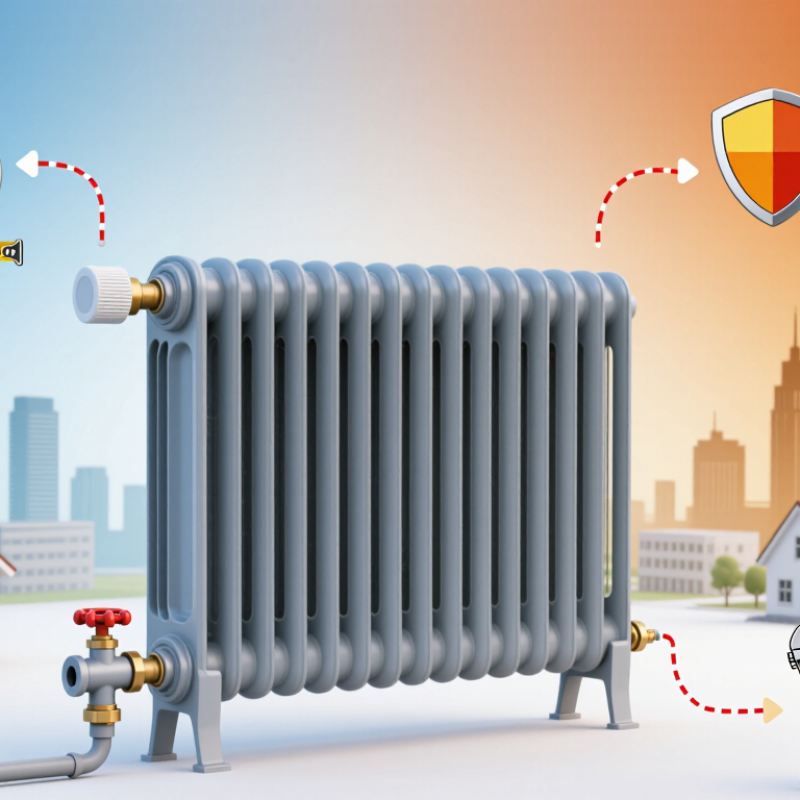
2026 Best Double Panel Radiator for Global Buyers

What Defines a Double Panel Radiator: Types 21 and 22 Explained

2026 Best Double Panel Radiator for Global Buyers

What Defines a Double Panel Radiator: Types 21 and 22 Explained

A double panel radiator contains two water-filled steel panels, but its heat output depends on the internal convector fins. Type 21 uses two panels and one convector layer. Type 22 adds a second convector layer. The difference looks small from the front. It is not small in a compact room.

Type 21 usually offers a slimmer profile and easier wall clearance. Type 22 delivers more output from similar wall length, making it useful for colder rooms or lower flow temperatures. Performance must be compared under the same test conditions, commonly defined by EN 442. A rating at ΔT50 cannot be compared casually with a ΔT30 result. That mistake still appears in product discussions.

The International Energy Agency reported in Energy Efficiency 2023 that building operations use about 30% of global final energy and produce roughly 26% of energy-related emissions. Heating efficiency therefore deserves practical attention, not only attractive specifications. A well-sized Type 22 may reduce required radiator length, but it can also collect more dust between its fins. Type 21 may clean more easily, yet require more wall space. Real homes are messier.

For global buyers, check tested output, connection position, steel thickness, corrosion protection, packaging, and local installation standards. Room heat loss matters more than the radiator label. Window size, insulation, outdoor temperature, and boiler settings can change results sharply. A perfect type does not exist.

How EN 442 Measures Radiator Output at ΔT50K

2026 Best Double Panel Radiator for Global Buyers

How EN 442 Measures Radiator Output at ΔT50K

EN 442 compares radiator output under controlled laboratory conditions. At ΔT50K, the average water temperature is 50 Kelvin above room temperature. A typical test uses 75°C flow, 65°C return, and a 20°C room. The radiator’s measured heat output is recorded in watts. This gives buyers a consistent reference across different models and sizes.

A double panel radiator often delivers higher output than a single panel unit. Its second panel adds heating surface, while convector fins improve air movement. However, panel count alone is not enough. Output also depends on height, length, fin design, water flow, and installation clearance. In real homes, lower water temperatures can reduce performance sharply. The published ΔT50K figure may look impressive, yet it may not match a heat pump system operating near 45°C flow temperature. I have seen this comparison cause practical mistakes.

Tips: Check the EN 442 output, dimensions, and declared test conditions together. Ask for correction data at ΔT30K or ΔT40K when needed. Leave clear space around the radiator, especially below the window shelf. Use proper balancing and thermostatic control. Small installation details matter.

One detail is easy to miss. EN 442 testing is repeatable, but a building is not. Drafts, wall insulation, pipe resistance, and furniture placement change comfort. Buyers should treat ΔT50K as a reliable benchmark, not a promise of identical room performance. Test certificates and technical drawings deserve careful review.

Comparing Heat Output, Water Volume, and Efficiency by Panel Size

2026 Best Double Panel Radiator for Global Buyers

For global buyers, the best double-panel radiator is not always the largest model. Room heat loss, water temperature, and panel dimensions must match. A 600 x 1000 mm radiator usually delivers less heat than a 600 x 1600 mm model. However, actual output depends on convector fins, tested temperature conditions, and installation quality.

Panel size increases heating surface and heat output. Greater water volume can provide steadier warmth, but it may slow the radiator’s response. This difference is noticeable in a bedroom that needs quick morning heating. A smaller model may react faster, while a larger unit can feel more stable. Efficiency becomes more important with low-temperature systems. Radiators rated at a high temperature may produce disappointing output with modern low-flow heating. Published figures should be checked carefully, because test standards vary between markets.

Tips: Compare output at the same temperature difference. Check the room’s calculated heat loss, not only its floor area. Leave space around the radiator for air movement. A 100 mm gap below a window can improve circulation. Also verify connection positions and pressure ratings before ordering. These details are easy to overlook.

A practical choice balances heat output, water volume, and available wall space. Oversizing is not automatically wasteful, but it can increase cost and reduce usable space. Undersizing is worse. It may leave a cold corner during winter. Measurements should be confirmed by a qualified heating professional, especially where local standards differ.

Global Buyer Checklist: Steel Grade, Pressure, Corrosion, and Warranty

2026 Best Double Panel Radiator for Global Buyers

A double panel radiator should be judged by more than heat output and appearance. Start with the steel grade and sheet thickness. Strong, consistent steel supports safer welding and reduces distortion during heating cycles. Ask for material certificates, weld inspection records, and independent pressure-test results. A polished surface can hide weak construction.

Pressure requirements vary by building type and destination market. Confirm the working pressure, test pressure, and maximum operating temperature in writing. The radiator should match the heating system, not only the room size. For coastal areas or humid warehouses, inspect the coating process carefully. Pretreatment, primer, and powder coating all influence corrosion resistance. I once focused too much on paint color and overlooked exposed threads. That was a costly lesson.

Tips: Request a sample before placing a large order. Check panel alignment, bracket strength, valve threads, and coating coverage by hand. Compare the test report with the actual model code. Ask whether the warranty covers leaks, coating failure, and replacement labor. Many warranties sound generous but exclude poor water quality, incorrect installation, or frozen pipes. Clarify those exclusions before payment. Also confirm spare-part availability and packaging protection for long-distance shipping. A small dent may not affect heating, but it can reveal weak transport protection. Leave room for doubt. Supplier documents are useful, but physical inspection is better.

2026 Selection Guide: Matching Wattage, Standards, and Climate Zones

For global buyers, a double panel radiator should match calculated heat loss, not room size alone. A 20 m² room may need 1,200–2,000 watts, depending on insulation, glazing, ceiling height, and outdoor design temperature. Obtain the local heat-loss calculation before ordering.

Published wattage often uses EN 442 conditions: 75/65/20°C, with a 50°C temperature difference. A low-temperature heat pump may operate near 45/35/20°C. Its real output can fall sharply. Check the correction table, not only the headline rating. ASHRAE Standard 169 supports climate-zone classification, while EN 442 helps compare radiator performance across European markets. These systems are useful references, but local building codes still control installation.

Cold continental zones usually require greater output, tighter pipe balancing, and reliable freeze protection. Mild coastal zones may need smaller radiators, although damp walls can increase perceived discomfort. The 2024 Global Status Report for Buildings and Construction estimates that buildings consume about 32% of global energy and produce roughly 34% of global carbon emissions. Efficient sizing matters beyond comfort.

A practical specification should state output, test conditions, connection type, pressure rating, and corrosion protection. Allow clearance above the floor and below the sill. Dust buildup can reduce convection. I have seen buyers select by panel count alone; that is a weak shortcut. Double panel does not automatically mean better performance. Verify the room’s design temperature, water temperature, and national conformity requirements before purchase.

2026 Best Double Panel Radiator for Global Buyers - 2026 Selection Guide: Matching Wattage, Standards, and Climate Zones

A practical comparison guide for selecting double-panel steel radiators by heat output, operating temperature, room size, climate, and applicable technical standards.

Double-Panel Radiator Types and Indicative Heat-Output Ranges
Radiator Type Construction Typical Depth Indicative Output at ΔT50
(600 mm high × 1,000 mm long)
Indicative Output at ΔT30
(600 mm high × 1,000 mm long)
Best Application Selection Notes
Type 21 Two water panels with one convector fin Approximately 65–75 mm About 1,300–1,600 W About 660–820 W Bedrooms, offices, hallways, and rooms with moderate heat demand Suitable where wall space is limited but a slimmer profile is preferred
Type 22 Two water panels with two convector fins Approximately 100–110 mm About 1,700–2,100 W About 850–1,070 W Living rooms, open-plan areas, and colder rooms requiring higher output Common general-purpose choice because it provides higher output than Type 21 at the same length and height
Output-temperature guidance: ΔT is the mean water-to-room temperature difference. A radiator rated at ΔT50 will produce substantially less heat when operated with lower-temperature water. As a planning estimate, output at ΔT30 is commonly around 48–52% of the ΔT50 rating, but the exact value depends on the radiator’s tested exponent and certified performance data.
Preliminary Room Heat-Demand Ranges for Global Buyers
Climate Zone Typical Design Condition Indicative Heat Demand Recommended Radiator Approach Typical Double-Panel Choice Important Considerations
Mild Warm winters; limited heating hours Approximately 60–80 W/m² Use certified output at the actual system temperature; avoid excessive oversizing Type 21 or compact Type 22 Consider coastal humidity, corrosion protection, and intermittent heating schedules
Temperate Moderate winter conditions with seasonal heating Approximately 80–100 W/m² Match the radiator to room-by-room heat-loss calculations Type 22 for most living spaces Check window area, insulation, ceiling height, and ventilation heat loss
Cold Long heating season and frequent below-freezing temperatures Approximately 100–130 W/m² Prioritize higher-output models or longer radiator lengths Type 22; consider multiple radiators in large rooms Confirm boiler or heat-pump flow temperature and available water flow rate
Very Cold Severe winter design temperatures Approximately 130–160 W/m² Use a formal heat-loss calculation and allow practical control margin High-output Type 22 or multiple radiator units Low-temperature systems may require substantially larger emitter surface area
Key Technical Dimensions to Confirm Before Purchase
Data Dimension Recommended Requirement Why It Matters Buyer Verification Point
Heat-output standard Performance tested and declared according to EN 442 or the applicable national adoption of EN 442 Creates a consistent basis for comparing radiator output Request the tested output table, test conditions, and declared ΔT value
Operating temperature Confirm output at the actual system condition, such as ΔT50 or ΔT30 Radiator output falls as water temperature decreases Do not size a low-temperature heat-pump system using only a ΔT50 rating
Maximum working pressure Common steel-panel radiator values are often around 10 bar, but the product declaration controls Ensures safe operation within the building’s hydronic system Check maximum pressure, test pressure, and local installation rules
Water quality and corrosion Follow the heating-system manufacturer’s water-treatment requirements Incorrect pH, oxygen ingress, or mixed metals can shorten service life Confirm compatibility with closed-loop systems, inhibitors, and galvanized or copper components
Connection layout Side, bottom, or opposite-end connections must match the pipework design Incorrect connection selection can reduce flow performance or increase installation cost Verify connection size, center distance, handedness, valve position, and air-vent location
Physical dimensions Confirm height, length, depth, bracket position, and wall clearance Radiator output and installation fit depend on actual dimensions Allow clearance for valves, skirting boards, curtains, cleaning, and airflow
Surface finish Use a durable powder-coated or equivalent finish suitable for the intended indoor environment Improves appearance and resistance to normal indoor wear For bathrooms or humid areas, confirm whether additional protective treatment is required
Packaging and logistics Use impact-resistant packaging with protection for corners, brackets, valves, and painted surfaces Large steel radiators are vulnerable to edge damage during international transport Confirm pallet dimensions, gross weight, stacking limits, and inspection procedures
Example Selection Calculations Using Indicative Values
Room Area Climate Assumption Planning Load Estimated Room Demand Illustrative Selection at ΔT50 Illustrative Selection at ΔT30
12 m² bedroom Temperate, well-insulated 80 W/m² Approximately 960 W One Type 21 Radiator rated at approximately 1,100–1,300 W One larger Type 22 Radiator or two shorter units, subject to heat-loss confirmation
20 m² living room Temperate, average insulation 100 W/m² Approximately 2,000 W One Type 22 radiator rated at approximately 2,000–2,300 W, or two smaller units Approximately 3,800–4,200 W of ΔT50-rated capacity may be needed to deliver about 2,000 W at ΔT30
25 m² open-plan room Cold, average insulation 120 W/m² Approximately 3,000 W Multiple Type 22 radiators are usually more practical than one very long unit Use a detailed heat-loss calculation; low-temperature operation may require significantly larger emitters
Important sizing note: The wattage ranges and climate-zone loads shown here are indicative planning values, not universal product ratings. Final selection should use room-by-room heat-loss calculations, certified radiator output data, local building regulations, design outdoor temperature, insulation level, glazing, ventilation, and the actual heating-system flow and return temperatures.

Ready to talk about water treatment?

Contact us

Please complete this form and we will be in touch