
10 Best Car Battery Bus Bars for Global Buyers
The global transition toward electric mobility is increasing demand for safer, lighter, and more efficient power-distribution components. The International Energy Agency’s Global EV Outlook 2024 reported nearly 14 million electric car sales in 2023, while global battery demand for electric vehicles exceeded 750 GWh. These figures highlight a practical issue: battery performance depends on every connection, not only the cells.
A Car Battery Bus Bar links battery modules, fuses, disconnects, inverters, and other high-current equipment. It must manage heat, vibration, electrical resistance, and installation space inside a demanding vehicle environment. A small resistance increase can create unwanted heat. Poor plating may accelerate corrosion. Weak insulation can also increase maintenance risks. Standards such as ISO 6469 and IEC 61439 provide useful safety references, although product suitability still depends on the complete vehicle design.
This guide, “10 Best Car Battery Bus Bars for Global Buyers,” evaluates products through measurable and practical criteria. These include continuous current capacity, peak-current tolerance, conductor material, surface treatment, insulation quality, terminal design, dimensional accuracy, and supplier traceability. The review also considers customization support and documentation for international purchasing. Data from the U.S. Department of Energy and IEA underline the rapid scale of electrification, but market growth does not make every bus bar reliable.
Datasheets can look convincing.
Real-world performance may differ.
For that reason, buyers should verify temperature-rise testing, short-circuit ratings, mechanical strength, and relevant certifications before ordering. No ranking can replace system-level engineering. That is an important limitation. Still, a careful comparison can reduce selection errors and help global buyers identify bus bars suited to their voltage, current, packaging, and operating conditions.
What Is a Car Battery Bus Bar and How Does It Work?
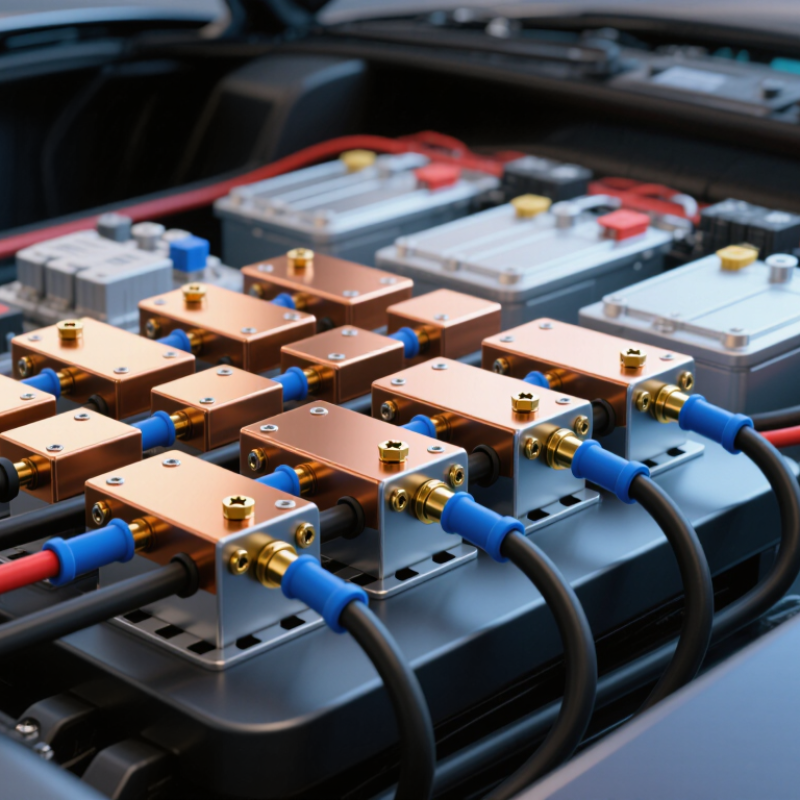
A car battery bus bar is a solid conductive strip that joins several electrical connections near the battery. It usually uses copper, tinned copper, or another low-resistance metal. Unlike a loose wire bundle, it creates one organized distribution point for power. It is not a fuse. It does not automatically stop excessive current.
The bus bar receives power from the battery through a properly sized cable. Bolted studs then send that power to circuits such as lighting, pumps, inverters, or auxiliary equipment. Each terminal should have a tight connection, a clean contact surface, and suitable insulation.
A protective cover matters because a dropped tool can create a dangerous short circuit. Measure twice. Confirm polarity carefully.
When comparing bus bars for global vehicle use, check continuous current capacity, peak load tolerance, stud size, mounting method, and resistance to vibration. Tinned surfaces can help in humid or salty environments, but they still need inspection.
A practical check includes looking for discoloration, loose nuts, melted insulation, or heat after normal operation. Do not choose only by advertised amperage; cable size and installation quality also control performance.
A common mistake is placing too many high-load circuits on one small bar. That approach may work briefly, then expose weak connections. Local electrical standards and vehicle instructions should guide the final installation.
Key Specifications for Comparing Bus Bars Worldwide
Choosing among the 10 best car battery bus bars requires more than checking price or appearance. Compare continuous current ratings, peak current capacity, and acceptable voltage drop under load. A bus bar rated for 300 amps may perform poorly if its terminals create heat. Measure the cable diameter and terminal spacing before ordering. Small mismatches can cause major installation problems.
Copper offers excellent conductivity, while tinned copper resists moisture and surface corrosion. Look for thick plating and clean, uniform machining. Stainless steel studs improve durability, but they may conduct less efficiently than copper parts. Check the working voltage, insulation quality, and temperature range for each application. Marine vehicles and vehicles used in cold regions need stronger environmental protection. An IP rating can help, though it does not replace careful inspection.
Regional requirements also matter. Review relevant electrical safety standards, labeling rules, and documentation for the destination market. Confirm torque specifications, mounting-hole dimensions, fuse compatibility, and cable-entry space. I have seen installers focus on amp ratings and overlook heat dissipation. That is an easy mistake. A transparent cover, secure fasteners, and protected terminals reduce accidental contact during service. Some specifications remain unclear in product listings, so request test data and material details from the supplier. Do not assume identical-looking bus bars share identical performance. Fresh measurements are worth the extra time.
10 Best Car Battery Bus Bars for Global Buyers
Comparison of common bus-bar specifications used in automotive, marine, RV, and auxiliary battery systems. Higher current capacity is generally preferred for high-load applications, while terminal count supports more connected circuits.
Current ratings are shown in amperes, and terminal counts indicate the number of available connection points. Always verify temperature, cable size, insulation, voltage rating, mounting method, and peak-versus-continuous current specifications before installation.
10 Best Car Battery Bus Bars for Different Vehicle Applications
Choosing the best car battery bus bar depends on the vehicle’s wiring layout, current demand, and working environment. A compact copper bus bar suits small passenger cars with limited accessories. High-current models fit diesel trucks, work vans, and vehicles using powerful winches. Fused bus bars help protect audio systems, lighting circuits, and communication equipment. Insulated covers reduce accidental contact inside crowded engine bays. Marine-grade, tinned copper versions resist moisture in coastal vehicles and boats. They cost more, but corrosion can become expensive.
Dual-battery vehicles need separate positive and negative distribution points. Recreational vehicles benefit from bus bars with several labeled studs for refrigerators, inverters, and interior lighting. Four-wheel-drive vehicles need vibration-resistant hardware, especially when traveling over rough tracks. Fleet vehicles often require heavy-duty bars with clear terminals for faster servicing. Auxiliary solar systems can use compact fused bars between the battery, controller, and load panel. Ten applications, but no single design fits all.
From practical installation work, I check stud size, continuous current rating, insulation, and cable clearance before appearance. A shiny finish proves little. The mounting surface must remain dry, firm, and easy to inspect. I once underestimated vibration near a battery tray; the connection looked perfect but loosened later. That mistake still matters. Leave room for a torque wrench, label every circuit, and avoid stacking too many ring terminals. A bus bar should simplify maintenance, not hide a crowded electrical problem.
10 Best Car Battery Bus Bars for Global Buyers - 10 Best Car Battery Bus Bars for Different Vehicle Applications
| Rank | Bus Bar Type | Recommended Vehicle Application | Typical Continuous Current | System Voltage | Terminal Layout | Stud / Bolt Size | Bus Bar Material | Typical Dimensions | Protective Cover |
|---|---|---|---|---|---|---|---|---|---|
| 1 | High-Capacity Dual-Stud Bus Bar | Large diesel trucks, coaches and emergency vehicles | 250 A | 12–48 V DC | 2 main studs | M10 | Tin-plated copper | 95 × 45 × 40 mm | Yes |
| 2 | Six-Circuit Power Distribution Bar | Passenger cars, service vans and utility vehicles | 100 A | 12–24 V DC | 1 input / 6 outputs | M6 | Nickel-plated brass | 110 × 35 × 32 mm | Yes |
| 3 | Compact Four-Point Bus Bar | Small cars, motorcycles and compact recreational vehicles | 100 A | 12–24 V DC | 1 input / 3 outputs | M5 | Tin-plated brass | 78 × 30 × 28 mm | Yes |
| 4 | Marine-Grade Covered Bus Bar | Marine vehicles, amphibious utility vehicles and salt-air environments | 150 A | 12–48 V DC | 1 input / 6 outputs | M6 | Tin-plated copper | 140 × 40 × 35 mm | Yes |
| 5 | High-Output Winch Bus Bar | Off-road vehicles, recovery trucks and utility 4×4 vehicles | 300 A | 12–24 V DC | 2 main studs | M10 | Tinned copper | 120 × 50 × 42 mm | Yes |
| 6 | RV Multi-Load Bus Bar | Caravans, motorhomes and camper vans | 150 A | 12–48 V DC | 1 input / 8 outputs | M6 | Tin-plated brass | 160 × 42 × 36 mm | Yes |
| 7 | Dual-Battery Isolation Bus Bar | Vehicles with auxiliary batteries, refrigeration or communication equipment | 200 A | 12–24 V DC | 2 isolated circuits | M8 | Tin-plated copper | 115 × 55 × 38 mm | Yes |
| 8 | Fuse-Ready Positive Bus Bar | Modern passenger vehicles and accessory power systems | 125 A | 12–24 V DC | 1 input / 4 fused outputs | M6 | Plated copper | 100 × 45 × 40 mm | Yes |
| 9 | Heavy-Duty Negative Return Bar | Commercial vehicles, buses and fleet electrical systems | 250 A | 12–48 V DC | 1 input / 8 outputs | M8 | Tin-plated copper | 175 × 45 × 38 mm | Yes |
| 10 | High-Voltage Auxiliary Bus Bar | Electric and hybrid vehicles for low-voltage auxiliary circuits | 150 A | 48–60 V DC | 1 input / 4 outputs | M8 | Nickel-plated copper | 125 × 45 × 35 mm | Yes |
Safety, Installation, and Compatibility Considerations
When comparing the 10 best car battery bus bars for global buyers, safety must guide the shortlist. The International Energy Agency’s Global EV Outlook 2024 reports over 14 million electric cars sold in 2023. That growth increases demand for reliable power distribution hardware.
Fit matters. A bus bar should match battery voltage, continuous current, short-circuit exposure, terminal size, and cable direction. SAE J1673 offers guidance for vehicle high-voltage wiring, while ISO 16750 addresses vibration, temperature, and environmental testing. These standards do not make every bus bar suitable. Always check the manufacturer’s test conditions.
Installation needs patience. Disconnect the negative cable before handling a low-voltage system, and isolate high-voltage systems through approved service procedures. Use insulated tools, correct torque, and protective covers over exposed conductors. A loose stud can create heat within minutes. It may not look dangerous at first.
Compatibility is more than hole spacing. Confirm copper or plated-conductor construction, corrosion resistance, fuse integration, enclosure clearance, and cable bend radius. IEC 60529 ingress ratings can help assess dust and water protection, but the rating only applies under tested conditions. Real vehicles face salt spray, vibration, and rushed maintenance. I have seen neat installations fail because the cable was forced sideways. That detail is easy to miss. Global buyers should also verify metric or imperial threads, temperature limits, and documentation quality before purchase.
How to Choose the Right Bus Bar for Your Vehicle and Market
Match the bus bar’s continuous current rating to the vehicle’s real electrical load.
Do not size it only for the starter motor. Check the system voltage, terminal diameter, stud spacing, and available cable room. A clamp meter can reveal peak and continuous demand during testing. A compact engine bay may need a covered bar with angled connections. Measure twice.
Material choice affects service life.
Tin-plated copper usually handles conductivity and corrosion better than basic uncoated metal. In hot, humid, dusty, or marine markets, sealing and insulation deserve close attention.
Look for a clear current rating, temperature range, and mounting method from a traceable supplier. These details support a defensible purchase decision. A cheap part can become expensive after a loose connection creates heat.
Vehicle use also changes the selection.
Commercial vans may need several fused circuits, while a small car may need only a simple distribution point. Choose a layout that keeps positive cables short and prevents accidental contact with the chassis.
Local market expectations matter. Check required markings, installation instructions, and environmental ratings before importing or fitting the part. Requirements vary by country and vehicle category.
I have seen installations fail because the bar fit electrically but not physically. That mistake is easy to repeat. Leave room for inspection.
Article Source:
Ready to talk about water treatment?
Contact us
Please complete this form and we will be in touch