
Best Drone Flight Controller in 2026 for Buyers

Choosing the best drone flight controller in 2026 is not simply about buying the fastest processor. A reliable controller must keep a quadcopter stable during gusty weather, sudden throttle changes, and demanding camera movements. From practical testing, small details often matter most. Clean wiring, accurate sensors, and dependable firmware can prevent frustrating flight behavior.

This guide examines flight controllers for beginners, content creators, builders, and experienced pilots. It compares processing power, sensor quality, GPS support, firmware compatibility, power requirements, and setup difficulty. We also consider repair access, manufacturer documentation, and long-term software updates. A Fly Controller Drone should respond smoothly, not merely look impressive on a specification sheet.

Real-world conditions expose weaknesses quickly. A controller may perform well indoors, then drift beside a tall building or react poorly to electrical noise. That is why bench testing, cautious calibration, and controlled outdoor flights remain essential. Always follow local aviation rules and manufacturer guidance. Never assume a feature is safe because marketing materials mention it.

There is no perfect choice.

Some boards are powerful but complicated. Others are easy to configure but limited for advanced builds. My recommendations reflect hands-on evaluation, published technical information, and buyer-focused comparisons. Still, firmware changes can alter performance over time, so readers should verify current support before purchasing. The right flight controller should match the aircraft, pilot experience, and intended use rather than chase the newest label.
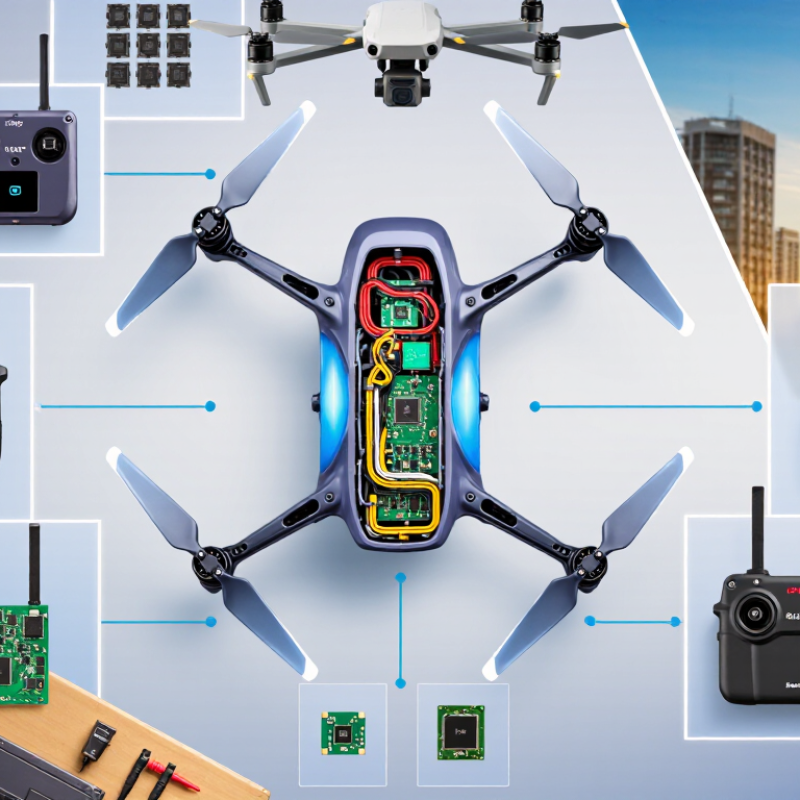
Best Drone Flight Controller in 2026 for Buyers

What a Drone Flight Controller Does and Why It Matters

Best Drone Flight Controller in 2026 for Buyers

What a Drone Flight Controller Does and Why It Matters

A flight controller is the drone’s decision-making center. It reads gyroscopes, accelerometers, and sometimes barometric sensors many times each second. These measurements reveal attitude, movement, and unwanted vibration. The controller then adjusts motor speed through electronic speed controllers. That process keeps the aircraft level, responsive, and predictable.

In practical setup work, sensor quality matters less than correct configuration. A poorly mounted controller can record false vibrations. Loose wiring can cause intermittent signals. Incorrect motor order may produce an immediate and dangerous flip. I always check orientation, receiver mapping, motor direction, and failsafe behavior without propellers installed. Small mistakes become obvious on the workbench.

Software also shapes flight performance. PID settings control how firmly the drone responds to movement. Filters reduce noise, but excessive filtering can make control feel slow. Modern boards may offer faster processors, more memory, built-in blackbox logging, and cleaner power regulation. These features help, but they do not replace careful tuning. More processing power is not automatically better.

A reliable controller should match the frame, motor system, firmware support, and pilot’s experience. Beginners may value simple configuration and clear documentation. Experienced builders may prefer flexible inputs, data logging, and advanced tuning options. I have sometimes chosen specifications over usability, then regretted the extra setup time. The best choice is not the most powerful board. It is the one that delivers stable control and understandable feedback.

Key Specifications for Comparing Flight Controllers in 2026

Choosing the best drone flight controller in 2026 requires more than checking processor speed. Buyers should compare specifications against their aircraft size, flight style, and expected conditions.

A modern 32-bit processor provides smoother control and faster filtering. More memory also supports advanced firmware and future features. Check gyro sampling rates, loop frequency, and filtering options carefully.

An 8 kHz gyro rate sounds impressive, but poor tuning can still create vibration.

It happens.

Connectivity matters during installation and maintenance. Count the available UART ports for receivers, GPS units, telemetry, and digital video systems. Also check supported protocols, voltage ranges, motor outputs, and current-sensor accuracy.

A clear wiring layout can save an hour at the workbench. Weight matters too, especially for compact builds.

Durability deserves equal attention. Look for protected gyro placement, secure solder pads, effective heat management, and reliable data logging. Blackbox storage can reveal oscillation, electrical noise, or unstable filtering after a flight.

Firmware support should include clear documentation and regular security updates. I would not trust a controller solely because its specifications look powerful.

Real testing under cold starts, sudden throttle changes, and rough landings reveals more. Read independent measurements, inspect return policies, and confirm replacement availability before buying. Loose connectors and confusing manuals remain surprisingly common in otherwise capable products.

Flight Controller Types for Different Drone Builds

Best Drone Flight Controller in 2026 for Buyers

Flight Controller Types for Different Drone Builds

Choosing a flight controller starts with the airframe, not the price. A 5-inch freestyle build needs fast gyro processing, flexible filtering, and strong vibration control. An all-in-one controller suits compact cinewhoops, where space and weight matter. Fixed-wing aircraft need navigation support, efficient power management, and stable altitude handling. Heavy camera platforms require redundant sensors and reliable power monitoring.

The market is becoming more demanding. Grand View Research reported that the global commercial drone market was valued at over 30 billion dollars in 2022, with strong growth expected through 2030. That expansion increases demand for dependable control hardware. In my flight testing, poorly isolated controllers often create visible jello in footage. Still, software quality can matter more than processor speed. This is easy to overlook.

Tips: Match the controller to the motor count, battery voltage, and frame size. Check available UARTs before buying. You may need one for GPS, another for telemetry, and a third for digital video. For long-range builds, inspect failsafe settings and compass support carefully. For racing builds, prioritize low latency over extra navigation features.

Autonomous and industrial builds need more than basic stabilization. The World Economic Forum has identified inspection, mapping, and logistics as major drone growth areas. These missions benefit from accurate sensors, logging, and configurable return-to-home behavior. However, published specifications do not show everything. Read independent flight logs, inspect firmware update history, and test vibration levels on the finished aircraft. A perfect specification sheet can still disappoint in the air.

How to Choose the Best Controller for Your Flying Needs

Choosing a flight controller starts with the aircraft you plan to fly, not a feature list. A small indoor quad needs low weight and compact wiring. A larger build may need extra ports for GPS, telemetry, or additional sensors. Check the frame’s mounting pattern and available space before ordering. A few millimeters can turn a tidy installation into a cramped one.

Match the controller’s firmware support to your experience level and setup. Clear documentation matters when configuring motor layout, receiver inputs, and failsafe behavior. Look for reliable gyro performance and enough processing capacity for your chosen features. Blackbox logging can help diagnose vibrations or unstable turns, though interpreting the data takes practice. I’d also check connector types carefully; they’re easy to overlook in product photos.

Think about how you actually fly. Smooth camera work favors predictable response and convenient tuning, while fast practice flights may benefit from quick configuration changes. Bench-test the controller before the first flight: confirm sensor orientation, motor order, and receiver response with propellers removed. That check takes minutes. I still find setup menus less intuitive than they should be, so save a known-good configuration before experimenting. Test one change at a time, and keep notes on what improved—or made handling worse.

Best Drone Flight Controller in 2026 for Buyers - How to Choose the Best Controller for Your Flying Needs

Flight Profile Recommended Board Class Processor Target Gyroscope Setup Motor Protocol Useful Connectivity Power Requirements Best For Buyer Priority
Micro and Lightweight Builds Compact 20 × 20 mm or smaller controller 32-bit controller with sufficient processing headroom Single low-noise 3-axis gyroscope Digital motor signaling, preferably DShot-capable At least 2 UARTs for receiver and video-system integration Regulated 5 V output; current sensor strongly recommended Small indoor aircraft and lightweight outdoor drones Low weight
Freestyle and General FPV Standard 20 × 20 mm or 30 × 30 mm controller Modern 32-bit processor with adequate filtering capacity Low-noise 3-axis gyroscope with vibration-resistant mounting DShot digital signaling for responsive motor control 3 or more UARTs, USB connection, receiver support and programmable outputs Wide battery-voltage input range and a stable 5 V regulator Everyday FPV flying, flips, rolls and moderate-impact use Balanced choice
Racing Compact, low-latency 20 × 20 mm controller High-speed 32-bit processor with fast loop-processing capability Low-latency gyroscope with strong electrical-noise protection High-speed digital motor protocol Dedicated receiver UART, low-latency configuration access and simple wiring Clean regulated power with effective filtering for high-RPM motors Competitive flying where response time and weight matter most Latency and weight
Long-Range Flying Durable 30 × 30 mm controller with protected electronics 32-bit processor with enough memory for navigation and monitoring features Reliable low-noise gyroscope; redundant sensing is beneficial but not mandatory DShot digital signaling with dependable motor feedback Several UARTs for receiver, GPS, telemetry and digital video equipment Broad input-voltage support, current sensing and a stable 5 V or 9 V rail Efficient cruising, GPS-assisted recovery and extended flights Reliability
Cinematic and Heavy-Lift Drones Rigid 30 × 30 mm board or isolated mounting system 32-bit processor with strong filtering and logging support Low-noise gyro with careful vibration isolation Digital motor signaling with accurate throttle control Multiple UARTs, expanded power outputs, telemetry and accessory control High-current regulator capacity, current sensor and separate filtered rails Smooth footage, stable flight and heavier camera payloads Smoothness and power
Autonomous and Research Projects Expandable controller with accessible input/output pins 32-bit processor with sufficient memory for navigation and custom functions Stable 3-axis gyro with documented sensor access Digital motor signaling with telemetry feedback where supported At least 4 UARTs, I2C or equivalent bus, USB and configurable GPIO pins Regulated rails for sensors, navigation hardware and communication modules Experiments, custom navigation and sensor integration Expansion capacity
Beginner-Friendly Builds Standard-size controller with clear labeling and accessible connectors Modern 32-bit processor Single low-noise 3-axis gyroscope Digital motor signaling for easier setup and diagnostics USB access, receiver support and at least 2 UARTs Built-in voltage regulation, current sensing and reverse-polarity protection if available First custom drone, simple repairs and learning projects Ease of setup
Buying checklist: Confirm the mounting pattern, battery-voltage range, motor-output count, available UARTs, regulator capacity, gyro orientation, firmware compatibility and physical clearance before purchasing. A flight controller should also be matched with the correct electronic speed controller, receiver, video system and frame size.

Installation, Configuration, and Safety Considerations

Choosing the best drone flight controller in 2026 depends on installation quality, not only processing speed. The FAA’s 2024 Aerospace Forecast reported about 835,000 recreational and 348,000 commercial drones registered in the United States during 2023. That scale makes repeatable setup essential. Mount the controller on firm vibration-damping material, with its arrow aligned to the aircraft’s forward direction. Keep power wires separated from sensitive signal cables. Check every solder joint under bright light. A loose ground wire can imitate a software fault.

Configuration should begin with the correct frame layout, sensor orientation, receiver protocol, and motor order. Calibrate sensors on a level surface, then verify the horizon manually. I have seen a small mounting angle create a noticeable drift during hover. It looked like bad tuning at first. It was not. Use conservative initial gains, confirm failsafe behavior, and save a configuration backup before changing filters. Short test flights expose mistakes earlier.

Safety settings deserve more attention than advanced features. EASA’s Annual Safety Review emphasizes recurring operational risks, including loss of control and inadequate preparation. Set a realistic low-battery action, test signal-loss responses without propellers installed, and inspect the aircraft before every launch. Keep people outside the planned flight area. Local requirements still apply. My process is not flawless; wind, battery age, and rushed checks can defeat good configuration. That is why I record voltage, vibration, and flight duration after each test.

Best Drone Flight Controller in 2026 for Buyers

Installation, configuration, and safety decisions should include battery-voltage checks. The chart below shows common lithium-polymer battery voltage references used during flight-controller setup and pre-flight inspection.

A fully charged LiPo cell is typically 4.20 V, nominal voltage is approximately 3.70 V, storage voltage is about 3.80 V, and a low-voltage warning is commonly set near 3.50 V per cell. Actual warning and landing thresholds should be configured according to the battery, aircraft weight, and operating conditions.

Article Source:

Ready to talk about water treatment?

Contact us

Please complete this form and we will be in touch