Top 10 Best Water Treatment Chemicals for Effective Purification?
Water treatment is essential for ensuring clean and safe water supply. The right water treatment chemicals play a vital role in this process. Different chemicals serve unique purposes, from disinfection to removal of contaminants. Choosing the best options can be overwhelming.
In this article, we explore the top 10 best water treatment chemicals. Each of these chemicals has proven effectiveness in purification. They are widely used in various industries. For example, chlorine is a common choice for water disinfection. Similarly, coagulants help in removing suspended particles.
We often overlook the importance of quality in water treatment chemicals. Even small mistakes can lead to ineffective purification. Therefore, understanding each chemical's function is crucial. This knowledge contributes to better decision-making. After all, clean water is vital for health and well-being.
Introduction to Water Treatment Chemicals and Their Importance
Water treatment chemicals play a crucial role in ensuring safe, clean drinking water. They help eliminate contaminants, pathogens, and impurities from water sources. According to the World Health Organization (WHO), about 2 billion people use a drinking water source contaminated with feces. This highlights the need for effective water treatment solutions.
Various chemicals are used in the purification process. Coagulants, for example, help gather small particles into larger ones for easier removal. Chlorine is another important chemical that disinfects and kills harmful microorganisms. A recent report by the Environmental Protection Agency (EPA) noted that chlorine is used in over 90% of water treatment facilities in the United States. This demonstrates its critical importance in water safety.
However, reliance on these chemicals often raises concerns. Some chemicals can form harmful byproducts, especially when mixed with organic materials. Additionally, improper dosing of these chemicals may lead to insufficient purification or even create new health risks. Regular assessment of chemical effectiveness and safety is necessary. While advances in technology have improved water treatment, ongoing vigilance is essential for public health.
Top 10 Best Water Treatment Chemicals for Effective Purification
| Chemical Name |
Usage Type |
Purification Method |
Effective Against |
Application Area |
| Chlorine |
Disinfection |
Oxidation |
Bacteria, Viruses |
Drinking Water |
| Alum |
Coagulation |
Flocculation |
Suspended Solids |
Municipal Treatment |
| Sodium Hypochlorite |
Disinfection |
Oxidation |
Bacteria, Algae |
Wastewater Treatment |
| Calcium Hypochlorite |
Disinfection |
Oxidation |
Bacteria, Viruses |
Swimming Pools |
| Polymer Flocculants |
Coagulation |
Flocculation |
Suspended Particles |
Industrial Plants |
| Ozone |
Disinfection |
Oxidation |
Microorganisms |
Drinking Water |
| Hydrogen Peroxide |
Disinfection |
Oxidation |
Bacteria, Algae |
Wastewater Treatment |
| Lime |
pH Adjustment |
Neutralization |
Acids, Heavy Metals |
Municipal Water |
| Phosphate |
Corrosion Inhibition |
Precipitation |
Corrosion |
Cooling Water Systems |
| Activated Carbon |
Adsorption |
Filtration |
Organic Compounds |
Drinking Water |
Types of Water Treatment Chemicals Used for Purification
Water treatment chemicals play a crucial role in ensuring clean and safe drinking water.
There are various types used for purification. One common type is coagulants.
They help remove suspended particles by causing them to clump together. This process can clear up cloudy water effectively.
Another important category is disinfectants.
These chemicals eliminate harmful microorganisms. Common disinfectants include chlorine and ozone.
They significantly reduce the risk of waterborne diseases. However, overusing disinfectants can lead to unwanted byproducts, which takes careful management.
pH adjusters also come into play.
They help to stabilize the water's acidity levels. This is essential for maintaining the effectiveness of other treatments.
However, getting the pH balance just right can be tricky.
Too high or too low can lead to problems, including corrosion or scale formation.
While each chemical serves a purpose, the combination must be managed wisely for effective purification.
Top 10 Water Treatment Chemicals and Their Applications
Water treatment chemicals play a vital role in ensuring safe drinking water. Various types of chemicals are used to purify and disinfect water.
Chlorine is one of the most commonly used chemicals in water treatment. It effectively kills bacteria and viruses. However, too much chlorine can create unwanted byproducts. Proper dosage is essential.
Coagulating agents are another key category. They help remove particles from water by clumping them together. This process is significant in improving water clarity.
Polymeric coagulants are often favored for their effectiveness. Yet, maintaining the right balance can be tricky. Using too much can lead to issues in the water quality.
pH adjusting chemicals are equally important in water treatment. They help maintain the water’s acidity at desired levels. Adjusting pH can prevent corrosion in pipes. Failure to monitor pH levels can result in unpleasant tastes or damage.
Each of these chemicals has its strengths and weaknesses. Understanding their applications is crucial for effective water purification. It’s a complex dance of chemistry that requires ongoing attention and analysis.
Factors to Consider When Choosing Water Treatment Chemicals
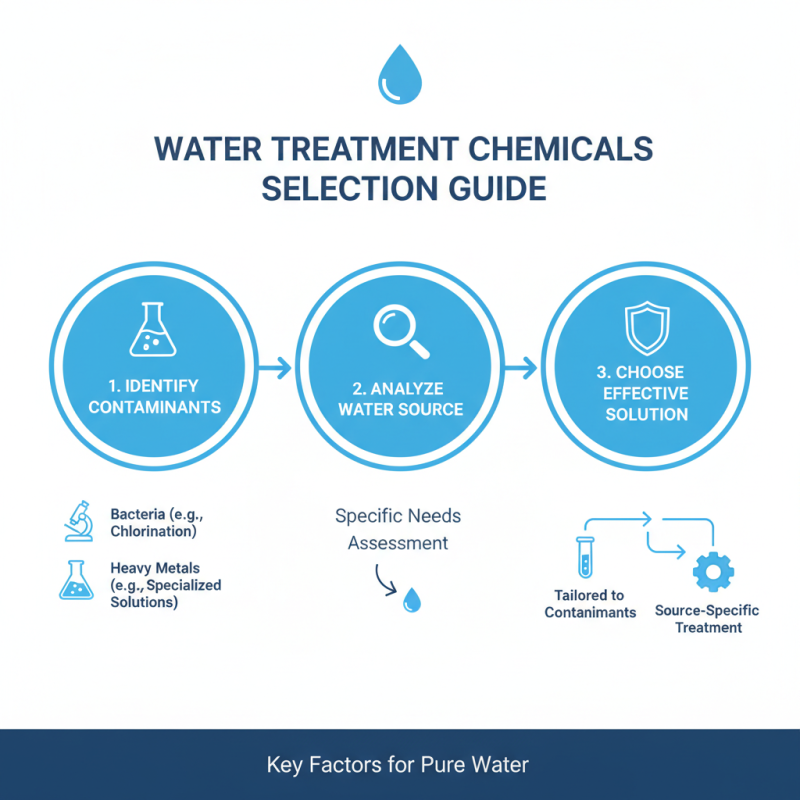
When selecting water treatment chemicals, several factors play a crucial role. The type of contaminants present in the water is a key consideration. For instance, if bacteria are the primary issue, chlorination may be effective. However, for heavy metals, different solutions are necessary. Understanding the specific needs of your water source is vital.
Another important factor is the chemical's environmental impact. Some chemicals may effectively purify water but can harm the ecosystem. Always consider biodegradable options or those with minimal environmental effects. Safety is also crucial; ensure that the selected chemicals pose no harm to human health.
Cost-effectiveness matters too. Cheaper options may seem appealing, but they might not provide adequate purification. Long-term effectiveness should be the goal. Consider conducting pilot tests to evaluate the performance of chosen chemicals. This trial phase can reveal unanticipated issues and help refine the selection process. Always be open to adjustment and reflection on the outcomes.
Best Practices for Using Water Treatment Chemicals Safely
Using water treatment chemicals requires caution. Proper handling and storage are essential. Always read the labels carefully. Ensure that you are following manufacturer guidelines. Wearing protective gear is necessary to prevent skin and eye contact.
Tips: Store chemicals away from sunlight and heat. Maintain a cool and dry environment. This helps preserve their efficacy. Avoid mixing different chemicals. It can create dangerous reactions. Find a dedicated space for each chemical.
Regular training on safe handling practices is crucial. Employees must be aware of emergency procedures. Have material safety data sheets (MSDS) easily accessible. Communication is key when using these chemicals. Discuss any concerns with your team. Safety should be a shared responsibility. Always reflect on past incidents to improve future practices.
Top 10 Best Water Treatment Chemicals for Effective Purification
This bar chart displays the effectiveness of the top 10 best water treatment chemicals used for purification. The effectiveness is rated on a scale of 1 to 10, with 10 being the most effective. These chemicals play a crucial role in ensuring water quality and safety for consumption.