

China Top 10 Custom Bathroom Vanities Manufacturers?
China has become a major sourcing destination for custom bathroom vanities, serving hotels, residential developers, retailers, and interior designers worldwide. This guide examines ten manufacturers known for tailored production, material options, and project support. It focuses on practical evidence, not impressive claims alone.
The review considers factory experience, design capability, production capacity, quality controls, and export communication. It also examines cabinet materials, countertop choices, hardware, finishes, and moisture-resistant construction. Details matter. A vanity may look elegant in a showroom, yet perform poorly beside daily splashes and limited ventilation. Reliable manufacturers should explain their plywood grades, edge sealing, drawer systems, inspection procedures, and packaging methods.
No ranking is perfect. Supplier strengths can change with new equipment, management, or project volume. Therefore, buyers should verify certifications, request recent samples, and compare written quotations carefully. Factory visits, video inspections, and reference projects can reveal more than a polished website. This article presents a balanced starting point for finding China’s top 10 custom bathroom vanities manufacturers. It also highlights questions worth asking before confirming an order, including minimum quantities, customization limits, lead times, warranty terms, and replacement support. Practical experience suggests that communication is often as important as price. A beautiful design still needs accurate drawings, consistent dimensions, and dependable delivery. Small errors can become expensive installation problems.
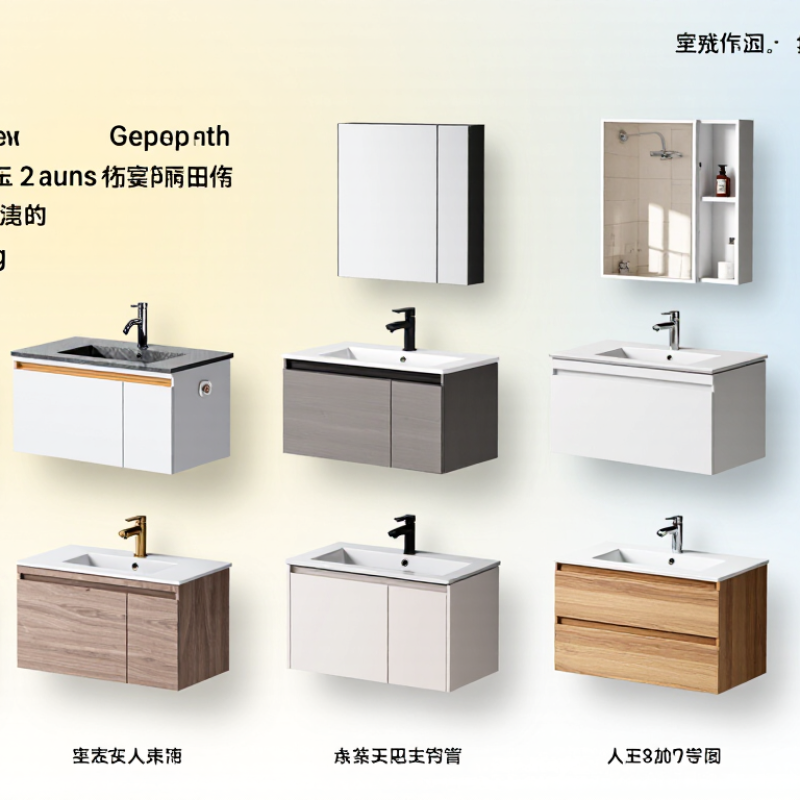
Table of Contents [Hide]
How China’s Custom Bathroom Vanity Manufacturing Industry Is Organized
China’s custom bathroom vanity industry is organized as a layered supply chain, not a single factory system. China’s National Bureau of Statistics reported furniture manufacturing revenue of about RMB 762.7 billion in 2023. Bathroom vanities represent only part of this broad category. The scale still matters.
Production begins with panel suppliers, hardware makers, glass processors, stone workshops, and coating facilities. Regional factories then assemble these components into cabinets, countertops, mirrors, and storage units. Some factories focus on OEM production. Others provide ODM services, adapting drawings, materials, and dimensions for overseas buyers.
The supply chain is highly specialized. Small workshops often handle unusual sizes or hand-finished surfaces. Larger plants usually manage automated cutting, edge-banding, drilling, and quality inspection. Trading companies connect these factories with distributors, contractors, and online sellers. Installation teams remain important because wall conditions vary between projects.
CSIL’s World Furniture Outlook 2024 places China among the world’s largest furniture-producing countries, accounting for roughly one-third of global output. This manufacturing depth supports competitive pricing and flexible customization. However, the structure is not perfectly transparent. Supplier capabilities can be difficult to compare, and “factory-direct” claims sometimes need verification. Buyers should inspect material certificates, moisture resistance, packaging tests, and sample consistency. A polished catalog is not enough. That remains an industry weakness.
China Top 10 Custom Bathroom Vanities Manufacturers? – How China’s Custom Bathroom Vanity Manufacturing Industry Is Organized
The table below maps the main manufacturing layers, production capabilities, and sourcing patterns used by China’s custom bathroom vanity sector without ranking or identifying individual companies and brands.
| No. | Industry Dimension | How the Manufacturing Segment Is Organized | Typical Customization and Production Data | Buyer-Relevant Considerations | Public Reference |
|---|---|---|---|---|---|
| 1 | Product Architecture | The supply base is commonly divided into wall-mounted vanities, floor-standing cabinets, integrated basins, vessel-basin units, mirror cabinets, and bathroom storage systems. | Customization normally covers width, height, depth, drawer configuration, basin position, mirror size, handle style, and plumbing cut-outs. | Buyers should confirm whether the supplier manufactures the complete unit or coordinates separate cabinet, basin, hardware, and mirror production. | Product specifications and technical drawings |
| 2 | Core Material Supply | Cabinet production uses several material groups, including moisture-resistant engineered wood, plywood, solid wood, stainless steel, aluminum, and PVC-based boards. | Material selection affects thickness, edge treatment, surface finish, water resistance, weight, machining method, and final packaging requirements. | Material declarations, sample approval, formaldehyde documentation, and moisture-resistance testing should be requested before mass production. | GB/T 3324; applicable material test reports |
| 3 | Ceramic and Solid-Surface Basin Integration | Some manufacturers make cabinet bodies in-house while sourcing ceramic, resin, mineral-composite, glass, or engineered-stone basins from specialized production lines. | Common options include undermount, countertop, integrated, double-bowl, rectangular, oval, and thin-edge basin designs. | Drain-hole position, overflow design, dimensional tolerance, glaze quality, stain resistance, and compatibility with regional plumbing standards must be verified. | GB 6952; product test documentation |
| 4 | Manufacturing Clusters | Production is distributed across established furniture, ceramic, sanitary-ware, hardware, and metal-processing areas in coastal manufacturing provinces, especially in South and East China. | Regional specialization allows buyers to combine cabinet production with nearby suppliers for basins, mirrors, handles, lighting, hinges, slides, and packaging. | Cluster-based sourcing can reduce coordination and inland transport between components, but quality control must cover every linked supplier. | China industrial and regional manufacturing statistics |
| 5 | Customization Workflow | A typical workflow includes design confirmation, drawing approval, material selection, prototype or pre-production sample, production scheduling, inspection, and export packing. | The principal control documents are the approved shop drawing, bill of materials, color reference, hardware list, carton markings, and inspection checklist. | Written approval of drawings and samples reduces disputes involving dimensions, color variation, door gaps, drawer alignment, and installation holes. | Supplier quality-management procedures |
| 6 | Hardware and Functional Systems | Hinges, drawer slides, handles, lift mechanisms, LED lighting, sensors, sockets, and anti-fog systems may be manufactured internally or purchased from specialized component suppliers. | Functional options include soft-closing drawers, push-to-open doors, adjustable shelves, concealed storage, integrated lighting, and electrical accessory modules. | Electrical components require suitable voltage, plug, wiring, ingress protection, and market-specific compliance documentation. | IEC standards; destination-market electrical rules |
| 7 | Surface Finishing | Common finishing routes include melamine, PVC film, acrylic, painted finishes, wood veneer, powder coating, anodized aluminum, and ceramic or stone surfaces. | Finishing can be specified by gloss level, texture, color system, grain direction, edge banding, anti-fingerprint treatment, and resistance requirements. | Color approval should use physical samples or controlled references because digital images do not reliably represent gloss, texture, or color under different lighting. | Approved samples; coating and surface test reports |
| 8 | Quality-Control Structure | Quality control generally combines incoming-material inspection, first-piece approval, in-process checks, final inspection, and container-loading verification. | Key inspection points include dimensions, squareness, drawer operation, door alignment, basin fit, surface defects, hardware installation, leakage, and packaging integrity. | Buyers should define acceptance limits, inspection sampling, corrective-action procedures, and responsibility for replacement or rework before issuing a purchase order. | ISO 9001 quality-management principles |
| 9 | Packaging and Export Logistics | Export-oriented production commonly uses reinforced cartons, foam or molded protection, moisture barriers, palletization, and container-loading plans for fragile or multi-part bathroom units. | Packaging can include flat-pack, semi-assembled, or fully assembled configurations, with customized labels, installation manuals, barcode systems, and replacement-part packs. | Packaging design should reflect drop, compression, vibration, humidity, and container-stacking risks, especially for ceramic basins and mirrors. | ISTA packaging principles; destination-market requirements |
| 10 | Commercial Manufacturing Model | China’s custom vanity supply base includes original equipment production, contract manufacturing, project-based fabrication, modular catalog customization, and integrated sourcing services. | Order terms may vary by design complexity, material combination, tooling needs, order quantity, sample requirements, and packaging configuration. | Supplier evaluation should compare production ownership, engineering capability, traceability, lead-time control, after-sales support, and export documentation rather than price alone. | Purchase contract; factory audit; commercial documentation |
Note: The information describes common industry structures and sourcing practices in China’s custom bathroom vanity sector. Exact specifications, testing obligations, lead times, and compliance requirements depend on the product design and destination market.