
How to Choose Sus201 Stainless Coils for Global Buyers
Choosing Sus201 Stainless Coils for international projects requires more than comparing price lists. Buyers must connect material grade, production quality, service conditions, and delivery risks. Sus201 is an austenitic stainless steel containing less nickel than many common alternatives. This can reduce cost, but it may also provide lower corrosion resistance in humid, salty, or chemically aggressive environments. The cheapest offer is not always the safest decision.
Experienced buyers usually begin with the application. Indoor panels, kitchen equipment, decorative trims, and light structural parts may suit Sus201. Coastal installations may require more careful evaluation. Ask suppliers for chemical composition, mechanical properties, surface finish, thickness tolerance, and coil weight. Mill test certificates should match the supplied batch. Independent inspection can verify dimensions, surface defects, hardness, and packaging condition before shipment.
Details matter. A coil with a bright surface can still contain edge cracks or inconsistent thickness. Check whether the finish is 2B, BA, brushed, or customized. Confirm inner diameter, outer diameter, loading limits, and seaworthy packaging. Also review the supplier’s production history, quality system, export experience, and response to claims. These checks reflect practical purchasing experience, not just catalog information.
There is no universal choice.
Some buyers overestimate price savings. I have seen specifications copied without checking the operating environment. That mistake can create staining, early replacement, and unexpected maintenance costs. Global procurement teams should compare total lifecycle value, not only the initial quotation. A reliable decision combines verified documents, realistic service conditions, clear inspection terms, and honest communication with the manufacturer. When uncertainty remains, ordering a small trial coil can reveal problems before full-scale purchasing.
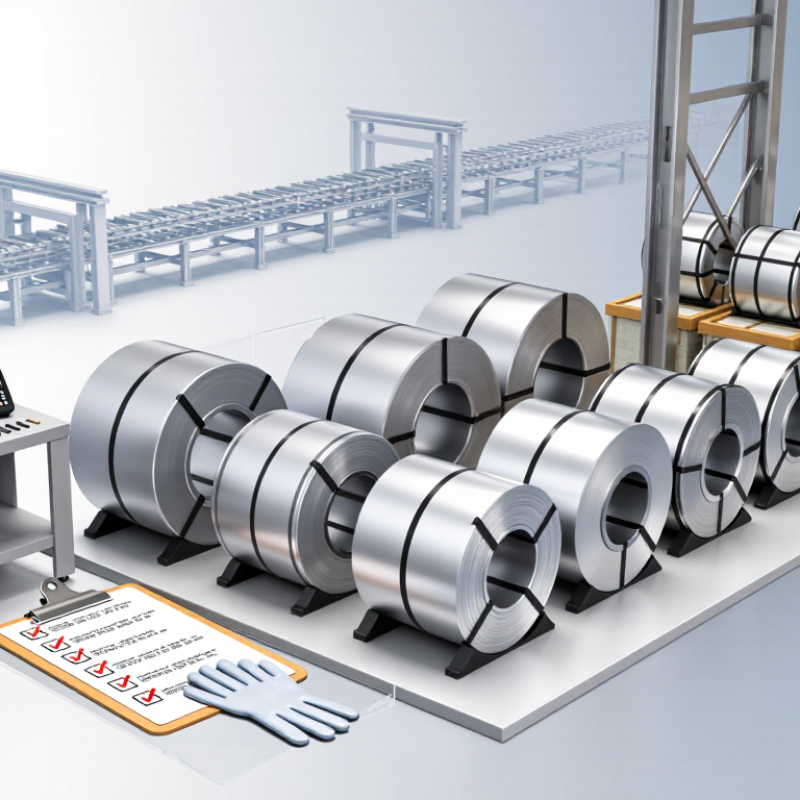
Understanding SUS201 Stainless Steel Coil Composition and Properties
When global buyers choose SUS201 stainless coils, composition deserves careful attention. SUS201 is an austenitic stainless steel with less nickel than many common grades. Manganese and nitrogen help maintain its structure and strength. Typical chemistry includes about 16–18% chromium, 3.5–5.5% nickel, and 5.5–7.5% manganese. Carbon, silicon, and nitrogen limits may differ by specification.
Chromium supports a passive surface film, which helps resist everyday atmospheric corrosion. However, SUS201 usually performs less reliably than higher-nickel grades in salt spray, acidic moisture, or coastal conditions. It also work-hardens during bending and rolling. A formed coil may become partly magnetic. This surprises inexperienced buyers.
Check the surface closely. Look for uniform brightness, clean edges, and no deep polishing lines. Ask for a heat number, chemical analysis, mechanical results, and applicable standard, such as ASTM A240 or EN 10088. Verify thickness across several points, not only one location. A low price can mislead. It is not flawless.
In practical use, SUS201 can suit indoor panels, kitchen equipment, decorative parts, and general fabrication. Welding and forming results depend on thickness, tooling, and process control. Confirm the intended environment before ordering large volumes. One overlooked detail matters: storage near carbon steel dust can create misleading rust marks. Proper packaging and dry transport protect the coil before installation.
Identifying Global Standards and Required Coil Specifications
How to Choose SUS201 Stainless Coils for Global Buyers
Identifying Global Standards and Required Coil Specifications
SUS201 stainless coils suit applications requiring strength, formability, and controlled cost. However, “SUS201” alone is not a complete purchasing specification. Confirm the governing standard before requesting quotations. Common references include JIS G4304, JIS G4305, ASTM A240, and EN 10088-2. These standards may differ in chemistry, testing, tolerances, and delivery conditions. Do not assume direct equivalence.
Specify the coil thickness, width, inner diameter, outer diameter, and weight range. State the surface finish, such as 2B, BA, or a brushed finish, when appearance matters. Also define the temper, edge condition, flatness, and acceptable thickness tolerance. For forming work, ask for mechanical values and elongation data. For decorative use, request surface inspection criteria and sample approval. A mill test certificate should identify the heat number, chemical analysis, mechanical results, standard, and inspection status. Details prevent expensive surprises.
Tips: Compare the certificate with the purchase order. Check whether dimensions are measured before or after finishing. Ask for corrosion expectations in the real environment. SUS201 can perform well indoors, but humid or salty locations may require careful evaluation. A small trial coil is often wiser than a large first order. No checklist is perfect. Recheck assumptions with an independent materials specialist when the application is critical.
Comparing Surface Finishes, Dimensions, and Mechanical Performance
How to Choose SUS201 Stainless Coils for Global Buyers
SUS201 stainless coils should be selected by application, not appearance alone. Surface finish affects cleaning, forming, and visual consistency. A 2B finish offers a smooth, practical surface for general fabrication. BA finish provides a brighter appearance but may show handling marks more easily. No. 4 finish uses visible abrasive lines and suits decorative panels. Looks can mislead. A polished coil can still contain uneven edges or inconsistent film protection.
Confirm thickness, width, coil inner diameter, outer diameter, and permitted tolerances before ordering. These dimensions influence slitting, stamping, and transport efficiency. Ask for current inspection records, including yield strength, tensile strength, elongation, and hardness. SUS201 can work-harden during forming, so deep drawing may require controlled testing. Mechanical values can vary with processing conditions. One overlooked tolerance may create serious production waste.
Tips: Request a sample coil or finish panel. Compare it under factory lighting and daylight. Check surface scratches, edge waviness, and oil residue. Verify the test certificate against the agreed standard and heat number. Do not judge corrosion suitability from finish alone; humidity, salt exposure, and cleaning chemicals matter. Measure twice. It is easy to specify a beautiful finish and forget the forming route. A small trial run often reveals problems that documents cannot.
How to Choose SUS201 Stainless Coils for Global Buyers - Comparing Surface Finishes, Dimensions, and Mechanical Performance
| Selection Category | Option / Parameter | Typical or Standard Value | Buyer Considerations |
|---|---|---|---|
| Surface Finish | No. 1 | Hot-rolled, annealed and pickled; matte appearance | Suitable for structural, industrial and high-temperature applications where appearance is not the primary requirement. |
| 2D | Cold-rolled, annealed and pickled; dull, non-reflective surface | Good choice for formed parts that will be painted, coated or further processed. | |
| 2B | Cold-rolled, annealed, pickled and skin-passed; smooth reflective surface | Common general-purpose finish for appliances, kitchen equipment, fabrication and architectural components. | |
| BA | Bright-annealed finish; highly reflective appearance | Select when visual appearance and low-maintenance cleaning are important; confirm reflectivity requirements before ordering. | |
| No. 4 | One-direction brushed finish, commonly produced with abrasive belts | Used for decorative panels, food-service equipment and visible fabricated surfaces; grain direction should be specified. | |
| Dimensions | Thickness | Common commercial range: approximately 0.30–3.00 mm | Thinner gauges reduce weight; thicker gauges improve stiffness. Confirm thickness tolerance under the applicable standard. |
| Width | Typical stock widths: 1,000, 1,219, 1,250 and 1,500 mm | Choose the widest practical coil to reduce slitting and fabrication waste; availability depends on thickness and mill capability. | |
| Inner diameter | Common coil ID: 508 mm or 610 mm | Match the coil ID with the uncoiler mandrel and handling equipment at the receiving facility. | |
| Outside diameter | Often specified around 1,200–2,000 mm, subject to weight and equipment limits | Define maximum OD and coil weight to avoid unloading, storage and transportation problems. | |
| Coil weight | Frequently engineered to approximately 3–15 metric tons | Specify a maximum gross weight based on crane capacity, truck limitations and warehouse equipment. | |
| Dimensional standard | ASTM A240/A240M, EN 10088-2 or JIS G4305, as applicable | State the governing standard and tolerance class in the purchase order; values are not interchangeable without verification. | |
| Mechanical Performance | Minimum tensile strength | Approximately 655 MPa (95 ksi) under ASTM A240 Type 201 requirements | Use the certified mill test report for the actual heat and condition supplied. |
| Minimum yield strength | Approximately 310 MPa (45 ksi) under ASTM A240 Type 201 requirements | Important for load-bearing, bending and forming calculations; verify whether the material is annealed or cold-worked. | |
| Minimum elongation | Approximately 40% in 50 mm under ASTM A240 Type 201 requirements | Higher elongation generally supports deeper forming, but actual formability depends on thickness, rolling direction and temper. | |
| Elastic modulus | Approximately 193 GPa at room temperature | Use for deflection and springback calculations; stainless steel springback can be greater than that of many carbon steels. | |
| Density | Approximately 7.86 g/cm³ | Useful for estimating coil weight, freight cost and material consumption. | |
| Work-hardening behavior | Moderate to high increase in strength during cold forming | Allow for forming load, springback and possible intermediate annealing in complex shapes. | |
| Magnetic response | Generally low in the annealed condition; may increase after cold working | Do not use magnetism alone to identify grade or verify compliance; request chemical and mechanical test reports. | |
| Global Buying Checklist | Chemical composition | Confirm Cr-Ni-Mn composition against the selected standard and grade designation | SUS201, ASTM Type 201 and EN designations should be cross-checked rather than treated as automatically identical. |
| Surface inspection | Check scratches, pits, stains, edge cracks, coil breaks and protective-film condition | Define inspection criteria, packaging method and allowable cosmetic defects before shipment. | |
| Documentation | Mill test certificate, dimensional report, surface-finish confirmation and packing list | Require heat number traceability and test results matching the purchase-order requirements. | |
| Application fit | Select by forming, corrosion, appearance, thickness and logistics requirements | SUS201 is often selected for cost-sensitive indoor or moderately corrosive applications; verify suitability for outdoor, chloride-rich or strongly acidic environments. |
Note: Mechanical values stated above are representative minimum requirements for ASTM A240 Type 201 where indicated. Typical dimensions, finish characteristics and performance can vary by product form, thickness, processing route and governing standard; confirm final values in the supplier’s technical documentation.
Evaluating Suppliers, Certifications, Pricing, and Export Reliability
How to Choose SUS201 Stainless Coils for Global Buyers
Selecting SUS201 stainless coils requires more than comparing a quoted price. Experienced buyers check chemical composition, surface finish, thickness tolerance, and coil weight before placing an order. Request a recent mill test certificate for every production batch. The document should match the actual material, not a generic template. Independent testing can confirm nickel, chromium, manganese, tensile strength, and elongation. It costs more, but prevents expensive disputes. I have found that unclear specifications often cause larger losses than high prices.
Tips: Ask suppliers for production photos, sample coils, inspection records, and export references. Verify whether certifications are current and issued by recognized bodies. ISO 9001 supports process control, but it does not guarantee perfect coil quality. That distinction matters. Also compare total landed cost, including packing, inland transport, insurance, duties, and port charges. The cheapest offer may hide weak packaging or unstable lead times.
Export reliability should be tested through practical questions. Can the supplier provide accurate invoices, packing lists, certificates of origin, and shipping documents? Are coils protected with waterproof paper, steel straps, and suitable pallets? Confirm the Incoterm, payment schedule, delivery window, and claim procedure in writing. A supplier that answers quickly is useful, but consistent documentation is more important. Some buyers rely too heavily on promises. That is a mistake worth reconsidering. Secure a trial shipment before committing to regular volumes.
Checking Quality, Packaging, Shipping, and Import Compliance
How to Choose SUS201 Stainless Coils for Global Buyers
Quality checks should begin before price negotiations. SUS201 chemistry can vary by specification, so confirm the grade against JIS G4304, ASTM A240, or the destination standard. Request a mill test certificate showing chemical composition, tensile strength, yield strength, elongation, hardness, thickness, and surface finish. World Stainless reported about 58.4 million tonnes of stainless crude steel production in 2023. This scale increases supply options, but it also makes traceability more important. Do not accept only a polished sample. Verify heat numbers, coil weight, edge condition, and thickness tolerance through independent inspection when the order is valuable.
Packaging must protect the coil from salt air, impact, and trapped moisture. Use waterproof paper, steel or plastic strapping, corner protection, and a strong pallet or cradle. Record each coil’s net weight, gross weight, dimensions, and identification mark. A small packaging mistake can create rust stains before arrival. The UNCTAD Review of Maritime Transport 2024 confirms that more than 80% of global merchandise trade moves by sea, so container loading deserves careful attention. Keep coils secured, centered, and separated from wet cargo.
Shipping documents should match the physical goods exactly. Prepare the commercial invoice, packing list, bill of lading, certificate of origin, mill certificate, and correct HS classification. Check destination rules for labeling, customs valuation, REACH, RoHS, and inspection requirements. These rules are not identical. A perfect checklist is impossible. Reconfirm them with the importer’s customs broker before dispatch, especially when the coil width, finish, or country of origin differs from earlier orders.
Article Source:
Ready to talk about water treatment?
Contact us
Please complete this form and we will be in touch