How to Choose the Best Corrugated Suction Hose in 2026?
Choosing the right Corrugated Suction Hose in 2026 requires more than comparing prices or wall thickness. The hose must match the conveyed material, suction pressure, temperature, bend radius, and connection method. A hose dragging across a concrete floor faces different risks from one handling abrasive slurry beside a pump.
Industry forecasts show sustained demand for industrial hose systems. MarketsandMarkets estimates that the industrial hose market could grow from about USD 13.1 billion in 2023 to USD 17.1 billion by 2028. Grand View Research also reports steady growth through 2030. These figures cover many hose types, not corrugated suction hose alone. That limitation matters. Broad market data cannot replace application testing.
John M. Ciesielski, a recognized hose-safety specialist and author of Hose Safety and Maintenance, offers a useful warning: “The hose assembly is only as strong as its weakest component.” That includes the cover, reinforcement, coupling, clamp, and gasket. Check every part. In practice, selection can still involve uncertainty. Supplier charts may use different test methods. “Look beyond the label.” This guide therefore examines construction, vacuum rating, abrasion resistance, chemical compatibility, inspection needs, and total service cost. A flexible hose may appear ideal during installation, yet collapse under continuous suction. The best choice is the one that remains reliable after real movement, repeated cleaning, and seasonal temperature changes.
What Is a Corrugated Suction Hose and How Does It Work?
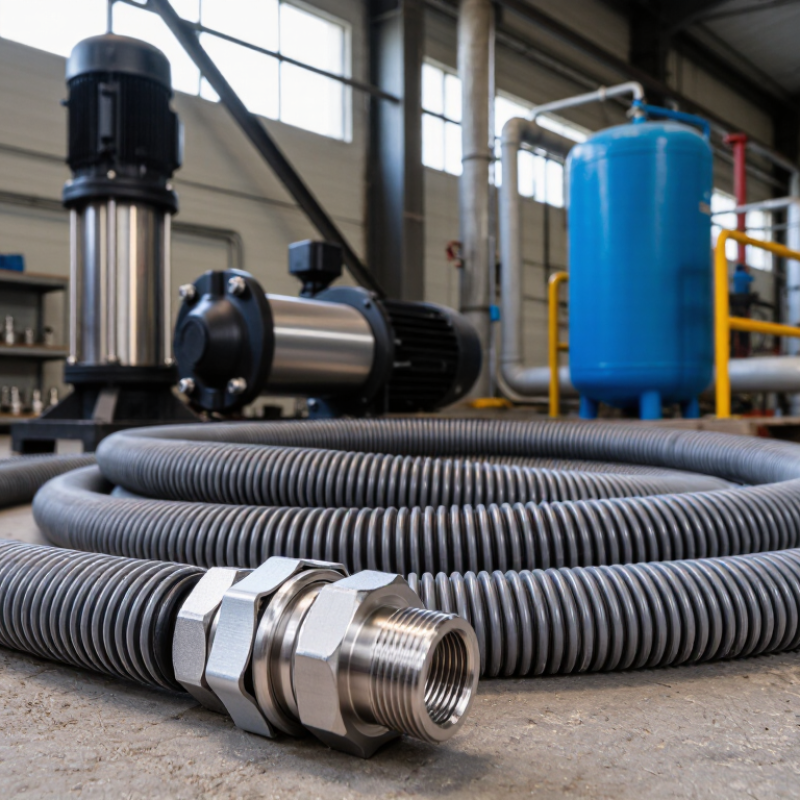
A corrugated suction hose is a flexible pipe designed to move liquids, slurries, or air under negative pressure. Its ridged wall allows bending around tanks, pumps, and uneven ground. A spiral reinforcement helps prevent collapse during vacuum service. Inside, a smoother bore supports steadier flow and reduces turbulence. Some hoses include embedded wire, textile layers, or thermoplastic reinforcement. The correct structure depends on pressure, temperature, and fluid type.
During operation, a pump reduces pressure inside the hose. Atmospheric pressure then pushes fluid toward the inlet. This is suction. The hose does not pull liquid by itself. If it kinks, leaks air, or exceeds its vacuum rating, flow can drop quickly. A transparent section near the intake may reveal bubbles, blockage, or sediment. In field installations, a short hose with gentle curves usually improves pump performance. Sharp bends are costly mistakes.
When choosing in 2026, check inner diameter, vacuum rating, temperature range, abrasion resistance, and material compatibility. Measure the actual inlet size, not only the old hose label. This detail is often missed. Abrasive slurry may require a tougher inner layer than extra flexibility. Inspect couplings, clamps, and reinforcement regularly. I would also review the application after seasonal temperature changes. A hose that works in summer may become too rigid in winter. Site measurements still matter more than attractive specifications.
How to Choose the Best Corrugated Suction Hose in 2026?
What Is a Corrugated Suction Hose and How Does It Work?
A corrugated suction hose is a flexible hose with a ribbed outer wall designed to move air, water, dust, chemicals, or other materials under suction or low-pressure conditions. The corrugations improve flexibility and allow the hose to bend while maintaining a continuous flow path. When choosing a hose, check the required temperature range, chemical compatibility, vacuum rating, inner diameter, bend radius, and reinforcement.
How to read the chart: The ranges show typical continuous service temperatures for commonly used hose materials. PVC is often selected for general-purpose air, water, and light material handling. TPU is useful where abrasion resistance and flexibility are important. Rubber provides strong flexibility and durability, while silicone is selected for applications requiring a wide temperature range. Actual performance depends on hose construction, reinforcement, pressure, chemicals, and operating conditions.
Which Materials and Construction Features Matter Most?
How to Choose the Best Corrugated Suction Hose in 2026?
Material selection often determines whether a corrugated suction hose performs reliably. PVC is lightweight, economical, and suitable for many water and air applications. Polyurethane usually handles abrasion better, especially when sand or granules travel through the hose. Rubber offers flexibility and temperature resistance, but it can be heavier and less convenient to install.
Do not judge the hose by appearance alone. Check the operating temperature, vacuum rating, chemical compatibility, and expected pressure. A strong embedded helix helps prevent collapse during suction. A smooth inner bore reduces turbulence and material buildup. Thick, evenly formed corrugations improve flexibility without making the wall dangerously weak. The bend radius matters near pumps, tanks, and tight equipment layouts. In field inspections, small cracks often appear near fittings first. Couplings deserve equal attention.
Tips: Compare the hose with your actual fluid, not a general product description. Measure the working length carefully. Leave room for movement. Test flexibility in realistic temperatures. Inspect the inner surface after several operating cycles. A grounding path may be necessary when static charge presents a risk.
No hose is perfect. A highly flexible design may sacrifice crush resistance. A thick wall may increase weight and handling effort. My first comparison would focus too much on material cost, but lifecycle performance is usually more important. Record wear, kinking, and connection problems during use. Those observations often reveal more than a specification sheet.
How to Match Hose Size, Pressure, and Temperature Requirements
Choosing the best corrugated suction hose in 2026 starts with accurate operating data. Measure the connection’s inside diameter, not only its outside diameter. A hose that is too narrow can restrict flow and increase pump load. A hose that is too large may collapse under vacuum.
Match the hose size to the required flow rate and the pump inlet. Check the manufacturer’s flow charts when possible. Corrugated walls improve flexibility, but they can create more turbulence than smooth interiors. Keep the bend radius above the stated minimum. Sharp bends near fittings often cause early wear. I have seen hoses fail there first.
Pressure ratings need careful interpretation. Confirm both working pressure and vacuum rating. These values can differ significantly. A discharge hose may handle pressure well but perform poorly under suction. Consider surge pressure, pulsing, and movement during operation. Add a reasonable safety margin, but avoid guessing. A larger margin cannot correct chemical incompatibility or poor support.
Temperature requirements include the fluid, surrounding air, and cleaning process. A hose rated for 80°C fluid may not tolerate continuous exposure at that temperature. Check whether the rating applies to continuous or intermittent service. Review the liner, reinforcement, cover, and coupling materials together. Temperature can reduce flexibility and pressure capacity. This detail is easy to miss.
Before installation, inspect the hose when warm and cold. Test the actual routing if possible. A specification sheet may not reflect field conditions. Recheck the selection after changing pumps, fluids, or cleaning methods. Small assumptions can become expensive problems.
How to Evaluate Flexibility, Durability, and Chemical Resistance
How to Choose the Best Corrugated Suction Hose in 2026?
When evaluating a corrugated suction hose, flexibility should be measured under real working conditions, not by hand alone. A hose that bends easily on a warm warehouse floor may stiffen near freezing temperatures. Check the stated minimum bend radius, then test it around the actual pump connection. Sharp bends can flatten the corrugations and restrict flow. Also inspect the fittings. Loose connections often cause leaks before the hose itself fails.
Durability depends on more than wall thickness. Examine the reinforcement, outer cover, and resistance to abrasion from concrete floors or metal edges. A clear hose can help operators spot trapped air, sediment, or discoloration. However, visibility does not prove strength. Chemical resistance requires checking the fluid type, concentration, temperature, and exposure time. Oils, acids, solvents, and cleaning agents may affect different hose materials in unexpected ways. A compatibility chart is useful, but a small controlled test is safer than relying on assumptions. I have seen apparently suitable hoses soften after repeated exposure. That detail is easy to miss.
Tips: Measure the working temperature first. Confirm suction pressure and vacuum requirements. Compare the hose’s bend radius with the installation space. Inspect for cracks after several operating cycles. Replace any section showing swelling, stiffness, or exposed reinforcement. Selection mistakes happen when only price and diameter receive attention.
How to Compare Safety Standards, Maintenance Needs, and Total Cost
How to Choose the Best Corrugated Suction Hose in 2026?
Safety standards should guide the purchase, not just price. Check the hose’s working pressure, burst pressure, vacuum rating, temperature range, and chemical compatibility. A hose marked only with pressure information is incomplete. Ask for test reports and confirmation of applicable local standards. Static-control requirements also matter when dry powders or flammable vapors may be present. Use properly grounded assemblies where required.
Maintenance needs are easy to underestimate. Inspect the corrugations, inner wall, clamps, and gaskets before each shift. Look for flattened sections, soft spots, cracks, and exposed reinforcement. Rinse compatible hoses with the correct method, then allow them to drain fully. Avoid dragging them across concrete. Small cuts can grow quickly.
Total cost includes more than the purchase invoice. Compare fittings, installation labor, cleaning time, replacement frequency, and production downtime. A smooth inner surface may reduce buildup and cleaning effort, while a highly flexible hose can simplify routing. However, flexibility may reduce service life in severe applications. I once focused too heavily on initial price and ignored connector wear. That decision created leaks and an unnecessary shutdown. Review actual operating conditions, not ideal catalog conditions. Keep records of inspection dates and failure points. This evidence makes the next selection more accurate.