What Is Cooling Water Treatment Chemicals and How Do They Work?
Cooling water treatment chemicals play a vital role in industrial processes. These chemicals help maintain the efficiency of cooling systems. By controlling corrosion, scale, and biological growth, they ensure smooth operations.
Proper management of cooling water is essential. Without treatment, systems can suffer costly downtime. Many industries rely on these chemicals to enhance water quality. They come in various formulations, tailored for specific needs.
Understanding how cooling water treatment chemicals work is key. Each component contributes to a balanced system. As technology advances, new solutions emerge. However, there is still room for improvement. Identifying effective strategies remains a challenge. The ongoing search for better options is crucial.
Definition and Purpose of Cooling Water Treatment Chemicals
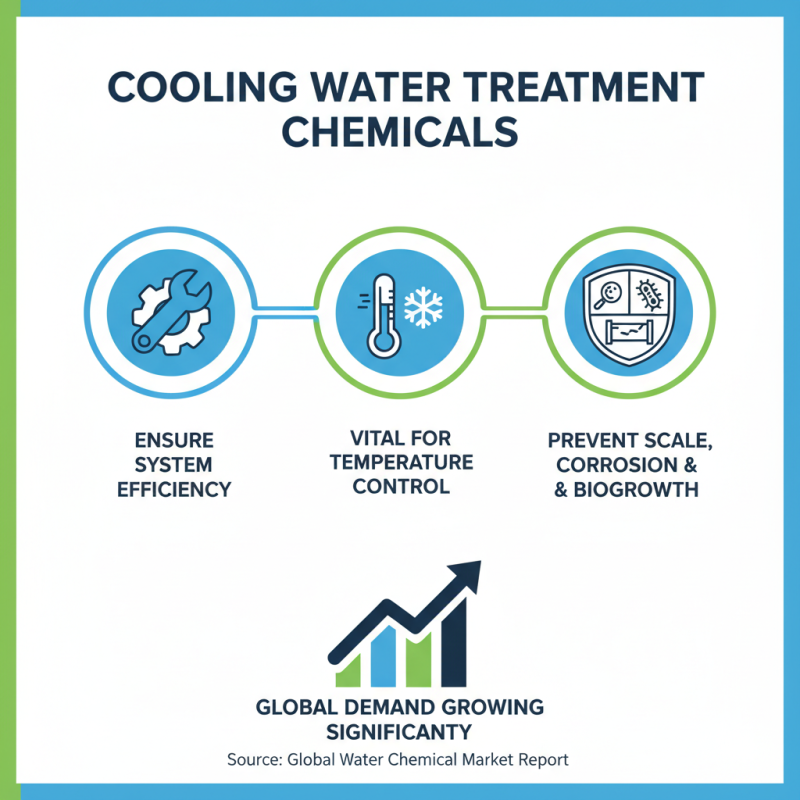
Cooling water treatment chemicals play a crucial role in industrial processes. They ensure the efficiency of cooling systems, which are vital for temperature control in many applications. These chemicals prevent scale, corrosion, and biological growth in cooling water systems. According to the Global Water Chemical Market report, the worldwide demand for these chemicals is projected to grow significantly, reflecting their importance.
The primary purpose of cooling water treatment chemicals is to protect equipment. Corrosion can reduce the lifespan of machinery, leading to costly downtimes. For instance, corrosion inhibitors can reduce metal loss by up to 90% in some systems. Similarly, scale inhibitors can prevent deposits that hinder heat transfer. This not only enhances efficiency but also drives down energy costs.
Despite their effectiveness, some industries struggle with proper chemical management. Inadequate treatment can lead to reduced system performance. A report from the Industrial Water Treatment Association indicates that 20% of facilities do not regularly monitor their cooling water systems. This oversight can result in significant operational issues. Ensuring the right balance and regular monitoring is essential for optimal results.
Types of Cooling Water Treatment Chemicals and Their Functions
Cooling water treatment chemicals are essential in maintaining the efficiency of cooling systems. These chemicals help to control scale, corrosion, and biological growth in cooling water. The correct chemicals can improve energy efficiency and prolong equipment life. According to a recent industry report, proper treatment can improve heat exchange efficiency by up to 30%.
Common types of cooling water treatment chemicals include scale inhibitors, corrosion inhibitors, and biocides. Scale inhibitors prevent mineral deposits from forming on heat exchange surfaces. This is crucial as scale can reduce heat transfer efficiency. Corrosion inhibitors protect metal surfaces from corrosion, which can lead to equipment failure. Biocides control microbial growth. This is vital since biofilms can obstruct flow and reduce efficiency by 50% or more.
Despite the benefits, some facilities struggle with chemical application and monitoring. Inconsistent dosing can lead to ineffective treatment or chemical waste. Moreover, relying on a single treatment approach can miss specific issues. For instance, certain water types may require a unique blend of chemicals. Understanding the specific needs of a cooling system is key to effective treatment. A more tailored approach can often yield better performance. This involves periodic testing and adjustments based on system conditions.
What Is Cooling Water Treatment Chemicals and How Do They Work? - Types of Cooling Water Treatment Chemicals and Their Functions
| Chemical Type |
Function |
Common Applications |
Potential Issues |
| Corrosion Inhibitors |
Preventing the corrosion of metal surfaces. |
Cooling towers, heat exchangers. |
Overdosing can lead to passivation failures. |
| Biocides |
Controlling microbiological growth in water systems. |
Legionella control in cooling towers. |
Environmental regulations on discharge. |
| Scale Inhibitors |
Preventing scale formation on equipment. |
Boilers, cooling towers. |
Inadequate dosage can lead to scaling. |
| pH Adjusters |
Maintaining optimal pH levels to prevent corrosion and scale. |
All cooling systems. |
Incorrect pH can harm equipment. |
| Flocculants |
Enhancing particle removal from water. |
Sedimentation in cooling systems. |
Poor mixing can reduce effectiveness. |
Mechanisms of Action: How Cooling Water Treatment Chemicals Work
Cooling water treatment chemicals play a vital role in maintaining industrial cooling systems. These chemicals help control scale, corrosion, and biological growth. Each substance has a unique mechanism of action, ensuring optimal water quality for efficient cooling.
Scale inhibitors prevent mineral buildup on heat exchange surfaces. They work by altering the crystallization process of minerals, allowing them to remain suspended in water. Corrosion inhibitors form a protective layer on metal surfaces. This barrier reduces metal ion release into the water, thus prolonging equipment life.
Biocides target harmful microorganisms that compromise system efficiency. They disrupt cellular functions, leading to cell death. However, their use must be carefully monitored. Overuse can lead to resistant strains. Not all chemicals work effectively under every condition. Adjustments may be needed based on water composition and environmental factors.
Importance of Cooling Water Treatment in Industrial Applications
Cooling water treatment is essential in various industrial applications. It plays a crucial role in maintaining equipment efficiency and longevity. Cooling systems are often prone to fouling, corrosion, and scaling. These issues can lead to increased energy consumption and costly downtime.
According to a 2022 report by the International Journal of Industrial Engineering, untreated cooling water can result in 15-30% energy loss in process heat exchangers. This substantial inefficiency emphasizes the importance of regular treatment. Effective cooling water treatment can reduce scale formation and prevent corrosion by up to 50%, significantly enhancing system performance.
Moreover, the economic implications are significant. Industries may face fines for non-compliance with environmental regulations. Many facilities struggle with this aspect. Monitoring and treating cooling water is not just beneficial; it’s a necessity. A lack of proper treatment can harm both the environment and the bottom line. Neglecting this aspect leads to potential risks that are worth evaluating.
Industry Standards and Regulations for Cooling Water Treatment Chemicals
Cooling water treatment chemicals are essential for maintaining system efficiency. Understanding industry standards and regulations is vital for effective treatment. The main goal is to minimize scale, corrosion, and biological growth. These chemicals are often subjected to strict guidelines.
Regulations can vary by region. Many industries follow protocols set by organizations like the EPA or OSHA. Compliance ensures safety and environmental protection. Facilities must monitor chemical usage and disposal carefully. Failure to adhere can lead to hefty fines or operational shutdowns.
Tips: Always keep a log of chemical doses. Regular testing of water quality is key. Track changes in performance to identify potential issues.
Even with standards in place, challenges persist. Some facilities may cut corners to save costs. This can lead to greater problems down the line, like equipment failure. Regular training and updating staff on regulations can help mitigate risks. It's crucial to foster a culture of compliance within the facility.