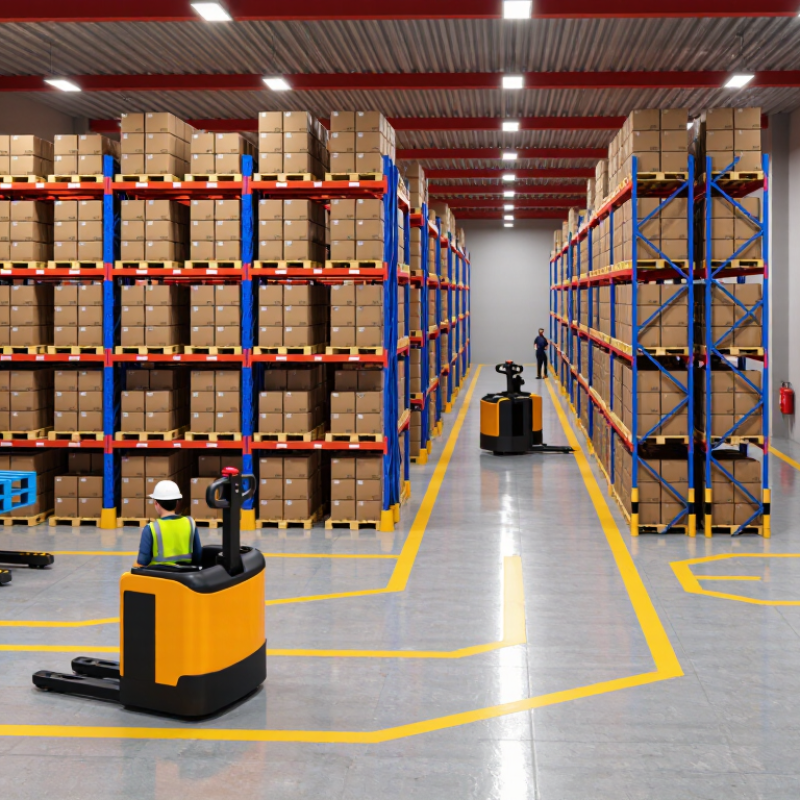
Top Electric Stacker Lift Types for Warehouses

Choosing the right Electric Stacker Lift starts with the warehouse floor, not the product brochure. A narrow aisle, a low-clearance doorway, or a two-shift schedule can change which design makes sense. Walkie stackers suit short trips and compact spaces. Ride-on models help cover longer routes, while straddle and counterbalance types handle different pallet and load requirements. Small details matter. Measure the tightest turn. Check the pallet openings.

MHI and Deloitte’s 2024 Annual Industry Report surveyed supply-chain professionals and identified automation and technology investment as continuing industry priorities. That broad trend does not mean every site needs the same equipment. MHI CEO John Paxton’s industry perspective points to a practical principle: technology investments should address specific operational needs. Applied to stackers, that means comparing load capacity, lift height, travel distance, charging arrangements, and operator visibility against real warehouse tasks. The report provides context, not a substitute for a site assessment.

There is no universal best type. A compact walkie may work well beside a staging lane, yet slow down a high-throughput operation with long travel distances. A taller mast can reach upper levels, but clearance and stability deserve careful review. Safety matters, too. OSHA’s powered-industrial-truck guidance emphasizes operator training and safe operation; equipment selection should support both. Compare specifications with your actual loads and floor conditions. Then test the shortlist in the aisles where it will work. That is where the right choice becomes clear.

Top Electric Stacker Lift Types for Warehouses

What Defines an Electric Stacker Lift

An electric stacker lift is a battery-powered material-handling truck designed to raise palletized loads and place them on racks. Unlike a counterbalanced forklift, many stackers use a tall mast and compact chassis, with the load carried ahead of the drive wheels. Operators may walk behind the unit or ride on a platform, depending on its design. The right description is practical: it lifts, transports, and positions pallets in tighter spaces.

Look closely at the mast, forks, power source, and operator controls. Rated capacity changes with lift height and load center, so a 1,000-kilogram rating does not mean every load can be raised to maximum height. A pallet’s weight, dimensions, and stability all matter. In a narrow aisle, even a small turning-radius difference can affect daily workflow. That detail is easy to miss.

OSHA’s Powered Industrial Trucks eTool reports about 85 fatalities and 34,900 serious injuries annually involving forklifts. Those figures cover powered industrial trucks broadly, not stackers alone, but they underline why operator training and clear visibility matter. MHI’s 2024 Annual Industry Report also notes that 55% of surveyed supply-chain leaders planned to increase technology investment. Automation is growing, yet a simple walk-behind stacker can still fit a small warehouse well. Specs help, but watching it handle a real pallet tells more.

Main Electric Stacker Types Used in Warehouses

Electric stackers move and lift palletized loads without the footprint of many counterbalanced forklifts. Walk-behind models are steered by an operator on foot and work well for short travel distances, low-to-medium lift heights, and compact storage areas. They are often practical for replenishing shelves or unloading near a dock. Space matters.

Ride-on stackers let the operator travel on a small platform, reducing walking on longer routes. Straddle stackers use legs that extend around the pallet, offering stability with compatible pallet sizes. Check the pallet’s bottom-board design: some closed or unusually wide pallets will not fit between the legs. Counterbalance stackers have a rear counterweight instead of straddle legs, so they can handle a broader range of pallet types. That flexibility has a cost: they may need more turning room.

Choosing a type starts with the actual work, not just the rated capacity. Measure aisle width, lift height, travel distance, and the heaviest routine load. Also inspect floor joints and slopes, since small wheels can make rough surfaces uncomfortable and less predictable. A higher lift rating may look reassuring, but load capacity can decrease as the forks rise. It is easy to overlook that detail. Trial the equipment in a representative aisle, and confirm the load chart and operating guidance before purchase.

How Each Stacker Type Handles Loads and Aisles

Top Electric Stacker Lift Types for Warehouses
How Each Stacker Type Handles Loads and Aisles

A walkie stacker suits short trips and compact work areas. The operator walks behind it, guiding pallets between nearby storage locations. Its small turning footprint can help in narrow aisles, but tight corners still need clearance for the load. Space matters. Before choosing one, check the aisle width with a pallet raised only as needed.

Straddle stackers place support legs around the pallet, helping steady loads during lifting. Those legs need a compatible pallet shape and clear floor space. A counterbalanced stacker has no front support legs, so it can handle some closed-bottom pallets and approach shelving more directly. However, its counterweight and turning path may demand wider aisles. Check the pallet. A poor fit can make a capable machine awkward to use.

For longer warehouse routes, a rider stacker lets the operator travel on the machine, reducing walking between picks. It may be less convenient in very confined aisles or during frequent, tiny repositioning moves. Lift height matters, too: a model’s rated capacity can change at higher elevations. Consult its capacity chart for the actual load and lift height. Floor condition, load balance, and operator visibility also affect handling. It is easy to overvalue speed; the best fit may feel slower during a test, yet place loads more reliably.

Warehouse Tasks Suited to Different Stacker Types

Electric walkie stackers work well for short moves between receiving areas, low racks, and nearby staging lanes. An operator walks behind the machine, which helps in tight aisles where a seated truck may feel cumbersome. They are useful for moving a few pallets at a time, not for constant travel across a large facility. Short runs matter.

Straddle stackers suit warehouses handling standard pallets at moderate lift heights. Their legs extend around the pallet, providing support without requiring wide forks beneath it. This can help when replenishing shelves or placing loads into compact storage bays. Check pallet dimensions carefully; unusual or closed-bottom pallets may not fit the legs. That detail is easy to overlook during selection.

Counterbalance stackers can handle loads that cannot be reached by straddle legs, including some closed-bottom pallets. They are useful at loading points and for placing goods on open racks, though their turning space and rated capacity need attention. Reach-style stackers are better suited to narrower aisles and higher storage positions, where controlled forward reach reduces repositioning. Still, aisle width alone does not decide the match: floor condition, load shape, and operator sightlines matter too. A site walk-through may reveal constraints a specification sheet misses. I would verify actual load weights and turning paths before choosing.

Key Factors for Choosing an Electric Stacker Lift

Choosing an electric stacker starts with the load, not the catalogue photo. Record the heaviest pallet, its dimensions, and how often it moves. Check the lift height against the highest rack beam, then confirm the truck can turn in your narrowest aisle. Walk-behind models suit shorter routes and lighter workloads; ride-on versions can reduce operator fatigue over longer runs. Fit the aisle. Also inspect floor joints, ramps, and thresholds: small wheels can make rough surfaces feel surprisingly severe.

Battery capacity should match the shift pattern, including peak periods and charging breaks. Ask suppliers for usable runtime under your actual load, not just an ideal test cycle. Check visibility, tiller reach, emergency controls, and whether operators can clearly see pallet tips at height. OSHA’s Powered Industrial Trucks guidance estimates about 85 fatal accidents and 34,900 serious injuries involving powered industrial trucks each year. That figure covers trucks broadly, not stackers alone, but it underlines why training and stability features matter. Test it loaded. A specification sheet can still miss an awkward corner or a floor slope; trial the unit in the real aisle before deciding.

Top Electric Stacker Lift Types for Warehouses

Representative lift heights vary by model and configuration. Compare your required lift height with load capacity, pallet type, aisle width, and floor conditions before choosing an electric stacker.

Key selection factors: Choose a walkie stacker for straightforward floor-level transport, a straddle stacker for compatible open-bottom pallets, a counterbalance stacker when outriggers are unsuitable, or a reach stacker where greater lift height and compact aisles are priorities.

Ready to talk about water treatment?

Contact us

Please complete this form and we will be in touch