
What Is a Heavy Cargo Drone and How Does It Work?
A Heavy Cargo Drone is more than a large aircraft with extra batteries. It is an engineered logistics system designed to lift, stabilize, and deliver substantial loads with precision. FlyingBasket CEO Michael Kloimstein has described the company’s mission as, “We want to make the impossible possible.” That ambition captures the appeal of heavy-lift aviation, but it also demands careful testing and realistic expectations.
These aircraft usually combine multiple electric motors, reinforced frames, flight-control computers, navigation sensors, and secured cargo platforms. The motors generate lift through coordinated propeller rotation. The flight controller constantly adjusts power when wind changes or the payload shifts. Batteries feed the system, while cameras, positioning technology, and onboard sensors support safer navigation. A ground operator may monitor the route, battery condition, weather, and landing area from a control station.
The technology is powerful. It is not effortless. A heavy load can reduce range, increase energy use, and make strong wind more difficult to manage. Uneven cargo placement can also affect stability. Real deployment is messier than a demonstration video. That matters.
This guide examines what a Heavy Cargo Drone is, how it works, and where its practical value appears. It will consider construction logistics, remote infrastructure, emergency support, and industrial transport, while avoiding exaggerated promises. Manufacturer specifications are useful, but independent trials, maintenance records, operator training, and local aviation requirements deserve equal attention. A claim can look impressive. Field evidence is stronger. The remaining uncertainty is important: battery limits, weather, noise, and operating costs may still shape whether these aircraft become everyday tools or remain specialized machines.
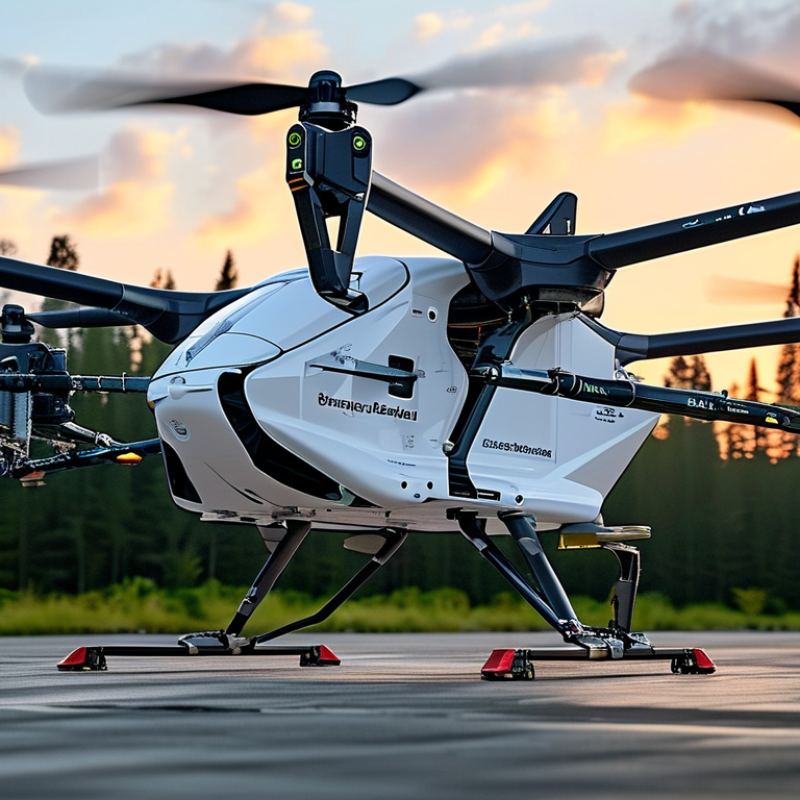
What Defines a Heavy Cargo Drone and Sets It Apart
A heavy cargo drone is defined by mission capacity, not appearance. There is no universal payload threshold. In practice, operators often reserve the term for aircraft carrying tens of kilograms over planned routes. A 50-kilogram payload changes everything. The airframe needs stronger arms, larger motors, redundant power systems, and reinforced landing gear. It also needs reliable loading procedures.
The FAA’s 2024 Aerospace Forecast recorded more than 850,000 commercial drones in the United States. That figure includes many small aircraft, so it does not measure heavy cargo capability. The distinction is operational. A consumer drone may carry a camera. A heavy cargo drone carries medical supplies, tools, or industrial components inside a secured container. Weight matters. So do range, endurance, weather tolerance, and battery safety.
Its working system is highly coordinated. Sensors measure altitude, obstacles, wind, and position. Flight computers adjust motor thrust several times each second. Navigation software follows approved routes while operators monitor the mission. The World Economic Forum’s last-mile report projects urban deliveries could rise by 78% by 2030, increasing pressure on transport networks. Heavy drones may reduce road dependence, but the promise is not automatic. A heavier battery can reduce payload. Stronger hardware can reduce range. The boundary remains fuzzy. Real field testing matters more than impressive specifications.
What Defines a Heavy Cargo Drone and Sets It Apart?
Heavy cargo drones are built to transport substantially larger payloads than conventional small unmanned aircraft. There is no single universal legal threshold, but heavy-lift systems commonly support payloads from about 100 kg to more than 1,000 kg. Their distinguishing features include high payload capacity, reinforced airframes, powerful propulsion, redundant flight systems, and specialized cargo handling.
The Main Systems Behind Heavy-Lift Drone Operation
What Is a Heavy Cargo Drone and How Does It Work?
The Main Systems Behind Heavy-Lift Drone Operation
A heavy cargo drone combines a strong airframe, high-output motors, batteries, sensors, and flight software. Its frame spreads loads across reinforced arms and landing gear. A cargo bay holds medical equipment, industrial parts, or food supplies securely. Some aircraft use electric propulsion, while larger designs may use hybrid power systems.
Power management decides how much weight the aircraft can safely carry. According to the 2024 FAA Aerospace Forecast, the U.S. commercial small-drone fleet could exceed one million aircraft by 2028. Heavy cargo models remain fewer, but their energy demands are much higher. A heavier payload can shorten flight time sharply. Battery temperature matters too. Cold cells may deliver less usable power.
Flight controllers process data from GPS, inertial sensors, radar, and obstacle-detection cameras. These systems help the drone hold position near buildings, wires, and uneven landing areas. The International Civil Aviation Organization identifies detect-and-avoid capability as a key requirement for wider drone integration. Reliable communication links also support route updates and emergency responses. Still, software is not magic. Wind changes, sensor errors, and imperfect weight estimates can defeat a polished plan. Operators must inspect batteries, propellers, fasteners, and cargo restraints before every mission. Small oversights become expensive in the air.
How a Heavy Cargo Drone Prepares and Loads Its Payload
A heavy cargo drone begins payload preparation long before its rotors turn. The crew checks the aircraft’s approved payload limit, battery condition, weather window, and landing zone. They inspect the cargo for damage, moisture, loose parts, and unexpected movement. Every item receives a measured weight and a clear handling note. Small details matter. A box that shifts by a few centimeters can change the aircraft’s center of gravity. Operators compare the planned load with flight-control limits and required safety procedures. If wind rises or visibility falls, the flight should wait, even when the cargo is urgent.
Before lifting, trained personnel secure the payload inside a compatible container or sling. They use rated restraints, protective padding, and approved attachment points. The load must sit near the correct balance position, not merely fit inside the cargo space. Sensors may confirm weight, restraint tension, door status, and temperature. Ground staff stay clear of propeller wash and maintain direct communication with the pilot or flight supervisor. The drone powers up only after the loading zone is clear. A short hover test can reveal vibration, uneven suspension, or unexpected battery demand.
The process is not perfect. A strap can look tight and still need adjustment. Experienced crews know checklists support judgment; they do not replace it. After landing, staff unload only when the rotors stop and the supervisor confirms power isolation. They inspect the drone, restraints, and cargo before the next mission. That record helps engineers identify repeated vibration, uneven wear, or planning errors. It also makes future loading more consistent.
What Is a Heavy Cargo Drone and How Does It Work? - How a Heavy Cargo Drone Prepares and Loads Its Payload
| Category | Dimension or Process | Typical Value or Method | Why It Matters |
|---|---|---|---|
| Definition | Heavy cargo drone | An unmanned aircraft designed to carry substantial external or internal cargo. There is no single worldwide payload threshold. | Payload limits depend on aircraft design, local aviation rules, battery or fuel capacity, and operating conditions. |
| Payload capability | Useful payload range | Approximately 25–200 kg for many specialized heavy-lift multirotor systems; larger aircraft may carry more. | The approved payload must include the cargo container, straps, hooks, and any release mechanism. |
| Aircraft configuration | Lift system | Multiple electric motors and propellers, often arranged as a multirotor layout; some cargo aircraft use fixed wings or hybrid lift systems. | Redundant propulsion and distributed lift can improve stability and control during loading and flight. |
| Energy system | Battery or fuel supply | High-voltage rechargeable batteries are common in electric systems; hybrid or combustion systems may be used for longer endurance. | The aircraft must reserve enough energy for takeoff, the planned route, landing, and required contingencies. |
| Flight endurance | Typical operating time | Roughly 15–60 minutes for many battery-powered heavy-lift missions, depending on payload, weather, route, and reserve policy. | A heavier payload increases power demand and normally reduces flight time and operating range. |
| Payload preparation | Cargo inspection | Confirm weight, dimensions, center of gravity, package condition, contents, and handling requirements. | Accurate cargo information prevents overloading, imbalance, and unsuitable transport of restricted materials. |
| Weight verification | Gross payload mass | Weigh the cargo together with the container, protective materials, attachment hardware, and release equipment. | The combined mass must remain below the aircraft’s approved useful-payload limit. |
| Loading method | Attachment options | Cargo may be placed in a dedicated bay, secured on a platform, suspended from a sling, or connected to a controlled winch. | The selected method affects aerodynamic drag, stability, clearance, and the ability to release the load safely. |
| Center of gravity | Cargo positioning | Place the load close to the aircraft’s designated centerline and secure it against shifting in every direction. | An off-center or moving load can cause excessive control corrections, reduced efficiency, or loss of stability. |
| Securing the load | Retention check | Use rated straps, latches, nets, or locking containers; remove slack and verify that no part can contact propellers or landing gear. | The cargo must remain restrained during acceleration, turbulence, turning, landing, and emergency maneuvers. |
| Aircraft inspection | Pre-flight condition | Inspect propellers, motors, frame, landing gear, batteries, wiring, payload fittings, sensors, and communication links. | A heavy load leaves less performance margin, so small mechanical or electrical faults require attention before launch. |
| Performance calculation | Mission planning | Calculate takeoff mass, expected power use, route distance, wind, temperature, landing zone, and minimum energy reserve. | Payload capacity alone does not confirm that a specific route is safe or achievable. |
| Flight control | Stabilization and navigation | Flight-control software combines inertial sensors, satellite navigation, altitude sensing, motor feedback, and operator commands. | The control system continuously adjusts motor output to maintain position, altitude, attitude, and route accuracy. |
| Takeoff procedure | Initial lift-off | The aircraft increases thrust gradually, rises vertically when appropriate, and pauses to confirm stable flight before continuing. | A controlled lift-off helps reveal shifting cargo, unexpected vibration, or insufficient performance. |
| Delivery and release | Payload placement | The drone lands or hovers at the approved delivery point, then releases the cargo using a supervised latch, winch, or unloading procedure. | Release must prevent uncontrolled swinging, dropping, contact with people, and damage to the delivery area. |
| Safety margin | Operating limits | Do not operate at the published maximum simply because the payload fits; maintain margins for wind, temperature, battery aging, and route changes. | Conservative limits improve controllability, endurance, and the ability to respond to abnormal conditions. |
| Regulatory compliance | Operational authorization | Follow the applicable rules for aircraft registration, pilot or operator qualification, airspace, remote identification, dangerous goods, and flight permissions. | Legal requirements vary by jurisdiction and may be stricter for heavier aircraft, operations beyond visual line of sight, or flights over people. |
How It Navigates, Flies, and Delivers Cargo
What Is a Heavy Cargo Drone and How Does It Work?
A heavy cargo drone is an unmanned aircraft built to lift equipment, supplies, or parcels. It uses electric motors, fuel engines, or a hybrid power system. Its frame must balance strength, weight, and stability. Sensors measure altitude, speed, wind, and distance from obstacles. The flight computer combines these readings with satellite positioning and digital maps. It is not magic. Reliable flight depends on repeated checks and accurate data.
Before takeoff, an operator confirms the cargo weight, battery level, weather, and approved route. During flight, the drone adjusts its propeller speed to resist gusts or changes in load balance. Cameras and radar can support navigation near buildings, trees, or landing zones. If positioning becomes uncertain, the aircraft may hover, return, or land at a planned safe area. Delivery is carefully controlled. The drone slows above the landing point, checks clearance, and lowers the cargo with a winch or places it directly on a secure surface. A route can look perfect on a screen, yet real wind may expose weak planning.
Tips: Keep the load centered and below the stated capacity. Inspect propellers, cables, and landing gear before every mission. Use weather data from more than one source. Keep a trained operator ready to intervene. Test emergency procedures regularly, because small delays can become serious problems. Even experienced teams miss details sometimes. That is why clear checklists matter.
Where Heavy Cargo Drones Are Used and What Limits Them
A heavy cargo drone is an unmanned aircraft designed to move substantial loads through the air. It combines electric motors, flight computers, sensors, and reinforced frames. Unlike small delivery drones, it needs careful weight balancing before takeoff. That balance affects lift, energy use, and landing safety. Operators often inspect batteries, propellers, attachment points, and weather data. Small errors matter.
Construction sites use these aircraft to move tools, cables, and replacement parts across difficult terrain. Farms may use them for equipment transport between distant fields. Remote infrastructure projects can receive supplies without building temporary roads. Emergency teams may also carry approved medical equipment to isolated areas. In practice, landing space remains important. A clear roof or marked ground zone improves control and reduces risks to workers.
The main limitation is the tradeoff between payload and range. More cargo demands more energy, while strong winds increase power consumption. Rain, ice, dust, and extreme temperatures can also reduce reliability. Batteries need charging facilities, and heavy models require trained operators and scheduled maintenance. Regulations, airspace restrictions, and community noise concerns may limit routes. A planned flight can still change suddenly. Human judgment remains necessary, especially near people, cranes, trees, or power lines. Some projects may overestimate savings because they ignore loading time, weather delays, and battery replacement costs.
Article Source:
Ready to talk about water treatment?
Contact us
Please complete this form and we will be in touch