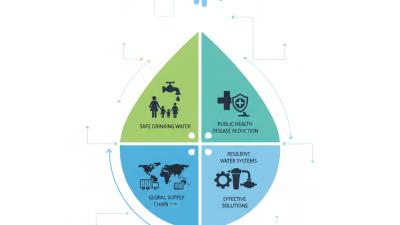
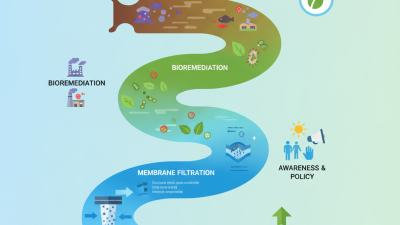
Why Are Water Technologies Important for Global Buyers?
Water technologies are no longer a niche concern for municipal engineers or industrial specialists. They now shape purchasing decisions across cities, factories, farms, hotels, and public facilities. Global buyers must ask more than whether a system removes visible impurities. They need evidence about safety, energy use, maintenance, scalability, and long-term value. A clear glass of water can hide a complicated supply chain.
Modern water technologies include filtration, membrane treatment, disinfection, monitoring sensors, wastewater recovery, and resource-efficient desalination. Each option performs differently under local conditions. Salinity, temperature, electricity access, operator skills, and seasonal demand can change results. A buyer in a coastal factory may prioritize salt removal, while a rural clinic may need simple treatment and dependable replacement parts. Practical experience matters here. A technically impressive system can fail when filters are difficult to source or instructions are unclear.
Responsible procurement combines engineering evidence with supplier transparency. Buyers should review independent testing, performance records, lifecycle costs, cybersecurity controls, and environmental impacts. Site trials can reveal pressure loss, cleaning frequency, and actual water output. Not every promising claim survives daily operation. That is worth admitting. Better decisions come from comparing verified data with field experience, then consulting qualified local professionals. Water security depends on more than equipment. It depends on fit, accountability, and continuous improvement. For global buyers, understanding these technologies is not simply a commercial advantage. It is a practical step toward safer water, stronger operations, and more resilient communities.

Global Water Scarcity: 2.2 Billion People Lack Safely Managed Drinking Water
Water scarcity is no longer a distant environmental concern. The WHO and UNICEF Joint Monitoring Programme reported that 2.2 billion people lacked safely managed drinking water in 2022. Safely managed means water is available when needed, located on premises, and free from contamination. These conditions remain difficult in dry regions, informal settlements, and areas with aging infrastructure.
Technology can help global buyers address these gaps with measurable tools. Treatment systems can reduce pathogens, while membrane filtration can remove salts and selected pollutants. Remote sensors can track flow, pressure, turbidity, and service interruptions. The 2024 United Nations World Water Development Report links water stress with rising competition among households, agriculture, industry, and ecosystems. Buyers therefore need more than equipment. They need verified performance data, local maintenance plans, energy estimates, and clear testing procedures.
Small details matter. A filter may work well in a laboratory but fail when replacement parts arrive late. A sensor may produce precise readings but lose value without trained operators. No system is perfect. It is easy to overvalue technical specifications and underestimate daily operating conditions. Responsible procurement should examine lifecycle costs, worker training, water quality standards, and disposal impacts. The International Water Management Institute has also highlighted the importance of context-specific water management, because one design rarely fits every community. Technology should support dependable access, not simply create an impressive installation.
Water Technology Market Drivers: 3.6 Billion People Face Seasonal Water Shortages
Why Are Water Technologies Important for Global Buyers?
Water Technology Market Drivers: 3.6 Billion People Face Seasonal Water Shortages
Seasonal water shortages are becoming a procurement concern, not a distant environmental issue. The World Meteorological Organization reported that 3.6 billion people faced inadequate water access for at least one month annually in 2022. It projects this figure could exceed 5 billion by 2050. For global buyers, that pressure changes investment priorities. Reliable supply now depends on reuse systems, leak detection, efficient filtration, and decentralized treatment.
The need is especially clear in agriculture and manufacturing. According to the United Nations World Water Development Report 2024, agriculture accounts for roughly 70% of global freshwater withdrawals. A dry season can interrupt production, raise operating costs, and expose weak supplier planning. Buyers should examine recovery rates, energy use, maintenance requirements, and local water quality before choosing equipment. A low purchase price can hide expensive replacements.
Technology is not a magic valve. Treatment systems still need trained operators, stable power, and realistic performance testing. The International Energy Agency also notes that water services consume significant energy, especially when pumping and desalination are involved. This creates a difficult trade-off. Better water security may increase electricity demand. Buyers should request verified data, lifecycle costs, and seasonal performance records. Some projects will still fail because planning was too optimistic. That uncomfortable risk deserves attention.
Why Are Water Technologies Important for Global Buyers? - Water Technology Market Drivers: 3.6 Billion People Face Seasonal Water Shortages
| Market driver |
Verified global data |
Reference period |
Why it matters to global buyers |
Source |
| Seasonal water shortages |
Approximately 3.6 billion people face inadequate access to water for at least one month each year. |
2018 estimate |
Creates recurring demand for storage, treatment, reuse, monitoring and distribution technologies. |
UNESCO World Water Development Report 2022 |
| Projected growth in water stress |
More than 5 billion people could face water shortages by 2050 if current trends continue. |
Projection for 2050 |
Long-term infrastructure planning favors scalable, efficient and climate-resilient water systems. |
UNESCO World Water Development Report 2020 |
| Limited access to safe drinking water |
2.2 billion people lacked safely managed drinking-water services. |
2022 estimate |
Supports demand for purification, disinfection, filtration, water-quality testing and decentralized systems. |
WHO/UNICEF Joint Monitoring Programme, 2024 update |
| Global sanitation gap |
3.5 billion people lacked safely managed sanitation services. |
2022 estimate |
Increases the need for wastewater treatment, sludge management, resource recovery and hygienic sanitation solutions. |
WHO/UNICEF Joint Monitoring Programme, 2024 update |
| Agricultural freshwater demand |
Agriculture accounts for approximately 70% of global freshwater withdrawals. |
Global estimate |
Efficient irrigation, leak reduction, treated-water reuse and water measurement can reduce operating and resource costs. |
FAO AQUASTAT |
| Wastewater treatment opportunity |
Only about 56% of domestic wastewater flows were safely treated worldwide. |
2022 estimate |
Reveals a substantial market for biological treatment, membrane systems, disinfection and digital process control. |
United Nations SDG 6 Data, 2024 |
| Water losses in distribution networks |
Non-revenue water commonly ranges from 20% to 50% in many urban utilities, depending on local conditions. |
Industry benchmark range |
Encourages procurement of leak detection, pressure management, smart metering and network rehabilitation technologies. |
World Bank water-utility performance literature |
| Climate-related variability |
Water-related disasters have increased in frequency over recent decades, while droughts and floods create simultaneous risks for water availability and quality. |
Long-term global trend |
Global buyers increasingly prioritize modular, remote-monitoring and disaster-resilient technologies with flexible deployment. |
World Meteorological Organization, State of Global Water Resources |
Note: Figures are global estimates or projections reported by the cited international organizations. Definitions, geographic coverage and reference years may differ by indicator.
Treatment Technologies: Desalination Supplies Over 100 Million Cubic Metres Daily
Why Are Water Technologies Important for Global Buyers?
Desalination now supplies more than 100 million cubic metres of water daily worldwide. Recent International Desalination Association inventory data places global capacity above this threshold. Global Water Intelligence’s DesalData also shows continued capacity growth across seawater and brackish-water projects. These figures explain why treatment technologies matter to international buyers. They are no longer emergency tools. They support cities, industries, farms, and drought-prone regions.
A practical buyer studies the complete treatment chain, not only the membrane unit. Pretreatment reduces suspended solids and protects equipment from fouling. Energy recovery can lower electricity demand in reverse-osmosis systems. The International Energy Agency reports that water services already consume significant energy globally, making efficiency a commercial concern. Buyers should also examine recovery rates, maintenance access, chemical requirements, and real-time water-quality monitoring. Small design choices become large operating costs.
Brine remains difficult.
The United Nations Environment Programme has warned that poorly managed brine can increase local salinity and affect marine ecosystems. Therefore, procurement teams need verified discharge studies and clear environmental controls. Performance claims should be checked against site-specific feedwater, seasonal temperature, and electricity conditions. A catalogue number may look precise, yet actual output can fall during storms or algae events. This is where experience matters. Desalination is powerful, but it is not effortless, and global buyers should question whether every project has honestly priced its energy, waste, and long-term skills requirements.
Industrial Water Efficiency: Agriculture Uses About 70% of Global Freshwater Withdrawals
Why Are Water Technologies Important for Global Buyers?
Agriculture uses about 70% of global freshwater withdrawals, although the share differs across regions. Much of this water supports irrigation, livestock, and food processing. For global buyers, this figure makes agricultural efficiency a procurement priority, not a distant environmental concern. Water shortages can interrupt harvests, raise production costs, and weaken supply reliability.
Practical technologies can reduce these risks. Drip irrigation delivers water near plant roots instead of flooding entire fields. Soil-moisture sensors help farmers irrigate when crops need water, not by habit. Flow meters can expose damaged pipes, blocked filters, and leaking canal joints. Small losses add up. In greenhouses, controlled dosing and water recirculation may lower freshwater demand while protecting crop quality.
However, efficiency claims require careful verification. A sensor can be installed badly. Recycled water may require treatment, testing, and strict local approval. Digital systems also depend on electricity, maintenance, and trained workers. Buyers should request measured water-use data, installation records, and clear performance conditions. Results should be compared against a defined baseline, such as cubic meters used per kilogram of produce. Field assessments often reveal uncomfortable gaps between promised savings and daily operation. That is useful evidence, not failure. Better purchasing decisions come from examining seasonal data, soil conditions, crop type, and local water rules rather than trusting a single percentage.
Buyer Evaluation Criteria: Assess Quality, Energy Use, Compliance, and Lifecycle Cost
Why Are Water Technologies Important for Global Buyers?
Quality should be tested at the outlet, not promised in a brochure. The WHO Guidelines for Drinking-water Quality recommend monitoring microbial, chemical, and operational risks through defined control plans. This matters because the WHO/UNICEF Joint Monitoring Programme reported that 2.2 billion people lacked safely managed drinking water in 2022. Buyers should request independent test results, maintenance records, and performance data under changing feedwater conditions. Clear evidence beats polished claims.
Energy use deserves equal attention. The International Energy Agency estimates that water services consume around 4% of global electricity, with demand rising as treatment becomes more advanced. Compare energy per cubic metre, recovery rate, standby consumption, and peak-load behavior. A system may look efficient during commissioning but perform differently after membranes foul or pumps wear. That uncomfortable possibility should be included in the evaluation.
Compliance is not a final checkbox. Confirm documentation, operator safety controls, discharge limits, and local certification requirements before purchase. Lifecycle cost should include installation, chemicals, replacement parts, labor, monitoring, and disposal. The World Bank’s procurement guidance supports evaluating total cost rather than purchase price alone. My practical view is simple: ask suppliers to model five to ten years using conservative assumptions. Those assumptions may be wrong. Review them openly, then test the most expensive risk first.
Why Are Water Technologies Important for Global Buyers?
Buyer Evaluation Criteria: Assess Quality, Energy Use, Compliance, and Lifecycle Cost
The chart shows representative electricity-use ranges reported for common water treatment configurations.
Actual performance varies with feedwater quality, salinity, temperature, recovery rate, pretreatment, and operating conditions.
Lower energy use can reduce operating cost and carbon emissions, but buyers should evaluate it together with treatment quality,
regulatory compliance, reliability, and total lifecycle cost.
Quality
Removal performance, treated-water consistency, and process reliability.
Energy Use
Electricity required per cubic metre of water produced.
Compliance
Ability to meet applicable drinking-water, reuse, or discharge standards.
Lifecycle Cost
Capital cost, energy, chemicals, maintenance, replacement, and disposal.