
How to Source Organic Sweet Potato Powder in 2026?
Sourcing Organic Sweet Potato Powder in 2026 requires more than finding a supplier with an attractive product page. Buyers must connect organic certification, processing controls, ingredient quality, and dependable logistics. The powder should show a clear origin, consistent color, mild natural sweetness, and a clean production history. A bright orange sample may look impressive. It can still hide uneven drying or weak traceability.
Plant scientist Dr. Mary Ann Lila has said, “Plants are the best chemical factories in the world.” That perspective matters when evaluating sweet potato powder. Its value depends on the crop, variety, soil, harvest timing, and processing conditions. Experienced buyers should request current certificates, batch-specific certificates of analysis, pesticide-residue results, microbiological testing, moisture data, and heavy-metal screening. They should also confirm whether the supplier controls farming, drying, milling, and packing.
Details matter. Ask for a production sample before approving large volumes. Compare the sample with the declared specifications, including mesh size, flavor, solubility, and color. Check packaging strength, storage temperature, minimum order quantity, and realistic lead times. A supplier’s answers should be consistent across sales, quality, and technical teams. That consistency builds trust.
Still, no sourcing checklist removes every risk. Certificates can expire, samples can vary, and seasonal crops may change the final powder. I would not treat “organic” as a complete quality guarantee. Responsible procurement combines document review, supplier audits, independent testing, and honest communication. This guide explains how to assess Organic Sweet Potato Powder suppliers carefully, while recognizing that practical judgment remains essential.
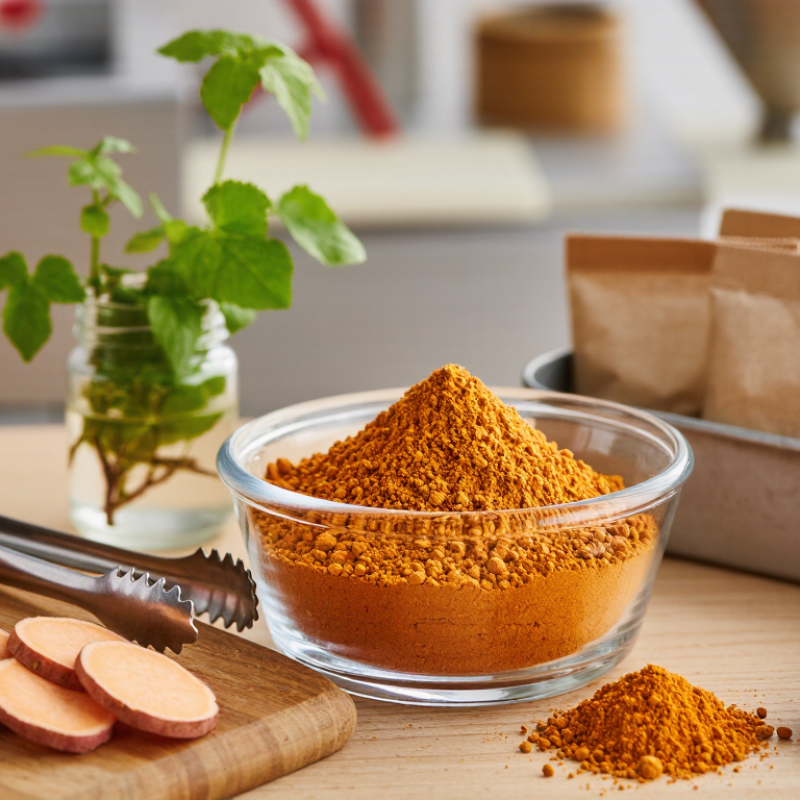
Understanding Organic Sweet Potato Powder and Its 2026 Market
In 2026, organic sweet potato powder is moving beyond niche pantry use. It now supports beverages, bakery mixes, nutrition products, and some baby-food formulations. Demand comes from clean-label expectations, natural sweetness, bright orange color, and convenient storage. Yet “organic” is not a complete quality description. Buyers should verify certification scope, farming records, processing facilities, and shipment documents. A current certificate matters. So does traceability. Each lot code should connect the powder with its farm region, harvest period, and production batch.
Professional sourcing teams usually request a detailed specification before discussing price. It should cover moisture, particle size, color, flavor, microbiological limits, heavy metals, pesticide residues, and allergen controls. A certificate of analysis should match the actual lot, not an old sample. Request retained samples and test them after opening. Powder can cake in humid warehouses. It may also lose color under heat and light. Small details matter. Packaging, inner liners, pallet conditions, minimum order quantities, and lead times affect the real landed cost. Buyers should compare seasonal supply, freight risks, and crop variability rather than selecting the lowest quotation.
A reliable supplier should explain how roots are washed, sliced, dried, milled, and protected from cross-contact. Factory audits, independent laboratory results, and corrective-action records build confidence. Still, paperwork does not prove perfect performance. One missed moisture check can affect a shipment. This deserves honest review. Start with a pilot order, define acceptance criteria, and record sensory results in the finished product. The best source is not always the cheapest. It is the supplier that repeatedly delivers consistent powder with evidence behind every claim.
How to Source Organic Sweet Potato Powder in 2026?
Global Sweet Potato Production Baseline for Organic Powder Sourcing
China and Malawi represent the largest production bases among the selected sweet potato-producing countries, while Tanzania, Nigeria, Ethiopia, and Uganda provide additional sourcing options. For 2026 procurement, production scale should be evaluated together with organic certification, residue testing, traceability, drying technology, moisture control, and powder specifications.
Data source: FAOSTAT Crops and Livestock Products database, 2022 sweet potato production data; figures are rounded estimates. Production volume is not equivalent to certified-organic production or sweet potato powder output.
Defining Quality, Certification, and Product Specification Requirements
How to Source Organic Sweet Potato Powder in 2026?
Defining Quality, Certification, and Product Specification Requirements
Organic demand continues to expand. FiBL’s 2024 World of Organic Agriculture reported 96.4 million hectares of organic farmland globally in 2022. However, organic labeling alone does not define powder quality. Ask suppliers for current organic certificates, transaction certificates, and full chain-of-custody records. Requirements differ by market, including USDA organic rules and EU Regulation 2018/848. Verify the certificate directly with the issuing authority.
Product specifications should be measurable and practical. Define sweet potato variety, country of origin, drying method, particle size, moisture, color, odor, and shelf life. Request microbiological results, pesticide-residue screening, heavy-metal testing, and mycotoxin analysis. Codex Alimentarius provides internationally recognized food safety guidance, but local limits may be stricter. A recent certificate of analysis is useful. It is not enough.
Tips: Approve a retained sample before signing a contract. Compare its color, aroma, flowability, and rehydration behavior after storage. Request three production-lot reports, not one attractive result. Check whether testing covers the finished powder, rather than only fresh roots. Packaging also matters; moisture barriers protect quality during humid transport.
The Organic Trade Association reported that U.S. organic sales reached 67.6 billion dollars in 2023. That growth may encourage rushed claims. I would not accept “organic” as a substitute for identity testing. Suppliers can make mistakes, and buyers can overlook them. Build a specification sheet with acceptance limits, audit rights, corrective actions, and a clear recall process.
Finding and Evaluating Reliable Organic Powder Suppliers
How to Source Organic Sweet Potato Powder in 2026?
Finding a reliable organic sweet potato powder supplier requires more than comparing prices. Start by checking certification documents, production scope, and certificate expiry dates. The certificate should cover the exact powder, facility, and intended market. Ask for evidence. Do not guess.
Request a recent certificate of analysis from the same commercial batch you may purchase. It should show moisture, microbiological results, pesticide residues, heavy metals, mesh size, and additives. Confirm whether the powder contains only sweet potato. A clean sample is useful, but it cannot prove long-term consistency. Test an unopened sample through an independent laboratory when the order is important.
Traceability is equally valuable. A dependable supplier should identify the farm region, harvest period, processing site, lot number, and storage conditions. Ask how they control heat, humidity, and cross-contact during drying and milling. Poor storage can create clumps, color changes, or stale flavors. Request packaging photos and a realistic shelf-life statement.
Communication also reveals operational maturity. Reliable teams explain minimum order quantities, lead times, shipping documents, complaint procedures, and recall steps without vague promises. Compare several suppliers using the same checklist. One strong conversation is not enough. Even a careful evaluation may miss seasonal variation. Review the first shipment closely, record its color and aroma, and compare future lots against that reference.
How to Source Organic Sweet Potato Powder in 2026? - Finding and Evaluating Reliable Organic Powder Suppliers
| Evaluation Dimension | Recommended Requirement for Organic Sweet Potato Powder | Typical Benchmark or Specification | Documents or Tests to Request | Priority |
|---|---|---|---|---|
| Organic Certification | The supplier and the processing facility should be covered by a valid organic certificate recognized in the destination market. | Certification should match the intended market, such as USDA organic requirements for the United States or EU organic requirements for the European Union. | Current organic certificate, certificate scope, issuing body, validity date, product list, and transaction certificate when required. | Critical |
| Raw Material Origin | Sweet potatoes should be traceable to approved organic farms or documented collection areas. | Lot-level traceability from farm or grower group through washing, slicing, drying, milling, and packing. | Farm or grower records, harvest information, lot codes, approved-supplier list, and traceability exercise results. | Critical |
| Processing Method | The powder should be produced using a controlled drying and milling process without unauthorized additives, carriers, or preservatives. | Processing conditions should be documented, with product specifications clearly stating whether the powder is raw, heat-treated, or otherwise processed. | Process flow chart, ingredient statement, allergen statement, equipment-cleaning records, and change-control procedure. | Critical |
| Moisture Content | Low and consistent moisture helps reduce caking, microbial growth, and shelf-life problems. | A practical commercial target is often approximately 5% to 8%, subject to the agreed specification and processing method. | Recent certificate of analysis, moisture test method, batch results, and accelerated shelf-life or stability data where available. | High |
| Particle Size | Particle size should suit the intended use, including beverages, bakery products, nutritional mixes, or instant formulations. | Common commercial specifications may include approximately 60 to 100 mesh, but the final requirement should be confirmed during application testing. | Sieve analysis, particle-size distribution, sample specification, and application trial results. | Medium |
| Microbiological Safety | The product should meet the microbiological limits required by the destination country and the buyer's food-safety program. | Testing commonly includes total plate count, yeast and mold, coliforms, and pathogens such as Salmonella; exact limits depend on jurisdiction and end use. | Lot-specific microbiological report from an accredited laboratory, sampling plan, sanitation records, and environmental-monitoring summary. | Critical |
| Contaminant Control | Organic status does not remove the need to control heavy metals, pesticide residues, mycotoxins, and foreign materials. | Results should comply with applicable legal limits in the importing market; risk-based testing frequency should be documented. | Multi-residue pesticide report, heavy-metal analysis, mycotoxin results where relevant, foreign-material controls, and corrective-action records. | Critical |
| Color, Aroma, and Flavor | The powder should have a clean sweet-potato aroma and a characteristic color without burnt, musty, chemical, or fermented notes. | Color may range from cream to orange or reddish-orange depending on cultivar and processing; the approved reference sample should define acceptance. | Retained reference sample, sensory evaluation form, color measurement if used, and batch-to-batch comparison records. | Medium |
| Food-Safety System | The facility should operate a documented food-safety management system appropriate for dried agricultural ingredients. | Evidence may include HACCP-based procedures, good manufacturing practices, internal audits, recall procedures, and supplier-approval controls. | Food-safety certificate where applicable, audit report, HACCP plan, recall test, sanitation program, and pest-control records. | High |
| Packaging and Storage | Packaging should protect the powder from moisture, oxygen, light, pests, and cross-contamination during transport and storage. | Food-contact packaging with a suitable moisture barrier; storage should generally be cool, dry, clean, and protected from direct sunlight. | Packaging specification, food-contact declaration, storage conditions, palletization details, and transport-protection plan. | High |
| Shelf Life | The supplier should provide a defined shelf life supported by product and packaging data. | Many dried vegetable powders are assigned approximately 12 to 24 months when properly packed and stored, but the approved period must be supported by evidence. | Shelf-life statement, stability data, recommended storage temperature and humidity, and “best before” coding procedure. | High |
| Minimum Order Quantity | The minimum order should be compatible with forecast demand, trial requirements, and inventory capacity. | Commercial minimums vary widely by packing format and production schedule; confirm sample, pilot, and regular-order quantities separately. | Written quotation, sample policy, pilot-order terms, production lead time, and price-break schedule. | Medium |
| Batch Consistency | Repeated lots should remain consistent in moisture, particle size, color, flavor, microbiology, and nutritional values. | Use an approved specification with defined tolerances and require a certificate of analysis for every commercial lot or an agreed testing frequency. | Three or more consecutive batch reports, retained samples, specification sheet, deviation records, and corrective-action procedure. | High |
| Commercial Reliability | The supplier should communicate clearly, disclose changes promptly, and provide realistic production and shipping schedules. | Evaluate response time, sample accuracy, on-time delivery history, export experience, and ability to support documentation requests. | Supplier questionnaire, reference checks without relying solely on marketing claims, delivery records, complaint log, and service-level agreement. | High |
Comparing Pricing, Sampling, Logistics, and Supply Agreements
How to Source Organic Sweet Potato Powder in 2026?
In 2026, sourcing organic sweet potato powder should begin with clear specifications, not attractive quotes. Request the organic certificate, current COA, country of origin, moisture level, mesh size, and microbiological results. A 1 kg sample can reveal color, sweetness, solubility, and sediment after mixing. Test it in your actual recipe. Powder that performs well in water may behave differently in baked products.
Compare delivered cost, not only the price per kilogram. Ask whether the quote includes packaging, inspection, inland transport, duties, and port charges. Request pricing at two volumes, such as 500 kg and 2,000 kg. This reveals volume breakpoints and prevents false savings. Sampling may be free, but courier fees and laboratory testing still affect the decision. My practical mistake was treating a low sample price as a low sourcing cost.
Tips: Confirm production lead time, pallet dimensions, storage conditions, and temperature exposure during transit. Ask for shipment photos before dispatch. A supply agreement should define specifications, approved testing methods, tolerances, replacement terms, payment stages, and delivery responsibilities. Include a small trial order before committing to annual volumes. Forecasts can change. Build flexibility into the agreement.
Verifying Compliance Before Importing Organic Sweet Potato Powder
How to Source Organic Sweet Potato Powder in 2026?
Verifying Compliance Before Importing Organic Sweet Potato Powder
Before importing, verify the supplier’s organic certificate directly with the issuing certification body. The certificate should cover the product, processing site, and relevant export activity. Check its expiry date and scope carefully. A valid certificate is not enough if it excludes powdered ingredients. Request transaction documentation when the destination market requires it. Keep matching lot numbers across invoices, certificates, and packaging.
Ask for a recent certificate of analysis for every production lot. It should address pesticide residues, heavy metals, microbiological limits, moisture, and foreign matter. Confirm the testing laboratory’s competence and the sampling date. Organic status does not guarantee food safety. That distinction matters.
I have seen buyers accept a clean-looking report without checking whether the tested lot matched the shipment. That small error can create costly delays.
Review traceability records from sweet potato farms through drying, milling, and packing. Confirm whether shared equipment is cleaned and documented between conventional and organic production. Check ingredient declarations, country-of-origin rules, carton markings, and required import documents with the destination authority. Requirements may change during 2026, so written confirmation is safer than informal advice. Request retained samples and inspect color, aroma, particle size, and seal quality before loading. Powder can absorb moisture quickly. A strong file still needs practical judgment.
Article Source:
Ready to talk about water treatment?
Contact us
Please complete this form and we will be in touch