What is Stainless Steel Capillary Tubing and Its Applications?
stainless steel capillary tubing is a vital component in many industries. Its unique properties, such as corrosion resistance and high strength, make it ideal for various applications. This type of tubing is particularly useful in medical devices, automotive systems, and chemical processing.
In the medical field, stainless steel capillary tubing is essential for precise fluid delivery. It is often used in syringes and other diagnostic equipment. This reliability is crucial for patient safety. In automotive systems, its durability enhances performance and longevity. It can withstand high pressures, making it a preferred choice for fuel lines and hydraulic systems.
Despite its advantages, users must recognize the limitations. Stainless steel capillary tubing can be challenging to work with. Proper handling and knowledge of installation techniques are necessary. Missteps can lead to failures in critical applications. Understanding the properties and appropriate uses ensures that stainless steel capillary tubing performs as intended in various settings.
What is Stainless Steel Capillary Tubing?
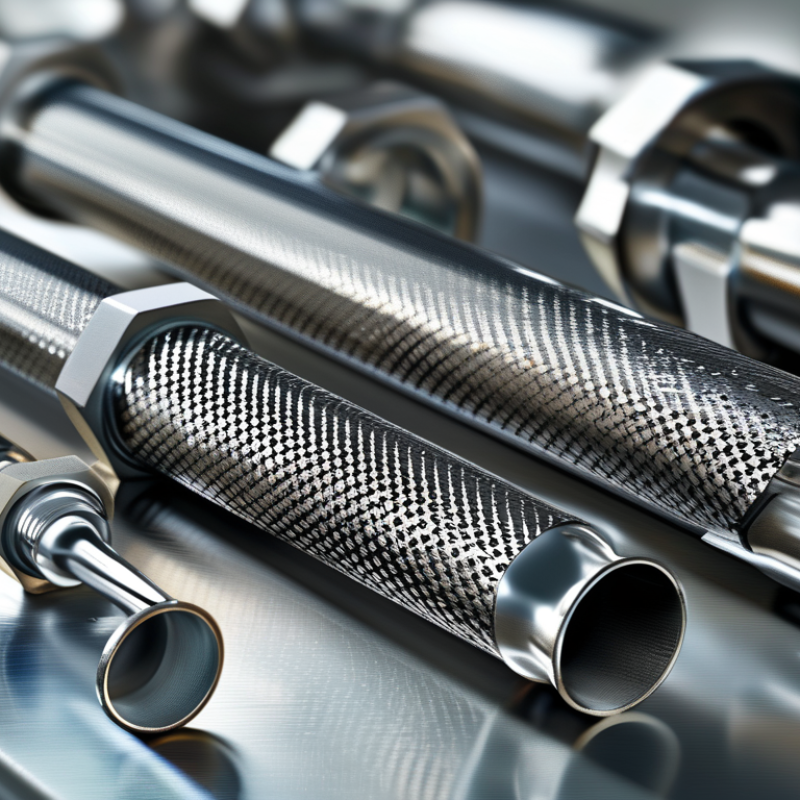
Stainless steel capillary tubing is a type of small-diameter tubing, often used in various industrial applications. Its size usually ranges from 0.5 mm to 3 mm in inner diameter. This tubing is produced using a process that gives it unique mechanical properties. It is known for its flexibility and resistance to corrosion, making it suitable for harsh environments.
In many cases, capillary tubing is used in medical devices. Its narrow size allows for precise measurement and delivery of fluids. This is critical in applications such as catheter systems. The tubing's smooth interior surface helps maintain the integrity of the transported fluids. This minimizes reactions or contaminations.
Furthermore, capillary tubing finds applications in instrumentation and sensors. It is commonly employed in thermocouples. The ability to transfer heat efficiently is crucial in many systems. However, users must consider the tubing's sensitivities. For instance, improper handling can lead to deformation. This would affect performance and reliability. Hence, awareness of the limitations is essential for effective use.
Stainless Steel Capillary Tubing Applications
Properties and Characteristics of Stainless Steel Capillary Tubing
Stainless steel capillary tubing is known for its precision and durability. Its small diameter is ideal for intricate applications. Often, the tubing has an outer diameter ranging from 0.5 mm to 10 mm. This makes it suitable where space is at a premium. The wall thickness is usually thin, allowing for a lightweight product. However, this also means careful handling is required.
One key characteristic is corrosion resistance. Stainless steel naturally forms a protective oxide layer. This layer prevents rust, making it ideal for harsh environments. The tubing can maintain integrity in both high-temperature and low-temperature settings. Additionally, it is easy to clean and sterilize, making it valuable in medical applications. However, the precision involved in manufacturing often leads to variability. This raises questions about consistency in quality.
The thermal and electrical conductivity of stainless steel capillary tubing is another important factor. It efficiently transfers heat, making it useful in heat exchangers. However, it may not suit every application due to its conductivity level. Engineers need to assess their specific needs before selection. The balance between properties like flexibility and strength should be carefully considered. The choice impacts overall performance in its intended use.
Common Manufacturing Processes for Capillary Tubing
Capillary tubing is known for its precision and small diameter. Common manufacturing processes for capillary tubing include drawing, pilgering, and extrusion. Drawing involves pulling a larger tube through a die to reduce its diameter. This method allows for significant control over wall thickness. It is essential for creating accurate dimensions for critical applications.
Pilgering is another vital process. It combines the principles of rolling and drawing. A tube is passed through a set of rollers to achieve the desired shape. This process can accommodate various materials, making it versatile. However, inadequate control during pilgering might lead to uneven wall thickness. Thus, precision is critical in this phase.
Extrusion is often used for producing capillary tubing. In this method, metal is forced through a shaped die to create the tube. While efficient, the quality of the finished product relies on careful temperature regulation. If the temperature is too high, it can lead to defects. Each method has advantages and disadvantages. It is crucial to weigh these when selecting a manufacturing process.
Applications in Medical Devices and Healthcare Equipment
Stainless steel capillary tubing is essential in medical devices. Its small diameter allows for precise fluid delivery and flow regulation. This tubing is used in syringes, infusion pumps, and catheter systems. Its biocompatibility ensures safety when in contact with bodily fluids.
In healthcare equipment, stainless steel capillary tubing plays a crucial role. It is found in diagnostic instruments and analytical devices. The resistance to corrosion adds to its reliability in various environments. This increases the longevity of medical devices, reducing maintenance needs.
Tips: When selecting capillary tubing, consider the application environment. Ensure the diameter meets your specific needs for fluid transfer. Regular inspection is crucial to prevent unexpected failures.
Uses in the Aerospace and Automotive Industries
Stainless steel capillary tubing is small-diameter tubing known for its strength and resistance to corrosion. In the aerospace industry, this tubing is crucial for various applications. It is often used in hydraulic systems, where high pressure and reliability are essential. Engineers value capillary tubing for its ability to perform under extreme conditions. However, installation and maintenance can sometimes be challenging, requiring specialized skills.
In automotive applications, capillary tubing plays a vital role in fuel and fluid delivery systems. It transfers fuels efficiently while resisting wear and heat. The small size allows for flexibility in design, making it easier to integrate into complex systems. Yet, the very characteristics that make it desirable also pose difficulties. For instance, ensuring proper connections can be tricky, and any slight error may lead to leaks.
Thus, while stainless steel capillary tubing demonstrates significant benefits, engineers must carefully consider its limitations. A thorough understanding of the material and its properties is key to ensuring successful implementation. Continuous learning and adaptation in using this tubing can lead to improved outcomes in both aerospace and automotive sectors.
What is Stainless Steel Capillary Tubing and Its Applications? - Uses in the Aerospace and Automotive Industries
| Dimension | Material | Application | Industry | Advantages |
| 1.0 mm OD x 0.5 mm ID | 316 Stainless Steel | Fuel and hydraulic lines | Aerospace | Corrosion resistance, high strength |
| 0.8 mm OD x 0.4 mm ID | 304 Stainless Steel | Instrumentation tubing | Automotive | Precision dimensions, durability |
| 1.5 mm OD x 1.0 mm ID | 321 Stainless Steel | Cooling and heating systems | Aerospace | High-temperature resistance, lightweight |
| 2.0 mm OD x 1.2 mm ID | 316L Stainless Steel | Fluid transfer lines | Automotive | Weldability, very low carbon content |