
Top 10 Exothermic Welding Powder Suppliers Worldwide
Grounding connections rarely attract attention, yet their reliability can affect the safety and service life of electrical installations. Exothermic Welding Powder supports permanent metal-to-metal connections used in grounding and bonding systems. Unlike a bolted joint, a properly executed weld does not depend on a loose fastener staying tight. Small details matter.
Demand for resilient electrical infrastructure gives this product category broader relevance. The International Energy Agency’s 2023 report, Electricity Grids and Secure Energy Transitions, says annual grid investment must rise from about $300 billion to more than $600 billion by 2030 in its net-zero pathway. That figure describes grid investment, not exothermic welding sales. Still, it points to the scale of network upgrades where dependable grounding connections may be required. IEEE 837-2014 also provides a recognized framework for qualifying permanent connections used in substation grounding.
This guide examines ten suppliers worldwide, focusing on practical factors buyers can verify: alloy and powder specifications, mold compatibility, packaging, technical documentation, quality controls, and regional support. Product labels alone do not tell the whole story. Ask for current datasheets and installation guidance, then check that the selected charge matches the conductor, mold, and application. Field conditions differ. A supplier’s broad catalog is useful, but it cannot replace engineering review or a controlled installation process. The comparison is a starting point, not a universal ranking; availability and performance can vary by market, project requirements, and operator experience. That caveat matters.
Exothermic Welding Powder: Composition and Core Function
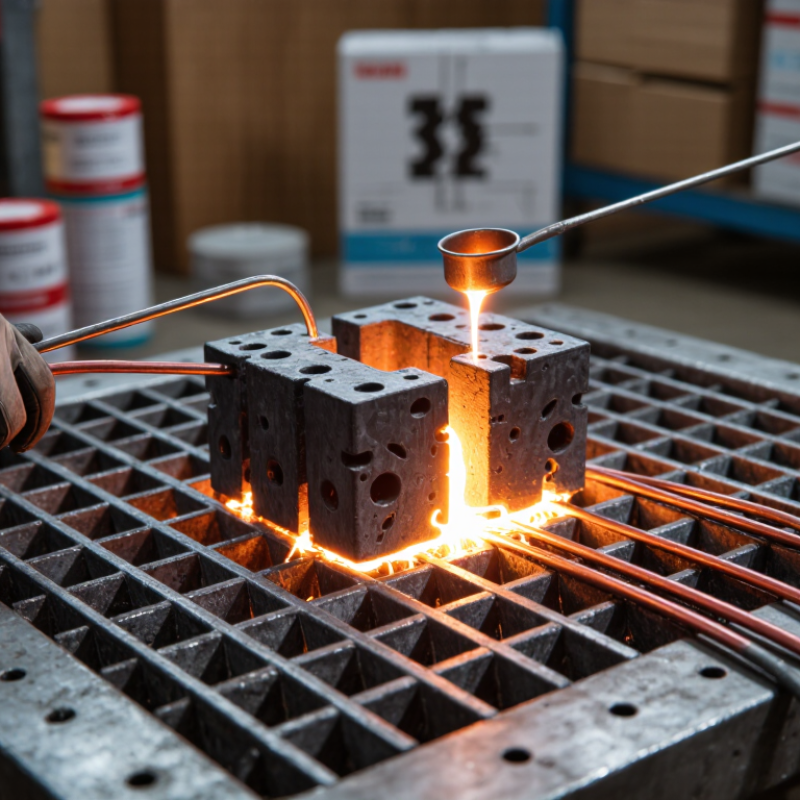
Exothermic welding powder is a measured blend, not a single metal dust. Many copper-connection formulations combine copper oxide with aluminum. The aluminum removes oxygen from the oxide, releasing intense heat and producing molten copper. Small amounts of alloying ingredients may adjust flow or suit a particular connection. Exact proportions vary by application, so product specifications matter.
That detail matters. In a prepared graphite mold, the molten metal fills the cavity and bonds with cleaned conductors as it cools. The finished joint conducts electricity without a separate clamp or external power source. In practical work, a dry charge, correctly sized mold, and conductors seated at the right depth all affect the result. Damp powder or a poor fit can compromise the weld.
The word “powder” can sound simple; the process is not. Composition must match the conductor materials and connection geometry. When comparing suppliers, check technical data, batch consistency, and clear storage guidance rather than relying on a generic description. A neat formula on paper cannot guarantee a sound joint in the field. That is an imperfect truth worth remembering.
How to Evaluate Exothermic Welding Powder Suppliers
A dependable exothermic welding powder supplier should provide batch-level certificates, not just a polished catalogue. Check composition tolerances, moisture controls, particle consistency, shelf life, and lot traceability. Ask for test records showing completed connections under the conditions your project expects, including conductor size and mould type. IEEE Std 837-2014 offers a relevant qualification framework for permanent grounding connections. Request evidence that the supplier’s test setup matches your installation; a report using different conductors may not answer your real question.
Quality systems matter, but certification is only a starting point. The ISO Survey 2022 recorded 1,265,216 valid ISO 9001 certificates worldwide. That figure reflects certified organizations, not verified powder quality. Ask to see the current certificate’s scope, issuing body, and audit status, then compare it with actual inspection records. Paper is not proof.
Evaluate practical support, too. Can technical staff explain how to prevent damp powder, poor mould fit, or incomplete weld fill? Ask for clear storage guidance and a sample inspection checklist. Check delivery consistency and whether replacement batches preserve the same specifications. I would still question any supplier offering impressive test claims without raw results, dates, or sample details. A small trial weld, inspected for shape and continuity, can reveal gaps that a sales call cannot.
Top 10 Exothermic Welding Powder Suppliers Worldwide
Choosing among leading suppliers worldwide takes more than comparing price lists. Check whether each supplier provides powder compatible with your conductor metals, mold design, and connection size. Request current technical data, safety information, and batch identification. These details help crews select the correct charge and trace products if a connection fails inspection. Small details matter. Regional stock and realistic delivery estimates also count, especially when a project schedule is tight.
Tips: Ask for a sample specification and confirm storage conditions before ordering. Keep powder dry, sealed, and clearly labeled. Follow the supplier’s instructions, site procedures, and required protective measures during use.
A capable supplier should answer practical questions without relying on vague claims. Ask how it handles batch consistency, packaging damage, and technical support across different regions. If possible, review documented quality controls and talk with users who have installed similar connections. A glossy catalog alone proves little. Even established suppliers may have service gaps or long lead times, so verify details before committing. The best choice depends on the application, local availability, and the quality of support—not a global ranking by itself.
Comparing Supplier Products, Certifications, and Global Reach
Comparing exothermic welding powder suppliers starts with the product itself. Check whether the powder is specified for the conductor metals, connection type, and mold design used on your project. Product sheets should state compatible materials, package size, storage conditions, and expected weld characteristics. In field evaluations, crews also notice practical details: clear batch labels, sealed packaging, and instructions that are easy to follow beside a work area. Small differences matter. Ask for test reports and traceability details, not just a polished catalog. Certifications can support confidence, but their scope needs checking. An ISO 9001 certificate, for example, concerns a quality management system; it does not by itself certify every powder or weld. Verify document dates and issuing bodies.
Global reach means more than shipping to many countries. Suppliers with regional stock, responsive technical support, and clear delivery estimates may reduce project delays. Confirm how they handle local documentation, language needs, and replacement shipments. A fast quote is useful, but it cannot replace technical answers. Request references for comparable applications and ask how reported product issues are investigated. No comparison is perfectly neat: supplier data may use different test conditions, and buyers can overlook that. A side-by-side review should record formulation options, certification scope, lead times, support availability, and the evidence behind each claim.
Exothermic Welding Suppliers: Relevant Qualification Standards
Edition years of selected standards relevant to evaluating connection products and grounding or lightning-protection applications.
IEEE 837-2014 covers permanent connections used in substation grounding. IEC 62561-1:2023 covers lightning-protection connection components, and IEC 62305-3:2024 addresses physical damage to structures and life hazards from lightning. These are standard edition years—not supplier ratings or evidence that any supplier holds a certification. Confirm product scope and certification directly with each supplier.
Applications, Handling, and Safe Storage of Welding Powder
Exothermic welding powder is used to create permanent electrical connections in grounding grids, utility networks, rail systems, and industrial facilities. The reaction produces intense heat and molten metal, so the work requires trained personnel and a controlled area. A clean, dry connection matters. Dust, oil, or moisture can compromise the joint and create hazards.
During handling, follow the product’s safety data sheet and work instructions. Wear suitable eye, hand, and body protection, and keep bystanders clear. Use adequate ventilation, especially in enclosed spaces. Keep powder away from moisture, sparks, and unintended heat sources. Never combine materials or reuse opened contents unless the supplier explicitly permits it. Small shortcuts can have serious consequences.
For storage, keep containers sealed, clearly identified, and in a cool, dry place. Separate them from water and incompatible materials, and inspect packaging for damage before use. Exact temperature and shelf-life limits vary, so check the current documentation rather than relying on a general rule. When comparing worldwide suppliers, look for batch traceability, accessible safety documents, consistent packaging, and knowledgeable technical support. Supplier pages can sound reassuring; still, missing storage details deserve a follow-up question.
| Supplier Profile | Typical Supply Market | Common Applications | Handling Guidance | Safe Storage |
|---|---|---|---|---|
| Electrical grounding materials producer | Global supply through regional electrical and infrastructure distributors | Grounding grids, earth conductors, and electrical bonding connections | Use only the powder specified for the connection mold and conductor combination. Keep the work area dry and follow the product safety data sheet (SDS). | Keep sealed in its original, clearly labeled packaging in a dry, secure place away from moisture and ignition sources. |
| Railway and transit connection specialist | Rail infrastructure markets in Asia-Pacific, Europe, and the Americas | Rail bonds, track-circuit connections, and selected rail-to-conductor joints | Confirm that the welding system and charge are approved for the rail material and application. Restrict access during setup and ignition. | Store in a dry area and protect from accidental damage, contamination, and unauthorized access. |
| Industrial welding consumables supplier | Industrial markets served by welding and maintenance supply networks | Industrial grounding, bonding, and selected copper-to-copper connections | Keep powder away from water, oils, and other contamination. Use the specified charge size and the prescribed ignition method. | Maintain the package closed between uses and follow the storage temperature and shelf-life information on the label or SDS. |
| Utility infrastructure supplier | Electric power transmission and distribution projects worldwide | Substation grounding, buried conductors, and utility bonding connections | Check that conductors and molds are clean and dry. Use suitable eye, hand, and body protection as required by the SDS and site procedures. | Keep inventory indoors in a dry, ventilated, controlled-access location, separated from incompatible materials as directed by the SDS. |
| Telecommunications grounding supplier | Telecom and data infrastructure projects across regional markets | Grounding and bonding for equipment shelters, towers, and communications sites | Use trained personnel and the correct mold-and-charge combination. Do not use damp, damaged, or unidentified powder. | Retain the original packaging and product identification; protect stock from rain, condensation, and direct contact with the ground. |
| Renewable energy project supplier | Solar, wind, and energy-storage construction markets | Grounding networks and bonding connections at renewable energy installations | Assess wind, weather, and nearby combustible materials before work. Follow the approved work method and site-specific fire precautions. | Keep sealed packages in a dry storage cabinet or room, away from heat and incompatible substances identified in the SDS. |
| Mining and heavy-industry supplier | Mining, processing, and heavy-industry regions worldwide | Grounding and bonding for industrial equipment and site electrical systems | Apply site permit and hazard-control requirements. Prevent powder spills and keep the work location clear of unnecessary personnel. | Store securely in the designated dry area, with access limited to trained personnel and stock managed according to label guidance. |
| Construction electrical distributor | Regional construction and electrical distribution channels | Building grounding systems, service connections, and infrastructure bonding | Verify product identity and condition before use. Follow the manufacturer’s instructions for mold preparation, ignition, and post-weld inspection. | Protect unopened stock from moisture and physical damage; keep packaging labels available for safe handling and traceability. |
| Marine and port infrastructure supplier | Coastal infrastructure, port, and marine electrical markets | Grounding and bonding work on port facilities and selected marine infrastructure | Prevent exposure to seawater, spray, and damp work surfaces. Use only where the selected welding system is suitable for the materials and conditions. | Store in a dry, sheltered location away from salt spray and condensation; reseal or replace packaging only as the product instructions allow. |
| Regional specialist welding distributor | Local markets supplied through qualified electrical or industrial distributors | Maintenance and installation work across grounding, rail, utility, and industrial sectors | Request the current SDS and application instructions. Do not mix charges from different products or substitute components without approval. | Use first-in, first-out stock rotation where appropriate, observe shelf-life guidance, and dispose of expired or damaged product according to local rules. |
This is an illustrative guide to supplier categories and common market applications, not a ranked directory of named companies. Product composition, compatibility, hazards, and storage limits vary; always follow the specific product label, SDS, and applicable workplace regulations.
Ready to talk about water treatment?
Contact us
Please complete this form and we will be in touch