
Top Graphite Iron Suppliers for Global Buyers

Choosing reliable Graphite Iron suppliers requires more than comparing prices or browsing polished catalogues. Global buyers must examine metallurgy, production consistency, inspection systems, and delivery performance. A supplier may offer attractive grades, yet fail to control graphite shape, nodularity, hardness, or machining stability. Small differences can cause cracks, vibration, leakage, or premature wear in finished components.

John Campbell, a respected casting researcher and author, stated, “The quality of a casting is determined by the quality of the metal.” This principle remains practical today. Buyers should request heat analysis, mechanical test reports, metallographic images, and traceable batch records. Factory audits can reveal important details, including furnace condition, inoculation practice, mold control, and the cleanliness of working areas. Ask for evidence. Do not rely on promises alone.

This guide reviews leading Graphite Iron suppliers for international purchasing teams. It considers gray iron, ductile iron, and compacted graphite iron capabilities. It also examines tooling support, dimensional control, packaging, export experience, and responsiveness after delivery. Certifications such as ISO 9001 may strengthen confidence, but certification alone proves little. Verify its scope and current validity.

The comparison is not perfect. Supplier rankings can change with capacity, raw material costs, or regional disruptions. Buyers should still test samples before approving regular production. A heavy casting may look sound outside while hiding internal porosity. That risk deserves attention. The strongest supplier is not always the cheapest. It is the one that repeatedly delivers documented quality, stable communication, and dependable performance under real operating conditions.
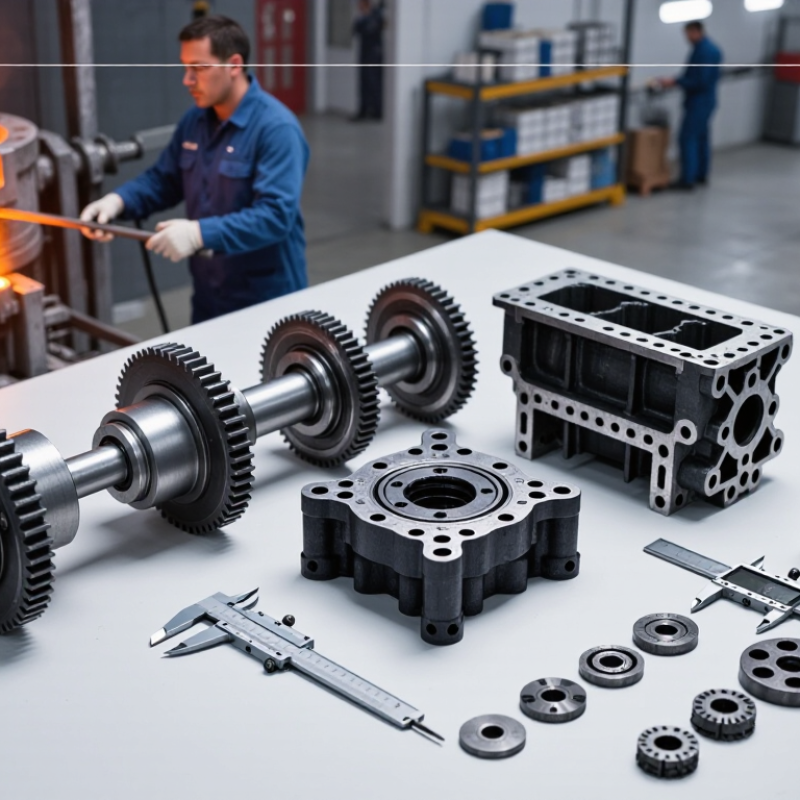
Top Graphite Iron Suppliers for Global Buyers

Graphite Iron: Definition, Properties, and Industrial Applications

Top Graphite Iron Suppliers for Global Buyers

Graphite iron is a family of cast irons containing carbon in graphite form. In gray iron, graphite appears as flakes within an iron-carbon matrix. This structure gives excellent vibration damping, thermal conductivity, and machinability. It also creates stress concentrations, so gray iron is less resistant to shock than ductile iron. The distinction matters during procurement.

ASTM A48/A48M classifies gray iron by minimum tensile strength, from 20 to 60 ksi. Higher grades usually require tighter control of chemistry, cooling rate, and inoculation. According to the World Foundry Organization’s 2023 census, global foundry output reached about 109.7 million tonnes in 2022. That scale reflects graphite iron’s continuing role in engine blocks, brake discs, pump housings, machine bases, and pipe components. These parts often need stable dimensions, strong wear resistance, and economical machining.

Production details deserve close inspection. A supplier should provide heat numbers, chemical analysis, hardness results, and metallographic evidence of graphite shape and distribution. ISO 185 also supports gray cast iron designation through tensile strength classes. However, strength data alone can mislead. A casting may meet its grade while showing porosity, uneven cooling, or weak surface quality. I have found that section thickness changes performance more than many buyers expect. The same melt can behave differently near a thin wall and a heavy boss. Thermal cycling remains another overlooked risk. Test coupons are useful, but they cannot fully represent every casting geometry.

Graphite Iron: Typical Tensile Strength by Standard Grade

Graphite iron is cast iron containing carbon in graphite form. Gray cast iron uses graphite flakes, while ductile cast iron uses graphite nodules, giving it higher tensile strength and toughness. The chart shows typical minimum tensile-strength requirements for selected EN 1561 and EN 1563 grades.

Industrial relevance: Gray iron is commonly used for engine blocks, brake discs, machine beds, and housings. Ductile iron is widely used for pipes, gears, suspension components, pressure parts, and heavy-duty machinery.

Key Criteria for Evaluating Global Graphite Iron Suppliers

Top Graphite Iron Suppliers for Global Buyers

Key Criteria for Evaluating Global Graphite Iron Suppliers

Choosing a graphite iron supplier requires more than comparing quoted prices. Ask for the exact iron grade, chemical range, tensile strength, hardness, and machining allowance. Reliable suppliers provide material certificates for every production batch. These records should match independent test results when critical parts are involved. Review their melting equipment, furnace capacity, and temperature-control methods. A supplier with stable process controls usually delivers more consistent castings. Still, equipment lists can look impressive on paper.

Inspect the supplier’s quality system and traceability process. Can each casting be linked to a heat number, mold, inspection record, and shipment? Request sample dimensional reports, surface-finish data, and defect photographs. Audits, video inspections, and third-party testing can reveal details that sales documents miss. Production experience matters, especially for thin walls, complex cores, and repeated orders. Ask how the team handles porosity, shrinkage, and machining distortion. Their answer should be practical, not vague. Delivery performance also deserves attention. Check packaging strength, export documentation, response time, and replacement procedures. I have learned that the cheapest quotation may hide costly rework. No supplier is perfect. What matters is whether problems are reported early and corrected with evidence. A small pilot order can test consistency before a larger commitment. Even then, review the results carefully.

Leading Supplier Regions and Their Manufacturing Strengths

Top Graphite Iron Suppliers for Global Buyers

Leading Supplier Regions and Their Manufacturing Strengths

China remains a major sourcing region for graphite iron castings. World Steel Association data reports about 1.005 billion tonnes of crude steel output in 2024. This scale supports broad foundry capacity, flexible tooling, and competitive component pricing. Many factories combine melting, molding, heat treatment, and machining under one roof. Buyers should still verify graphite shape, nodularity, hardness, and dimensional records. High volume does not guarantee stable metallurgy.

India produced approximately 149.6 million tonnes of crude steel in 2024, according to the same industry report. Its supplier base is expanding across automotive, agricultural, pump, and industrial machinery applications. Lower labor costs can support cost-sensitive programs, while local engineering teams often handle pattern adjustments quickly. Process consistency may vary between plants. A detailed audit matters.

Germany, Japan, and other established manufacturing regions offer strong process control and documentation. Germany produced roughly 37.2 million tonnes of crude steel in 2024, while Japan reached about 84.0 million tonnes, according to World Steel Association statistics. Their foundries commonly emphasize automated molding, laboratory testing, and traceable batches. ISO 1083 remains a useful reference for ductile iron specifications. The best supplier is not always the cheapest. A practical evaluation should compare tensile results, casting rejection rates, machining capability, furnace capacity, and delivery performance. Sample reports can look excellent, yet production behavior may differ.

Top Graphite Iron Suppliers for Global Buyers - Leading Supplier Regions and Their Manufacturing Strengths
Supplier Region Common Graphite Iron Categories Relevant Standards and Grades Typical Manufacturing Strengths Quality and Engineering Capabilities Best Fit for Global Buyers
China Gray cast iron, ductile iron, compacted graphite iron, and engineered castings for machinery, automotive, pumps, valves, and infrastructure. ISO 185, ISO 1083, EN 1561, EN 1563, ASTM A48, and ASTM A536 are commonly referenced depending on the buyer specification. Broad foundry capacity, green-sand and resin-sand molding, automated molding lines, large-format castings, and integrated machining for export programs. Spectrochemical analysis, tensile and hardness testing, dimensional inspection, radiographic or ultrasonic testing for specified applications, and pattern-making support. High-volume purchasing, multi-part programs, cost-sensitive castings, and buyers requiring a wide range of sizes and material grades.
India Gray and ductile iron castings for agricultural equipment, commercial vehicles, pumps, construction machinery, pipes, and general engineering. ISO 185, ISO 1083, EN 1561, EN 1563, ASTM A48, and ASTM A536 are frequently used in international quotations. Competitive production costs, green-sand and no-bake molding, ductile iron production, medium-to-large castings, and strong machining subcontracting networks. Chemical analysis, metallography, tensile testing, hardness testing, dimensional reports, process documentation, and inspection plans for export orders. Cost-conscious buyers, agricultural and industrial equipment programs, replacement parts, and medium-to-high volume recurring orders.
Germany and Central Europe Precision gray iron, ductile iron, austempered ductile iron, and compacted graphite iron for automotive, machine tools, energy, and industrial systems. EN 1561, EN 1563, EN 16079, ISO 185, ISO 1083, and customer-specific European specifications. Highly automated molding, controlled metallurgy, precision pattern systems, complex-core production, thin-wall castings, and close integration with machining operations. Strong process traceability, metallurgical control, dimensional capability studies, non-destructive testing, and structured quality-management systems. Safety-critical or technically demanding parts, low-to-medium volume programs, tight tolerances, and buyers prioritizing engineering support and documentation.
Japan High-consistency gray iron, ductile iron, compacted graphite iron, and precision castings for automotive, robotics, hydraulics, and industrial equipment. JIS G 5501, JIS G 5502, ISO 185, ISO 1083, and customer-controlled technical specifications. Stable automated production, precise mold control, thin-wall capability, complex internal passages, and strong repeatability for established part designs. Detailed inspection records, metallographic verification, dimensional control, process monitoring, and disciplined change-management procedures. Automotive and industrial buyers seeking consistent quality, complex geometries, long-term supply stability, and strict process control.
South Korea Gray and ductile iron castings for automotive components, pumps, compressors, shipbuilding equipment, and general industrial machinery. KS standards, ISO 185, ISO 1083, EN 1561, EN 1563, and ASTM specifications where required by export customers. Automated molding, controlled production for automotive applications, complex-core casting, and strong machining and assembly support. Material certification, dimensional inspection, metallography, non-destructive testing, and production traceability for regulated industrial supply chains. Automotive, marine, hydraulic, and industrial buyers requiring reliable production control and proximity to major Asian logistics routes.
United States and Canada Gray and ductile iron castings for municipal infrastructure, pumps, valves, heavy equipment, rail, agriculture, and industrial machinery. ASTM A48, ASTM A536, ASTM A842, AWWA specifications, ISO 185, and ISO 1083 are commonly applicable by product type. Large-capacity foundries, heavy-section castings, ductile iron components, no-bake molding, centrifugal casting for applicable products, and domestic finishing services. Strong compliance documentation, casting simulation, dimensional inspection, mechanical testing, radiographic testing, and traceability for infrastructure applications. North American standard compliance, heavy industrial parts, municipal projects, replacement components, and buyers valuing local technical support.
Brazil Gray and ductile iron castings for agricultural machinery, automotive components, pumps, construction equipment, and mining-related machinery. ABNT, ISO 185, ISO 1083, ASTM A48, ASTM A536, and customer-specific automotive or industrial requirements. Large agricultural and industrial casting experience, green-sand and resin-sand processes, ductile iron production, and machining for regional supply chains. Chemical and mechanical testing, metallography, dimensional inspection, pattern engineering, and production documentation for export and domestic programs. Agricultural, mining, infrastructure, and heavy-equipment buyers seeking access to South American production and raw-material markets.
Turkey and Eastern Europe Gray iron, ductile iron, and engineered castings for machinery, automotive suppliers, pumps, valves, construction equipment, and energy systems. EN 1561, EN 1563, ISO 185, ISO 1083, ASTM A48, and ASTM A536 for projects requiring international equivalence. Flexible batch production, green-sand and resin-sand molding, medium-to-large castings, pattern development, and access to European transport corridors. Material certificates, mechanical testing, dimensional inspection, machining support, and third-party inspection arrangements for export orders. European buyers seeking shorter lead times, flexible production volumes, competitive pricing, and conformity with EN-based specifications.
Buyer note: Actual capability varies by foundry and part design. Before placing an order, confirm the required graphite morphology, matrix structure, hardness, tensile strength, dimensional tolerances, heat-treatment condition, inspection plan, surface treatment, packaging, and applicable standard edition.

Quality Standards, Customization, and Export Capabilities

Top Graphite Iron Suppliers for Global Buyers

Reliable graphite iron suppliers demonstrate quality through measurable production controls. Experienced buyers should request chemical composition reports, hardness results, tensile data, and microstructure examinations. These records help confirm graphite distribution, matrix structure, and casting consistency.

Traceability matters. Each batch should connect to a heat number, inspection report, and approved drawing.

Customization requires more than changing dimensions. Suppliers should review wall thickness, machining allowances, surface finish, drainage features, and operating temperatures. Clear technical drawings reduce costly misunderstandings.

A capable engineering team can suggest pattern changes when they improve strength or reduce casting defects. However, recommendations should remain evidence-based. Some suppliers promise too much before reviewing the design.

Export capability also reflects operational maturity.

Look for secure packaging, moisture protection, accurate labeling, and dependable document control. Export files may include commercial invoices, packing lists, certificates of origin, and inspection documents.

Suppliers should explain production lead times and communicate delays early. That sounds basic, yet it is often overlooked. Buyers can strengthen reliability by requesting sample inspections, production photographs, and independent testing when risks are high.

No supplier gets every detail right. The strongest partners acknowledge limitations and correct them transparently.

How Global Buyers Can Select the Right Graphite Iron Supplier

Top Graphite Iron Suppliers for Global Buyers

How Global Buyers Can Select the Right Graphite Iron Supplier

Selecting a graphite iron supplier requires more than comparing unit prices. Define the required grade, tensile strength, hardness range, wall thickness, and machining tolerance. Ask for recent chemical analysis and mechanical test reports. The documents should match the supplied batch, not an older production run. Small details matter.

A reliable supplier explains its melting, molding, heat-treatment, and inspection processes clearly. Request sample castings with visible identification marks. Check critical dimensions with your own measuring equipment. Review defect rates, surface quality, and repair practices. Photos help, but physical samples reveal more. They are often less flattering.

Production capacity should match your forecast without weakening quality control. Confirm tooling ownership, maintenance schedules, packaging methods, and shipping responsibilities. A supplier should also provide traceability from raw materials to final inspection. During an audit, observe the testing area and ask how failed parts are handled. Vague answers deserve caution.

Price is only one part of the decision. Compare total costs, including tooling changes, machining waste, delays, and rejected castings. A small supplier may offer better communication, while a larger facility may provide stronger continuity. Neither assumption is always correct. Use a trial order with clear acceptance criteria before signing a long-term agreement. Check communication speed, corrective action quality, and delivery consistency during that trial.

Ready to talk about water treatment?

Contact us

Please complete this form and we will be in touch