What Are the Top Water Testing Kits for Drinking Water?
Clean-looking water can still contain contaminants, while an unusual taste does not identify its cause. The right water testing kits for drinking water help households check specific concerns, from lead and nitrate to chlorine, pH, or hardness. But no single kit measures everything. That detail matters.
Home kits vary widely. Test strips can provide quick readings, while color-comparison tests may require careful lighting and timing. Mail-in laboratory kits take longer but can offer more detailed analysis for selected substances. Each option has limits. Results depend on the contaminants tested, the sample collected, and the instructions followed. A missed waiting time or poorly rinsed container can affect a reading.
This guide compares common kit types, explains what their results can—and cannot—tell you, and highlights practical details to check before buying. Look for clear instructions, stated detection ranges, and independent performance information relevant to your concern. For example, a kit marketed for metals may not test for bacteria. Read the label closely.
Small print counts.
A home result is useful evidence, not a complete diagnosis of water quality. If a reading is concerning, inconsistent, or difficult to interpret, consider having a qualified laboratory analyze a fresh sample. That extra step may feel inconvenient. Still, guessing from taste or appearance is less reliable.
What Drinking Water Test Kits Measure
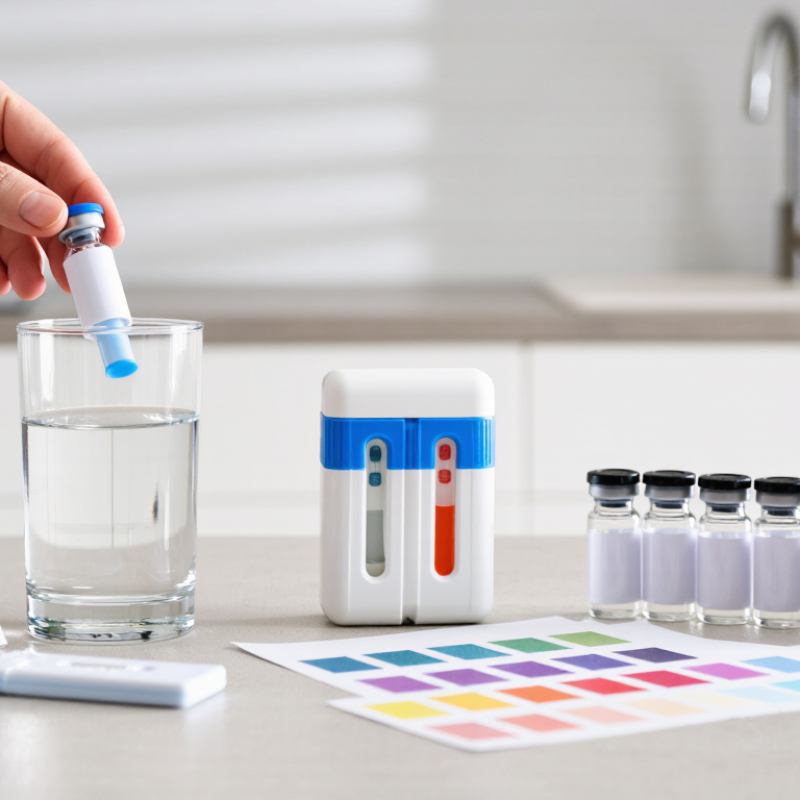
Drinking water test kits measure different things, so the label matters more than the number of tests advertised. Many kits check pH, hardness, chlorine, and total dissolved solids. These readings can help explain a metallic taste, scale on a kettle, or a strong pool-like smell. They do not, by themselves, prove water is safe to drink.
Other kits screen for specific contaminants, such as lead, copper, nitrate, or bacteria. Some use color-changing strips; others collect a sample for analysis. A strip may give a quick indication, but lighting, timing, and color judgment can affect the result. Small details matter. A lead test also may not capture every change in water quality between the tap and the sample.
Choose tests based on the water source and a specific concern, not a long list of vague promises. Private wells may call for different checks than treated municipal water. Read the instructions closely, including sample preparation and detection limits. A negative result is not always definitive. If a result is unexpected, or a health concern remains, consider a qualified laboratory test and ask what the kit does not measure. I would not treat one quick reading as the whole story.
Main Types of Drinking Water Test Kits
Drinking water kits generally fall into four groups: single-parameter tests, multi-parameter strips, digital meters, and laboratory mail-in kits. Strips can screen for basics such as hardness, chlorine, or nitrate, while digital meters commonly measure pH or total dissolved solids. Useful, but limited. A meter reading cannot identify every contaminant. CDC estimates that more than 23 million U.S. households rely on private wells, where owners are responsible for checking water quality.
Mail-in kits send samples to a laboratory and can test for bacteria, metals, or other specified contaminants. They usually provide more detailed results than color strips, though sample collection and shipping matter. The U.S. Environmental Protection Agency recommends that private-well users test yearly for coliform bacteria, nitrates, total dissolved solids, and pH. A kit should clearly list its analytes, detection limits, and any laboratory accreditation. A neat color chart can still leave room for doubt.
Tips: Match the kit to a known concern, such as nearby agricultural activity or older plumbing. Follow the sampling instructions closely; a clean bottle and correct tap preparation can affect results. Use strips for screening, not as proof that water is safe. If results look unusual, repeat the test or consult a certified laboratory.
| Kit Type | Common Tests | How Results Are Read | Typical Strengths | Important Limitations | Best Suited For |
|---|---|---|---|---|---|
| Test strips | Depending on the kit: pH, hardness, free or total chlorine, nitrate, nitrite, and selected other parameters. | A color change is compared with a chart, usually after a specified wait time. | Fast, simple to use, and useful for checking several basic water characteristics at home. | Results are generally approximate. Color matching, lighting, sample handling, and the kit’s detection range can affect interpretation. A strip tests only the substances listed for that kit. | Routine screening and basic checks of treated tap water or private-well water. |
| Liquid-reagent color kits | Often pH, chlorine, hardness, or other specific parameters, depending on the reagents supplied. | Reagents are added to a water sample; the resulting color is compared with a scale. | Can provide a clear, parameter-specific screening result without electronic equipment. | Usually tests a limited set of parameters. Accurate timing, clean containers, and careful color comparison are important. | Checking a known concern or monitoring a specific water-treatment step. |
| Digital meters | Common meters measure pH, electrical conductivity, or total dissolved solids (TDS); the measured property depends on the instrument. | A probe or sensor displays a numerical reading. | Convenient for repeated measurements and tracking changes over time. | A TDS or conductivity reading does not identify which substances are present and cannot establish that water is safe to drink. Meters may require calibration and maintenance. | Monitoring changes in water characteristics or checking equipment performance, not identifying specific contaminants. |
| Lead screening kits | Lead, using the specific sample type and method stated in the kit instructions. | May use a color-change reaction or a sample sent for laboratory analysis. | Provides a focused way to investigate a potential lead concern. | Methods and detection limits vary. A home screening result may not replace laboratory testing, especially when making health or remediation decisions. | Following up on a suspected lead issue; use a qualified laboratory for dependable confirmation. |
| Bacteria presence/absence kits | Commonly total coliform bacteria and, in some kits, E. coli. | A sample is mixed with a prepared medium and observed after the specified incubation period. | Can screen for bacterial indicators that may signal a problem with a private well or water system. | Requires careful sterile sampling and correct incubation. A negative result applies only to the sample tested and does not rule out every pathogen or contamination event. | Screening untreated well water or checking after a well repair, flood, or other contamination concern. |
| Mail-in laboratory test kits | Panels may include metals, nitrate, minerals, volatile organic compounds, or microbial indicators; the available panel varies. | A sample is collected according to instructions and sent to a laboratory for analysis and a written report. | Can test a broader range of substances and provide measured results with method-specific reporting. | Costs more and takes longer than an immediate home test. Results depend on correct collection, preservation, shipping, and the analytes included in the selected panel. | Investigating a specific concern, testing private-well water, or obtaining more detailed results. |
How to Compare Test Kits for Accuracy and Coverage
A useful drinking-water test kit should match the question you need answered. Check which substances it measures, such as lead, nitrate, bacteria, or chlorine, rather than relying on a long list of vague claims. Small details matter. Look for the detection limit and measurement range; a kit may not detect very low concentrations, even when it lists a substance on the box. Compare its instructions with your water source and intended use. A private well, for example, may need different testing from treated municipal water.
Accuracy depends on more than the test itself. Review whether the kit uses a laboratory analysis or an at-home color strip, and check for independent performance information where available. Note the sample volume, required waiting time, storage directions, and expiration date. A rushed reading under dim kitchen lighting can be hard to interpret. Coverage also has limits: one kit rarely checks every relevant contaminant. That can mislead. Repeat a test when results seem unexpected, and contact a qualified laboratory or local water professional if a health concern remains. Test kits are useful screening tools, not a complete guarantee of safety. Samples can be contaminated by an unclean faucet or container, so follow collection instructions carefully.
What Are the Top Water Testing Kits for Drinking Water?
Compare common test-kit types by the approximate number of water-quality analytes they may cover.
These representative counts are approximate: coverage varies by test and analytes may differ between kits. A higher count does not mean greater accuracy. Accuracy depends on the specific contaminant, detection limit, interferences, and correct use. For health-related decisions or results near a regulatory limit, confirm with a qualified laboratory.
How to Collect a Water Sample and Run a Test
Choose a kit that names the contaminants it measures; a general screen cannot rule out every hazard. Read its instructions before opening the sample bottle. Use the specified tap, and note whether the test requires water after flushing or a first-draw sample. These details matter, especially for lead. Wash your hands, remove the faucet aerator only if instructed, and avoid touching the bottle’s inside or cap. Keep it simple. Label the sample with the collection time and location.
For a mailed laboratory test, follow its exact collection and shipping rules; some bottles contain preservatives and should not be rinsed. For strips, dip them for the stated time, then compare colors under good light at the specified reading interval. Timing matters. A 2023 U.S. Geological Survey assessment found that about one in five domestic wells had at least one contaminant above a health-based benchmark. That finding concerns private wells, not every household tap, but it shows why a single broad screening kit may be insufficient. Treat a home result as an initial screen, not a diagnosis. If a result is concerning—or the kit does not test for a contaminant you suspect—use a qualified laboratory and its recommended sampling protocol. A reassuring color can still leave questions.
How to Interpret Results and Decide on Next Steps
Interpreting drinking-water test results starts with understanding a kit’s limits. A color strip may screen for pH, hardness, chlorine, or nitrate, but it cannot identify every contaminant. Read the scale in good light and compare it at the time stated in the instructions; a late reading can shift. Record the date, water source, and result, then compare the reported level with current public-health guidance. “Not detected” does not always mean zero. It may mean the amount was below the kit’s detection range. Small differences matter.
Treat an unexpected result as a reason to verify, not panic. Repeat the test with a fresh sample, following the instructions closely: use a clean glass, flush the tap if directed, and avoid touching the container’s inside. For concerns involving lead, bacteria, or other health-related contaminants, contact an accredited drinking-water laboratory or local health department. Home kits are screening tools, not substitutes for laboratory analysis. If a result exceeds a health-based guideline, use a safe alternative water source while seeking expert advice. Keep the test report and ask which follow-up test is appropriate. The process can feel fussy, and even a careful person might misread a shade, but confirmation is more useful than guessing.
Related Posts
-
2026 How to Improve Water Treatment Systems for Better Efficiency?
-
How to Perform Water Testing for Safe Drinking Water
-
2026 Best Water Testing Methods for Homeowners to Ensure Safe Drinking Water?
-
China Top 10 Cooling Water Treatment Chemicals Suppliers
-

2025 How to Choose the Best Water Plant for Your Home Garden
-
What is Water Equipment and How Does It Function?
Ready to talk about water treatment?
Contact us
Please complete this form and we will be in touch