What is Water Treatment Systems and How Do They Work for Your Needs
Water treatment systems play a crucial role in ensuring the quality and safety of water for various uses, from residential consumption to industrial applications. As concerns about water quality continue to grow, understanding how these systems work becomes increasingly important. Water treatment systems encompass a wide range of processes and technologies designed to remove contaminants, purify water, and enhance its usability. By tailoring these systems to meet specific needs, individuals and organizations can effectively address a variety of water issues, ensuring a reliable supply of clean water.
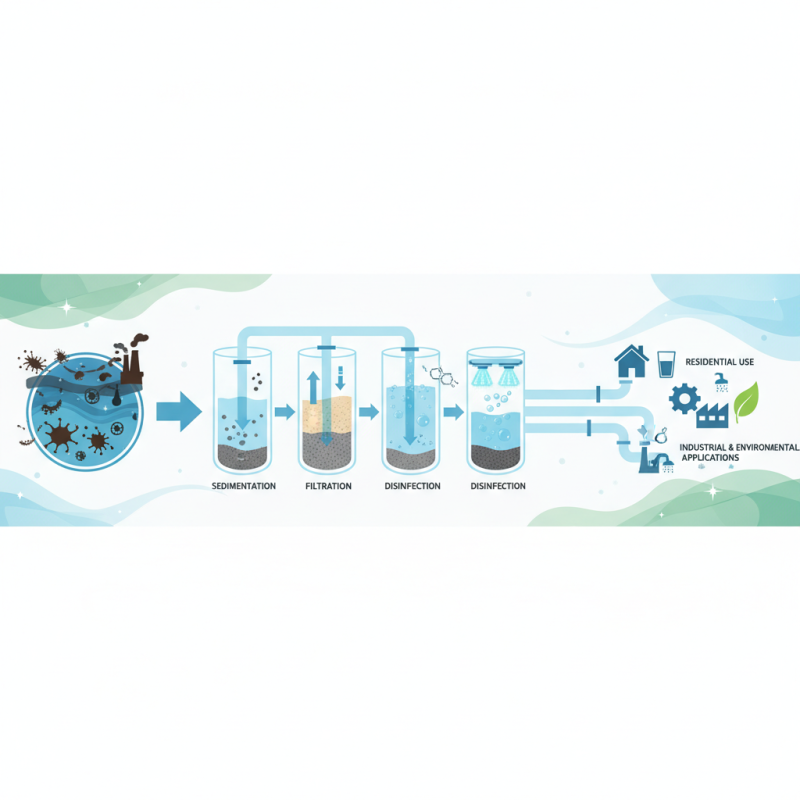
The functionality of water treatment systems revolves around multiple stages, each targeting specific pollutants or undesirable characteristics. These systems may employ physical, chemical, or biological processes to facilitate purification. For instance, sedimentation, filtration, and disinfection are critical steps that work synergistically to eliminate harmful substances from the water. By exploring the different types of water treatment systems and their applications, users can gain insights into the best solutions for their particular demands, enhancing not only health and safety but also environmental sustainability. Understanding the principles behind these systems empowers consumers to make informed choices that align with their water quality needs.
What Are Water Treatment Systems?
Water treatment systems play a crucial role in ensuring that our water supply is safe, clean, and suitable for consumption and various other uses. These systems are designed to remove contaminants and impurities from water, making it more suitable for drinking, irrigation, and industrial processes. According to a report by the World Health Organization (WHO), about 2 billion people globally lack access to safely managed drinking water services, highlighting the essential nature of effective water treatment systems in public health and environmental preservation.
The primary function of a water treatment system is to filter out pollutants, such as bacteria, viruses, chemicals, and sediments. This can be achieved through several methods, including sedimentation, filtration, and disinfection. For instance, the U.S. Environmental Protection Agency (EPA) has established stringent guidelines to treat drinking water, significantly reducing the prevalence of waterborne diseases.
Advanced systems now utilize technologies like reverse osmosis and ultraviolet (UV) light to enhance water quality, ensuring it meets regulatory standards. In fact, it's reported that properly functioning water treatment systems can reduce harmful contaminant levels by over 90%, safeguarding both public health and the environment.
In summary, water treatment systems are pivotal in addressing the need for clean water. They act as a barrier against various contaminants while adapting to different water source challenges, whether in urban or rural settings. Their development continues to evolve, driven by advances in technology and growing awareness of the importance of sustainable water management in addressing global water scarcity issues.
Types of Water Treatment Technologies Available
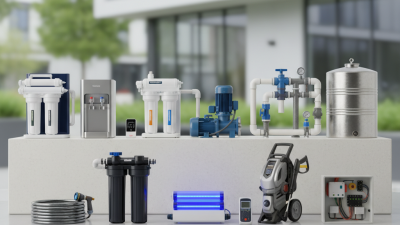
Water treatment systems come in various technologies designed to meet specific needs for purifying water. One of the most common methods is filtration, which physically removes particulates and impurities from water using various media such as sand, carbon, or membranes. Filtration systems can be simple, like those used in residential settings for drinking water, or more complex, such as those employed in municipal water plants to ensure safe water supply for communities.
Another prevalent technology is reverse osmosis, a process that utilizes a semi-permeable membrane to remove contaminants from water by applying pressure. This method is particularly effective in desalination, making seawater suitable for consumption, and in eliminating a wide range of impurities, including heavy metals and dissolved solids.
Additionally, ultraviolet (UV) light treatment is gaining popularity due to its effectiveness in disinfecting water without chemicals, employing high-intensity UV light to deactivate pathogens, thereby ensuring safety in drinking and recreational water. Each of these technologies plays a crucial role in addressing different water quality challenges and can be tailored to fit individual or community needs.
How Water Treatment Systems Function
Water treatment systems play a crucial role in ensuring the quality and safety of our drinking water. At the core of these systems are various processes that remove contaminants and impurities, thereby making water suitable for human consumption. The most common methods include filtration, sedimentation, and disinfection.
Filtration devices utilize a physical barrier, such as sand or charcoal, to trap particles and microorganisms. According to a report by the Water Quality Association, adequate filtration can eliminate up to 99% of contaminants, highlighting its effectiveness in water purification.
Sedimentation relies on the gravity separation of solids from liquids, allowing heavier particles to settle at the bottom of a treatment tank. This process is vital in municipal water systems, where large volumes of water are treated daily. The U.S. Environmental Protection Agency (EPA) estimates that sedimentation can remove about 50% of the total suspended solids from raw water sources, which significantly improves overall water quality.
Following sedimentation, disinfection processes, such as chlorination or ultraviolet light treatment, target any remaining pathogens, further ensuring that the water is safe for consumption. By understanding how these systems function, consumers can make informed decisions about their water needs and the best treatment options available.
Benefits of Water Treatment for Home and Industry
Water treatment systems are essential for ensuring that both residential and industrial users have access to clean and safe water. One of the primary benefits of water treatment is the removal of harmful contaminants, including bacteria, heavy metals, and chemicals, which can pose serious health risks. According to the United States Environmental Protection Agency (EPA), over 15 million households rely on private wells for their drinking water, making the need for effective treatment systems paramount. Proper treatment not only safeguards health but also enhances the color, taste, and odor of water, making it more palatable for everyday use.
In industrial settings, the advantages of water treatment become even more significant. Industries often consume vast amounts of water, and ensuring its purity can lead to reduced downtime and maintenance costs. A report by the Global Water Intelligence indicates that companies investing in efficient water treatment systems can reduce operational costs by up to 30% while simultaneously minimizing their environmental impact. These systems can also recycle and reuse water, significantly reducing the demand on local water sources. As industries face increasing pressure to adhere to sustainable practices, optimized water treatment becomes a crucial investment for both compliance and corporate responsibility.
What is Water Treatment Systems and How Do They Work for Your Needs - Benefits of Water Treatment for Home and Industry
| Aspect |
Residential Benefits |
Industrial Benefits |
| Water Quality Improvement |
Removes contaminants and improves taste |
Ensures high-quality water for production processes |
| Health Benefits |
Reduces risk of waterborne diseases |
Protects workforce health, ensuring safety standards |
| Cost Savings |
Decreases bottled water purchases |
Reduces maintenance costs for machinery |
| Environmental Impact |
Less plastic waste from bottled water |
Minimizes water pollution and conserves resources |
| System Types |
Reverse osmosis, water softeners |
Filtration systems, UV treatment |
| Regulatory Compliance |
Meets safety standards for drinking water |
Ensures compliance with industry regulations |
Choosing the Right Water Treatment System for Your Needs
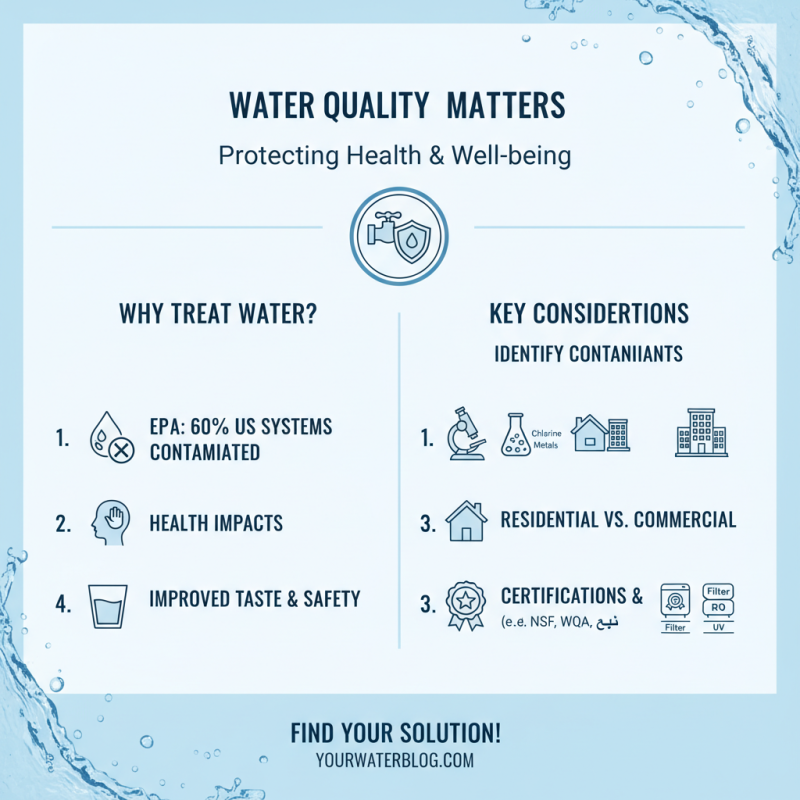
Choosing the right water treatment system is crucial for both residential and commercial needs, as water quality has a direct impact on health and well-being. According to the U.S. Environmental Protection Agency (EPA), over 60% of the water systems in the United States face contamination issues, compelling many households and businesses to seek effective treatment solutions. The decision-making process involves understanding the specific type of contaminants present, such as sediment, chlorine, heavy metals, or microorganisms, that may be prevalent in local water supplies.
When selecting a water treatment system, it's essential to evaluate the technologies available, such as reverse osmosis, ultraviolet light purification, and granular activated carbon filters, each with distinctive capabilities. Research from the Water Quality Association indicates that reverse osmosis systems can remove up to 99% of total dissolved solids, making them particularly effective for households concerned about high levels of contaminants. Additionally, factors like maintenance, cost, and the volume of water that needs treatment should be considered. A thorough water quality assessment is the first step in identifying the right system to effectively address specific water concerns, ensuring safe and clean water for all uses.