Why Choose Pure Matcha Powder for Your Business?
For beverage brands, cafés, and food manufacturers, matcha is more than a vivid green ingredient. It can shape a product’s flavor, appearance, and customer experience. Grand View Research estimated the global matcha market at USD 3.27 billion in 2023 and projected a 7.7% compound annual growth rate from 2024 to 2030. These figures suggest commercial momentum, but they are market estimates, not a promise of sales for any one business.
Quality shows up in practical details. A fine, evenly colored powder should blend smoothly into a latte, while its aroma and taste influence whether customers order it again. Pure Matcha Powder can help businesses build a clear ingredient story, provided suppliers can document origin, processing, and batch consistency. Ask for specifications and appropriate safety and quality testing records. Then check how the powder performs in your own recipes. Small differences matter.
The fit is not automatic. Strong demand cannot compensate for an overly bitter blend, inconsistent supply, or unclear sourcing. A sample may look appealing under café lights and still taste flat in a finished drink. That is worth remembering. Choosing well means balancing flavor, reliable supply, usable documentation, and cost per serving. For a business, those choices can turn a promising trend into a product customers genuinely want to buy again.
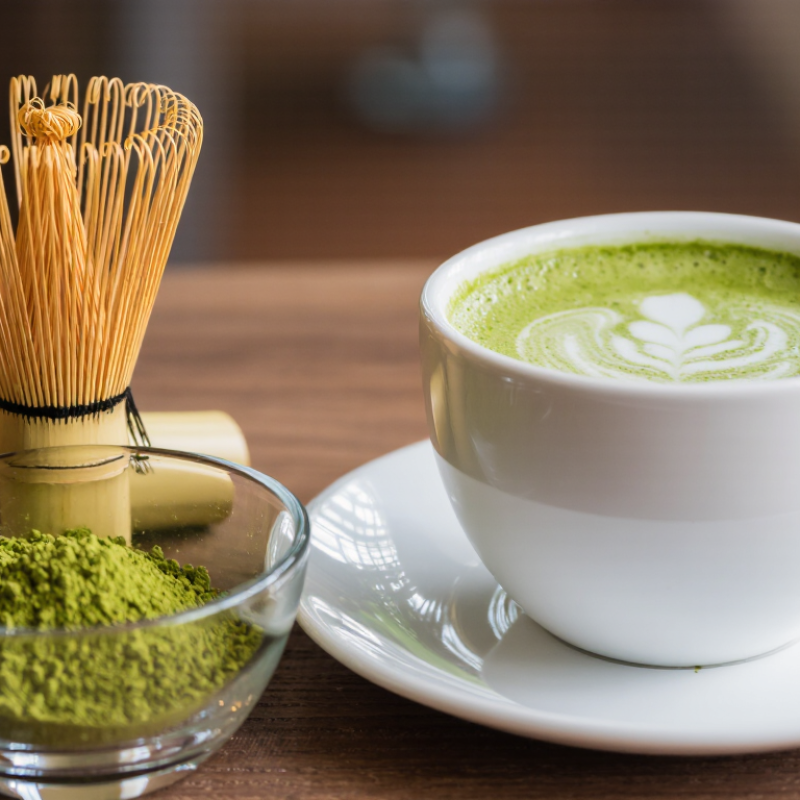
Define Pure Matcha: Tencha Leaves, Shade-Growing, and Stone Milling
Pure matcha begins with tencha, not ordinary green tea leaves ground into powder. Tea plants are shaded before harvest, often for several weeks, reducing direct sunlight and encouraging greener leaves. After steaming, producers dry the leaves without rolling them, then remove stems and veins. The remaining leaf material is tencha. MAFF’s 2022 crop statistics recorded about 4,176 metric tons of tencha production in Japan, showing that this specialized raw material is only one part of the country’s tea supply. Small detail, big difference. Shade-grown leaves can bring stronger color and umami, though cultivar, harvest timing, and processing also shape the cup.
Stone milling turns tencha into the fine powder used in traditional matcha. The slow process helps limit heat, but it also restricts output; a mill produces only a modest amount per hour. For a business, that means checking both ingredient identity and production capacity before setting a recipe or supply plan. Japan’s Ministry of Agriculture, Forestry and Fisheries tracks tencha separately in its tea statistics, a useful reference when assessing sourcing claims. Still, “stone-milled” alone does not guarantee a preferred flavor or consistent batch. Ask for harvest and milling details, then test the powder in the actual drink or food application. A little skepticism helps.
Assess Quality: Origin, Color, Particle Size, and Independent Testing
For a business buyer, “matcha” on a label is not a quality grade. Ask where the leaves were grown and processed, and request traceability to the harvest and lot. Japan’s Ministry of Agriculture, Forestry and Fisheries tracks tencha separately in its tea statistics; that distinction matters because matcha is milled from tencha, not ordinary rolled green tea. The Tea Association of the U.S.A.’s 2023 fact sheet estimates Americans consumed more than 84 billion servings of tea in 2022. A large category makes clear specifications useful. Check them.
Color offers a quick clue, not proof. A vivid green powder may reflect leaf material and storage, but lighting and photography can mislead. Particle size affects mouthfeel and suspension; ask suppliers for a measured distribution, not just “fine.” ISO 11287:2011 describes green-tea requirements, but it does not set a universal matcha color or particle-size grade. That gap is worth noting. Request lot-specific independent testing, ideally from an ISO/IEC 17025-accredited laboratory, for identity, moisture, microbiology, and relevant contaminants. Compare the certificate with your own purchasing limits. One test cannot establish every quality claim, and a polished certificate can still leave questions about origin or freshness.
Design Product Formats for Retail, Foodservice, and Manufacturing
Why Choose Pure Matcha Powder for Your Business?
Design Product Formats for Retail, Foodservice, and Manufacturing
Pure matcha can serve different buyers, but one pack size rarely works for all. Retail customers may want sealed tins or single-serve sachets that protect color and simplify preparation. Foodservice teams often need larger, resealable bags for lattes, smoothies, and baking. Manufacturing buyers usually prioritize consistent specifications, dependable supply, and formats that fit production equipment.
Japan’s Ministry of Agriculture, Forestry and Fisheries reported that green tea exports reached 7,579 tonnes, valued at ¥29.2 billion, in 2023. This covers green tea broadly, not matcha alone, so it should not be read as a matcha sales forecast. Still, it signals expanding international trade and a need for export-ready product formats. Small details matter. A café may need a scoop-friendly pouch; a beverage producer may require documented particle size, moisture, and batch consistency.
Choose formats around use, not appearance. Retail packs need clear storage guidance and practical serving cues. Foodservice packs should open cleanly and reseal well between busy shifts. Manufacturing specifications need to be explicit and testable. One awkward truth: attractive packaging cannot fix inconsistent powder. Build quality checks into sourcing, and confirm that each format protects the product through storage and handling.
Why Choose Pure Matcha Powder for Your Business?
Design product formats for retail, foodservice, and manufacturing.
Smaller packs can suit retail shoppers, while larger formats can help foodservice teams and manufacturers manage recurring use. Pack sizes shown are illustrative examples, not industry standards; specifications should reflect serving needs, production volume, and storage requirements.
Set Serving Guidance Around the FDA’s 400 mg Daily Caffeine Limit
When businesses serve pure matcha, caffeine guidance should be clear at the counter and on the menu. The FDA says 400 mg per day is an amount not generally associated with negative effects for most adults. It is not a universal limit or a target. Individual sensitivity, health conditions, and other caffeine sources matter.
Matcha caffeine can vary with the leaves, powder amount, and preparation. A heaped scoop may look generous, but it can make servings inconsistent. Set a measured portion, document the recipe, and use supplier data or appropriate testing to estimate caffeine per serving. Then share that estimate honestly, including that it may vary. Customers can compare it with their coffee, tea, energy drinks, and other daily sources.
Keep it practical. A small recipe card beside the whisk helps staff serve the same amount each time. Avoid promising that a serving is “safe” for everyone. Pregnant customers, people sensitive to caffeine, or those with health concerns may need individualized guidance from a healthcare professional. One detail is easy to miss: a neat number on the menu can imply more certainty than the product data supports. If the estimate is rough, say so and review it when ingredients or serving sizes change.
Why Choose Pure Matcha Powder for Your Business? — Set Serving Guidance Around the FDA’s 400 mg Daily Caffeine Limit | Suggested Matcha Portion | Estimated Caffeine per Serving | Serving Guidance | Context for the FDA’s 400 mg Figure | Business Consideration |
| 1 g powder | About 19–44 mg | A smaller portion for a lighter-tasting drink or for customers who prefer less caffeine. | Approximately 5–11% of 400 mg. | Use a stated gram weight rather than an undefined scoop size to make serving information clearer. |
| 2 g powder | About 38–89 mg | A practical standard portion for a matcha drink; communicate that caffeine content is an estimate. | Approximately 10–22% of 400 mg. | Provide preparation instructions and a consistent portioning method for food-service or retail use. |
| 3 g powder | About 57–133 mg | A larger portion for a stronger flavor. Make the higher powder amount clear to customers. | Approximately 14–33% of 400 mg. | Consider offering a measured serving option so customers can choose their preferred strength. |
| Daily intake from all sources | Varies by product and serving size | Encourage customers to count caffeine from matcha alongside coffee, tea, energy drinks, supplements, and other sources. | The FDA says 400 mg per day is an amount not generally associated with negative effects for most adults. It is not a target or a guarantee of safety for every person. | Use cautious, factual language and avoid presenting the 400 mg figure as a recommended intake for every customer. |
Estimation note: The caffeine ranges above use an approximate 19–44 mg per gram of matcha powder. Actual caffeine content can vary with the tea leaves, growing and processing conditions, and serving measurement. Confirm the caffeine content of the specific product before making product-specific claims. People who are pregnant, sensitive to caffeine, or taking medication may need individualized guidance from a healthcare professional.
Account for the FDA’s 200 mg Daily Caffeine Limit During Pregnancy
For businesses selling pure matcha powder, pregnancy-related caffeine guidance deserves precise wording. The FDA has not established a specific 200 mg daily limit for pregnancy. The American College of Obstetricians and Gynecologists advises keeping total caffeine below 200 mg daily; the European Food Safety Authority likewise considers intake up to 200 mg daily unlikely to raise fetal safety concerns (ACOG, “Caffeine and Pregnancy”; EFSA Journal, 2015, 13(5):4102). These are recommendations, not a caffeine allowance reserved for matcha.
Matcha caffeine varies with the leaves, harvest, and serving size. A review in Molecules reports approximately 18.9–44.4 mg of caffeine per gram of matcha (Kochman et al., 2021, 26:85). At two grams, that suggests roughly 38–89 mg, but it is an estimate, not a product guarantee. That range is wide. Preparation matters, too: a heaped scoop may contain more powder than a measured serving.
Clear product information can help buyers count caffeine from matcha alongside coffee, tea, chocolate, and other sources. Businesses should avoid presenting one serving as universally “pregnancy-safe.” Where possible, use batch-specific laboratory testing and state the tested serving size. Even then, results may vary between lots. Pregnant customers should discuss personal intake with their healthcare professional, especially when other caffeine sources are part of their day.