
10 Best Boiler Water Treatment Chemicals for Buyers
Boiler water can look clear and still carry dissolved minerals that form hard scale on heated surfaces. A thin deposit inside a tube can slow heat transfer, waste fuel, and raise maintenance demands. Corrosion creates a different risk, often starting where oxygen or unsuitable water chemistry goes unnoticed. That is why boiler water treatment chemicals deserve careful comparison, not a quick purchase based on price alone.
Water-treatment specialist Robert Puckorius is known for work on assessing scale-forming tendencies. His work supports a practical principle: treatment should match the water chemistry and operating conditions of the actual system. Buyers should check feedwater quality, boiler pressure, makeup-water volume, and the supplier’s dosage guidance. Ask how a product manages scale, corrosion, and, where relevant, oxygen. Request clear handling instructions and technical support. Small details matter. A dosing pump set incorrectly can undermine an otherwise suitable program.
This guide reviews 10 options and the situations they may suit. It also considers compatibility, monitoring needs, and supplier documentation. No single chemical is best for every boiler. That sounds obvious, yet it is easy to overlook when a product promises broad protection. Results depend on testing, correct dosing, and routine checks of blowdown and water chemistry. Buyers should verify recommendations with a qualified water-treatment professional and the boiler manufacturer’s requirements. Even then, field results can differ. Good selection is not a one-time decision; it needs follow-up.
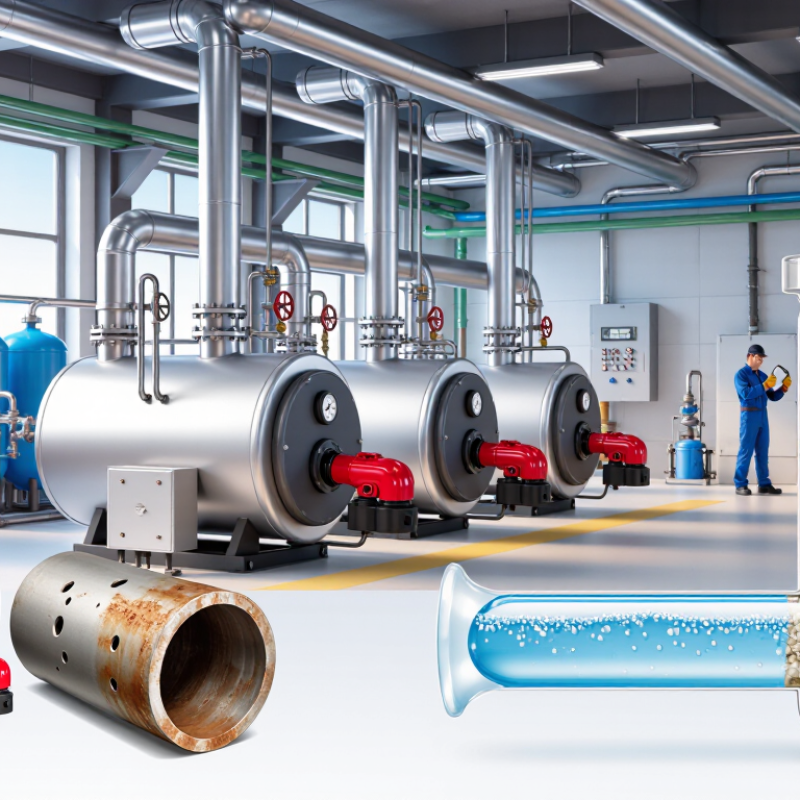
Table of Contents
[Hide]
How Boiler Water Treatment Chemicals Protect Boiler Systems
Boiler water treatment chemicals protect equipment by controlling scale, corrosion, and foaming. Hardness minerals can bake onto hot heat-transfer surfaces, while dissolved oxygen attacks metal and creates pits. Oxygen scavengers help limit that damage; phosphate and polymer programs can keep minerals suspended or removable. Alkalinity control also matters. Too little can encourage corrosion, while excessive levels may contribute to foaming and carryover.
The U.S. Department of Energy’s Steam Tip Sheet #9, Minimize Boiler Blowdown, reports that blowdown commonly ranges from 4% to 8% of feedwater, and may reach 20% when feedwater contains high solids. That range shows why treatment and monitoring work together: chemicals help manage contaminants, while blowdown removes concentrated dissolved solids. Still, dosing is not magic. A changing makeup-water supply can upset yesterday’s settings.
For buyers, match chemical selection to boiler pressure, metallurgy, feedwater quality, and operating conditions. Oxygen scavengers, internal scale-control treatments, condensate corrosion inhibitors, and antifoams serve different purposes; one product rarely covers every risk. Check feedwater and boiler-water tests, treatment instructions, and compatibility with existing materials before changing a program. Small details count. A sample taken from a poorly flushed line, for example, may misrepresent the boiler’s actual chemistry. Regular testing helps operators adjust treatment before deposits or corrosion become visible.
| Treatment Chemical | Primary Function | How It Protects the Boiler System | Typical Selection Considerations | Important Limitations |
|---|---|---|---|---|
| Sodium sulfite | Oxygen scavenger | Reacts with dissolved oxygen in boiler feedwater, helping reduce oxygen-related pitting and corrosion. | Commonly considered for many low- and medium-pressure systems; review operating pressure, feedwater quality, and required residual control. | Reaction adds dissolved solids to the water. Feed rate and blowdown must be managed using water analysis and system guidance. |
| Catalyzed sodium sulfite | Faster-acting oxygen scavenger | Uses a catalyst to accelerate oxygen removal, which can help protect feedwater and boiler surfaces when reaction time is limited. | Consider where rapid oxygen scavenging is needed and confirm compatibility with the boiler’s treatment program and monitoring equipment. | Does not replace deaeration or sound feedwater-system operation; residuals and treatment performance require monitoring. |
| Sodium erythorbate | Oxygen scavenger | Consumes dissolved oxygen, helping limit oxygen-driven corrosion in suitable feedwater-treatment programs. | Check applicable regulations, operating conditions, supplier instructions, and whether the chemical is approved for the intended application. | Effectiveness depends on temperature, pH, residence time, and system design; it is not a universal substitute for other oxygen-control measures. |
| Sodium phosphate | Phosphate hardness conditioning | Helps react with residual calcium and magnesium hardness so deposits can be managed as sludge rather than forming hard scale on heat-transfer surfaces. | Selection depends on boiler pressure, feedwater hardness, control strategy, and the ability to remove sludge through blowdown. | Requires careful phosphate and pH control. Excessive or poorly controlled treatment can contribute to deposits or operational problems. |
| Sodium hydroxide | Alkalinity and pH adjustment | Maintains suitable boiler-water alkalinity, supporting corrosion control and helping phosphate-based programs function as intended. | Choose a control range based on boiler pressure, metallurgy, treatment design, and applicable operating guidance. | Overfeeding or localized concentration can cause caustic corrosion or caustic gouging. Use controlled dosing and regular testing. |
| Polymer dispersants | Deposit and sludge dispersion | Help keep suspended particles and certain scale-forming materials dispersed, reducing their tendency to adhere to heat-transfer surfaces. | Confirm that the polymer is compatible with feedwater chemistry, the chosen phosphate or alkalinity program, and the system’s blowdown capacity. | Dispersants do not remove hardness from the system; effective blowdown and upstream water treatment remain important. |
| EDTA chelating treatment | Hardness-ion sequestration | Forms soluble complexes with certain metal ions, which can help control deposits in specifically designed and closely monitored programs. | Assess boiler pressure, metallurgy, temperature, feedwater composition, and the expertise available for chemical control before selection. | Improper use can keep corrosive species in solution or damage protective oxide films. It is not suitable for every boiler or routine treatment program. |
| Neutralizing amines | Condensate pH control | Neutralize carbonic acid in condensate, helping reduce corrosion in steam and condensate return lines. | Selection depends on the distribution system, condensate return pattern, steam use, and applicable process or regulatory requirements. | Different amines distribute differently through a system. Monitor condensate pH and assess any restrictions on chemical carryover. |
| Filming amines | Condensate-line surface protection | Form a water-repellent protective film on metal surfaces, helping limit contact between condensate and the underlying metal. | Evaluate system cleanliness, materials, dosing method, operating conditions, and compatibility with the existing treatment program. | Performance depends on consistent application and system conditions. Improper dosing or poor compatibility can cause operational issues. |
| Boiler-compatible antifoam agents | Foam and carryover control | Reduce persistent surface foam that can promote water carryover into steam lines and downstream equipment. | Verify compatibility with the boiler-water program and steam-use requirements; confirm suitability for the specific operating conditions. | Antifoam does not correct the underlying cause of foaming, such as excessive dissolved solids or contamination. Investigate water chemistry and blowdown as well. |
Selection note: The appropriate treatment depends on boiler pressure, feedwater quality, system materials, steam use, and local requirements. Establish dosing and control limits from a qualified water-treatment professional and regular water testing; the chemicals listed are treatment categories, not a fixed dosing prescription.
Related Posts
-

China Top 10 Boiler Water Treatment Chemical Suppliers?
-

Top 10 Water Solutions for Global Buyers to Consider?
-

2026 How to Start a Sustainable Water Plant for Community Benefit?
-

Top Water Treatment Solutions for Global Buyers in China
-

Top 10 Cooling Water Treatment Chemicals for Global Buyers?
-
What Are the Top Water Testing Kits for Drinking Water?