Top 10 Water Treatment Equipment Types for Global Buyers
Water security is no longer a distant policy concern. It affects factories, hospitals, farms, hotels, and growing cities every day. The demand for reliable water treatment equipment is rising as water quality risks become more visible and operating standards become stricter.
The WHO and UNICEF Joint Monitoring Programme reported that 2.2 billion people lacked safely managed drinking water in 2022. The United Nations World Water Development Report 2024 also identifies water quality, scarcity, and infrastructure gaps as connected global pressures. These figures reveal the scale of the challenge. They do not, however, tell buyers which filtration, disinfection, membrane, or sludge treatment system will perform best.
That decision requires practical comparison. Energy use matters. Maintenance access matters more than many brochures admit. A small coastal plant may need corrosion-resistant components, while a food processor may prioritize hygienic design and rapid cleaning. No single machine fits every site.
Peter H. Gleick, co-founder of the Pacific Institute, has often stated, “The world’s water crisis is not a crisis of scarcity, but a crisis of management.” His observation remains useful for equipment buyers. Technology alone cannot correct weak monitoring, poor operator training, or unrealistic maintenance plans.
This guide examines the top 10 water treatment equipment types for global buyers. It considers applications, treatment performance, operating costs, and installation realities. Some comparisons remain imperfect. Product specifications can change. Local water chemistry can overturn an attractive estimate. That is precisely why careful evaluation matters before a purchase order is signed.
Water Treatment Equipment: Definition, Purpose, and Main Categories
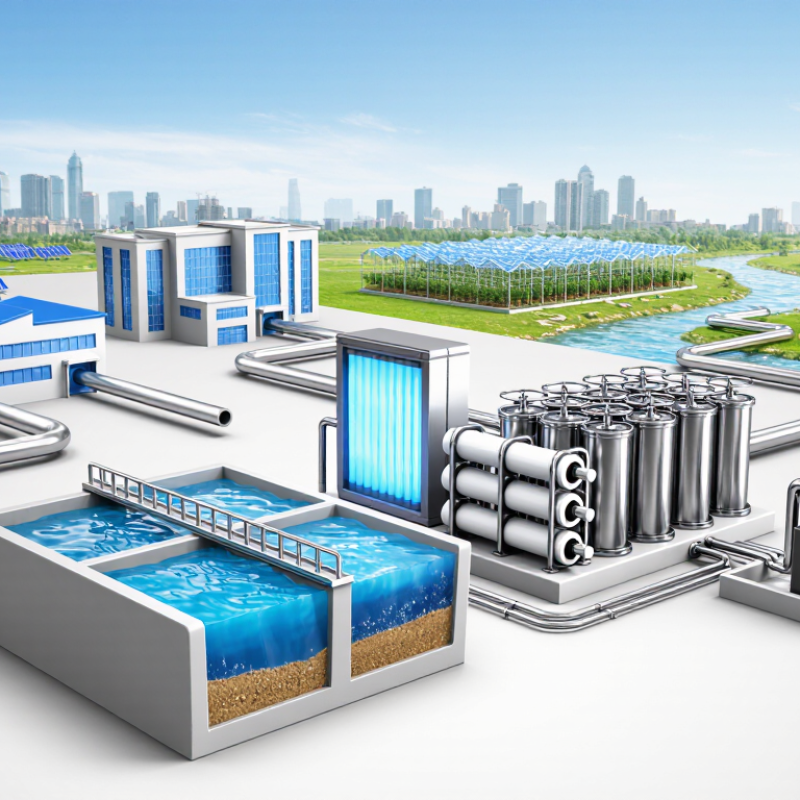
Water treatment equipment is the machinery used to remove physical, chemical, and biological contaminants from water. Its purpose is practical: protect public health, support industrial processes, and reduce environmental discharge risks. The right system depends on water quality, flow rate, temperature, and local requirements.
For global buyers, ten common equipment types are screening units, grit removers, coagulation mixers, flocculation tanks, sedimentation clarifiers, media filters, membrane systems, disinfection units, ion-exchange softeners, and sludge dewatering machines. Online monitoring instruments often support every stage.
Screens catch leaves and plastics. Membranes remove dissolved salts and smaller particles. Disinfection controls surviving microorganisms.
Each category has limits. For example, membranes can reduce contaminants effectively, but poor pretreatment may cause rapid fouling. I have seen projects fail because operators trusted a specification sheet more than actual feed-water tests.
Tips: Request recent laboratory results, seasonal flow data, and a pilot trial when possible. Check energy use, replacement parts, cleaning chemicals, and operator training before purchasing. Ask whether the equipment can handle peak flow, not only average flow. Keep records of pressure, turbidity, conductivity, and maintenance intervals. Small data gaps can become expensive surprises. A careful review may feel slow, but it often prevents an unsuitable installation.
Top 10 Water Treatment Equipment Types for Global Buyers
Global buyers need equipment matched to source water, discharge rules, energy prices, and operator skills. The WHO and UNICEF Joint Monitoring Programme reported that 2.2 billion people lacked safely managed drinking water in 2022. Demand is urgent, but rushing procurement creates expensive mistakes.
The ten core equipment types are intake screens, grit removal units, coagulation systems, flocculators, sedimentation tanks, media filters, ultrafiltration or microfiltration membranes, reverse osmosis systems, ultraviolet disinfection units, and sludge dewatering presses. Screens protect pumps from leaves and plastics. Coagulation and flocculation reduce suspended solids. Media filters polish water before disinfection. Membranes deliver tighter separation, but they need reliable pretreatment. Reverse osmosis removes dissolved salts, although energy use and concentrate management deserve careful review. UV works quickly, yet cloudy water can weaken performance. Sludge presses reduce transport volume.
The World Bank estimates that agriculture accounts for about 70% of global freshwater withdrawals. This strengthens the case for reuse systems and efficient filtration. However, equipment selection should not rely on headline data alone. Buyers should request pilot testing, verified flow rates, chemical consumption, maintenance intervals, and local spare-part availability. A lower purchase price may hide difficult cleaning procedures. My practical view is imperfect: no single technology fits every region. Small operators may also struggle with automation. That reality should shape the specification, not be ignored.
How Each Equipment Type Works and Where It Is Used
Top 10 Water Treatment Equipment Types for Global Buyers
Water treatment equipment works as a connected process, not as isolated machinery. Screens remove plastics and large debris at municipal intakes. Grit chambers then separate sand and stones. Coagulation and flocculation use chemicals to gather fine particles into visible flocs. Sedimentation tanks let these heavier flocs settle. Dissolved air flotation lifts oils, algae, and light solids with tiny air bubbles. These systems commonly serve city wastewater plants, food factories, and industrial pretreatment lines. The UN World Water Development Report 2024 states that agriculture accounts for about 70% of global freshwater withdrawals, increasing pressure on efficient reuse systems.
Media filters trap remaining particles through layers of sand, anthracite, or similar materials. Activated carbon adsorbs taste, odor, and many organic compounds. Microfiltration and ultrafiltration membranes block suspended solids, bacteria, and some viruses by pore size. Reverse osmosis pushes water through a dense membrane, removing salts and dissolved contaminants. It is widely used for desalination, boiler feedwater, and high-purity production. The WHO and UNICEF Joint Monitoring Programme reported that 2.2 billion people lacked safely managed drinking water in 2022, showing why reliable treatment remains essential.
Ultraviolet systems damage microorganisms with light, while chlorination provides a lasting residual in distribution networks. Operators must match equipment with raw-water testing, flow changes, energy limits, and local rules. A polished specification can still miss seasonal algae or membrane fouling. That needs honest review. No equipment type works perfectly everywhere.
Key Specifications for Comparing Water Treatment Equipment
Top 10 Water Treatment Equipment Types for Global Buyers
Comparing water treatment equipment requires more than checking capacity and purchase price. Start with the water source, daily flow, peak flow, turbidity, temperature, and target quality. These details shape the correct selection.
Common equipment includes screening units, coagulation and flocculation systems, sedimentation tanks, media filters, activated carbon filters, ultrafiltration units, reverse osmosis systems, ultraviolet disinfection equipment, ozone generators, and sludge dewatering machines. Check each unit’s rated flow in cubic meters per hour. Also review operating pressure, recovery rate, energy consumption, and cleaning requirements. For membranes, pore size, salt rejection, material, and chemical tolerance matter. For ultraviolet systems, compare UV dose, lamp life, sensor accuracy, and alarm functions.
Look closely at construction details. Stainless steel grades, pipe connections, control cabinet protection, and spare-part availability affect long-term reliability. A filter may perform well in a laboratory but struggle with seasonal algae or sudden sediment loads. That happens.
Ask for test data from water similar to yours. Confirm whether performance figures represent continuous operation or short trials. Warranty terms should cover measurable outputs, not vague promises. Installation space, operator skills, local power standards, and wastewater disposal also need review. One weakness remains common: buyers compare equipment prices but overlook maintenance labor. That mistake can quietly increase the total cost.
Global Buying Factors: Standards, Installation, and After-Sales Support
Global buyers should evaluate water treatment equipment beyond capacity and price. Common options include membrane systems, clarifiers, media filters, dosing units, ultraviolet systems, and wastewater packages. Each type must match the water analysis, flow rate, discharge rules, and operating environment. Request test reports, material certificates, electrical documents, and clearly stated performance limits. Standards differ by country, so local certification and pressure requirements need checking before payment.
Tips: Ask for a compliance matrix. Compare each required standard with the supplier’s document number, testing body, and validity date. Confirm whether installation needs local engineers, lifting equipment, drainage space, or special foundations. A compact unit may look efficient, but cramped maintenance access can create expensive delays. Leave room for sampling points and safe chemical handling. Do not rely on drawings alone; request a marked installation layout.
After-sales support often decides whether equipment remains reliable. Confirm spare-part availability, remote troubleshooting, response times, warranty coverage, and operator training. Ask for commissioning records and a preventive-maintenance schedule. In my purchasing experience, vague support promises caused more frustration than technical defects. Some suppliers also underestimate local water chemistry. That happens. Require pilot testing when feedwater varies seasonally, and record every assumption in the contract. A careful buyer should review the service plan with the final users, not only the engineering team.
Related Posts
-
How to Choose the Right Water Equipment for Your Business?
-
2025 Top Water Equipment Trends: Innovations Driving a $200 Billion Market
-
Top Water Treatment Equipment Solutions for Global Buyers?
-
10 Best Drinking Water Treatment Systems for Global Buyers
-
Why Are Water Treatment Supplies Essential for Global Procurement?
-
Top 10 Essential Water Equipment for Global Buyers Guide?
Ready to talk about water treatment?
Contact us
Please complete this form and we will be in touch