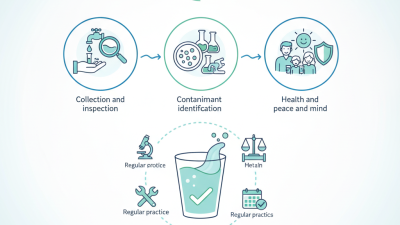
Top 10 Water Analysis Kits for Accurate Water Testing
Choosing a water analysis kit can feel simple until two test strips show different shades of blue. Yet accurate water testing depends on more than a quick color match. The right kit should measure the specific concerns that matter, such as pH, hardness, chlorine, nitrate, or lead. It should also provide clear instructions, readable results, and supplies suited to the water source being tested.
Small details count. Check the kit’s testing range, expiration date, and sample requirements before use. A strip test may offer a fast screening result, while a liquid reagent kit may provide finer color distinctions. Neither is automatically right for every household. Lighting, timing, sample collection, and user interpretation can affect results. That part is easy to overlook.
This guide compares ten water analysis kits by their test coverage, usability, result clarity, and practical limitations. It considers common home-testing needs, including tap water, well water, and aquarium water, without assuming one kit can handle them all. For each option, look for the analytes measured and whether the manufacturer explains what results mean. A home kit can help identify a reason to investigate further, but it may not replace laboratory analysis when results are unclear or important decisions depend on them. Repeat the test when instructions recommend it. Keep notes on the date, source, and reading. The best water analysis kit is not simply the one with the most tests; it is the one that fits your question and helps you interpret the answer carefully.
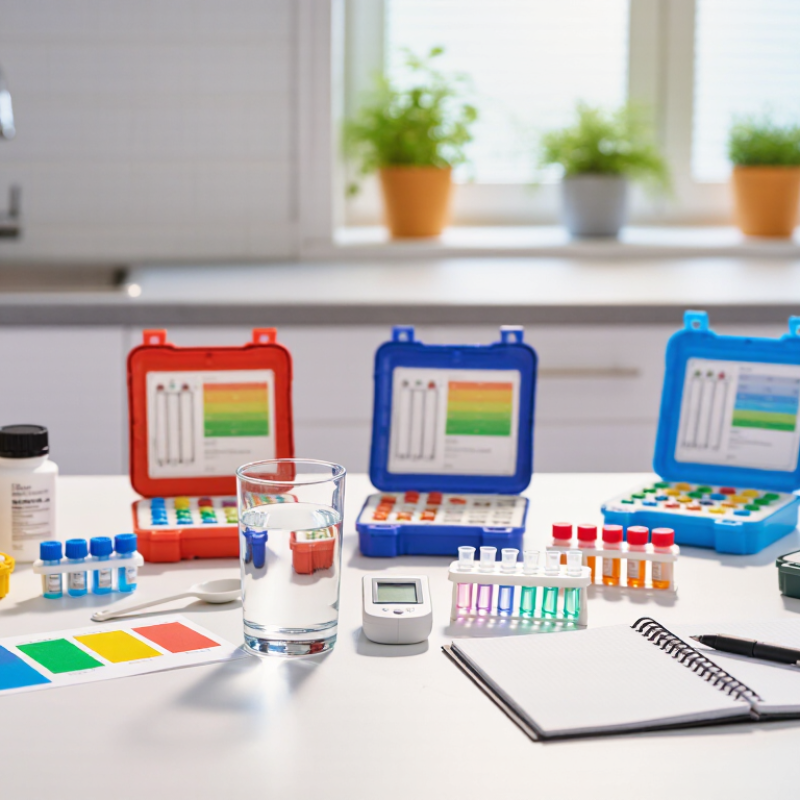
Water Testing Basics: EPA Sets Standards for 90 Drinking-Water Contaminants
Top 10 Water Analysis Kits for Accurate Water Testing
Safe drinking water depends on more than clear appearance. Under the Safe Drinking Water Act, the EPA sets standards for 90 regulated contaminants. These include microorganisms, chemicals, disinfectants, and radionuclides. Each contaminant has specific limits or treatment requirements. A reliable water analysis kit can help screen for common risks, but it cannot replace certified laboratory testing.
Good testing begins with the water source. Collect samples from a clean tap, well outlet, or storage tank. Follow the kit instructions carefully. Record the date, location, temperature, and recent treatment activity. Small errors matter. A poorly rinsed container may alter results, especially for metals or chlorine. Some test strips also produce colors that are difficult to judge under weak kitchen lighting.
Use a kit that identifies its detection range, test method, storage conditions, and expiration date. Look for clear instructions and quality-control information. Results near a regulatory limit deserve professional confirmation. Negative results are not absolute proof of safety. They may reflect a narrow testing panel or temporary water conditions. This is where many home tests fall short. I would treat them as practical screening tools, not final evidence. For unusual odors, repeated failures, or vulnerable households, send a preserved sample to an accredited laboratory and compare the report with current EPA standards.
How to Compare 10 Water Analysis Kits by Test Method and Detection Limit
Top 10 Water Analysis Kits for Accurate Water Testing
Comparing ten water analysis kits requires more than counting test parameters. Test method matters first. Color strips provide quick screening, but visual readings can shift under weak light. Drop-based colorimetry offers better control, while electrochemical meters measure values such as pH, conductivity, and dissolved solids. Membrane filtration can indicate bacteria, but it needs careful handling and incubation. No kit wins every test.
Detection limit separates useful results from attractive packaging. The United States Environmental Protection Agency defines a method detection limit as the lowest concentration reliably distinguished from zero. Compare each kit’s detection limit with health benchmarks, not only its advertised range. The WHO Guidelines for Drinking-water Quality list 50 mg/L for nitrate and 0.01 mg/L for lead. A kit detecting lead only above 0.05 mg/L cannot support a meaningful comparison. Units also matter: mg/L and µg/L differ by 1,000.
Tips: Create a table for all ten kits. Record method, detection limit, range, sample volume, waiting time, and calibration needs. Test one clean sample and one known reference solution. Read strips beside a window. Small details affect results. I would not trust a single reading. EPA quality-control guidance supports duplicates, blanks, and documented procedures. The USGS National Water Quality Assessment reports also show why local water chemistry can influence interpretation. A low-cost kit may be useful, but its uncertainty should remain visible.
Top 10 Water Analysis Kits for Accurate Water Testing
Comparison of common field-test methods by their typical practical detection limit. Lower values indicate greater sensitivity; detection limits are analyte-specific and should not be treated as a direct ranking across different substances.
Values are representative practical detection limits commonly associated with field colorimetric, titrimetric, and turbidimetric testing. Actual performance depends on sample conditions, calibration, and the specific procedure used.
Top 10 Kits for Checking Arsenic Against EPA’s 10 µg/L Limit
Top 10 Water Analysis Kits for Accurate Water Testing
Arsenic deserves special attention when comparing the top 10 water analysis kits. The U.S. Environmental Protection Agency sets a maximum contaminant level of 10 µg/L, equal to 0.010 mg/L. The World Health Organization also lists 10 µg/L as its guideline value in the Guidelines for Drinking-water Quality. A useful kit should detect arsenic below that threshold, not merely display a pass-or-fail result.
Look for methods with detection limits near 1–5 µg/L. Color changes can be difficult to judge under weak kitchen lighting. Digital readers may reduce interpretation errors, but they still need calibration checks. The USGS National Water-Quality Assessment identifies arsenic as a recurring groundwater concern, especially in certain aquifer systems. Testing should include a clean container, an unexpired reagent, and careful timing. Small mistakes matter.
Read the instructions twice. Then question the result.
Some kits measure total arsenic, while others focus on inorganic forms. That distinction affects health interpretation. For suspected contamination near EPA’s limit, confirm the result through a qualified laboratory using an EPA-recognized method, such as ICP-MS or hydride-generation atomic absorption. Compare kit results with laboratory findings when possible. Ten kits may look similar on paper, yet their sampling steps, interference controls, and reporting units can differ sharply. A low reading is reassuring, but it is not proof of safety.
Accuracy and Validation: What ISO/IEC 17025 Accreditation Means
Top 10 Water Analysis Kits for Accurate Water Testing
Accuracy and Validation: What ISO/IEC 17025 Accreditation Means
Choosing among the top 10 water analysis kits requires more than comparing test strips or prices. Check the target analytes, detection limits, sample volume, storage needs, and expiration dates. A useful kit should provide clear instructions, controlled reaction times, and readable color references. Small details matter. A warm sample can change results.
ISO/IEC 17025 accreditation applies to competent testing laboratories, not automatically to the water kit itself. An accredited laboratory demonstrates validated methods, trained personnel, equipment calibration, measurement traceability, and controlled records. It should also evaluate measurement uncertainty and participate in proficiency testing. These safeguards make reported results more defensible.
In practical testing, I would record the collection time, water temperature, sample location, and kit lot number. For drinking water, a field kit may screen pH, free chlorine, nitrate, hardness, or microbial indicators. However, a screening result is not the same as a laboratory report. Strip colors can be difficult to match under weak lighting. Residue inside a container can also distort readings.
Accreditation does not mean every reported number is perfect. It shows that the laboratory follows a recognized competence system and can explain its method. Ask whether the laboratory’s scope covers your specific analyte and technique. If results appear unusual, repeat the test with a fresh sample and clean container. One overlooked step can matter.
Choosing a Kit to Test Nitrate Against EPA’s 10 mg/L Limit as Nitrogen
Top 10 Water Analysis Kits for Accurate Water Testing
Choosing a Kit to Test Nitrate Against EPA’s 10 mg/L Limit as Nitrogen
Nitrate testing becomes meaningful only when the result uses the correct unit. EPA’s drinking-water limit is 10 mg/L as nitrogen, not 10 mg/L as nitrate. Some kits report nitrate ions instead, which can create a serious comparison error. A result near 10 mg/L as nitrogen deserves careful attention, especially in private wells, rural homes, and areas with fertilizer runoff.
Choose a kit with a stated range around 0–15 mg/L as nitrogen. Fine color steps help distinguish 8, 10, and 12 mg/L. Look for clear expiration dates, sealed reagents, and instructions for sample volume and reaction time. Clean glassware matters. Even a trace of soil or fertilizer can affect results. In practical testing, strips are useful for screening, but a liquid color test may provide better resolution. If the reading approaches the limit, repeat it and consider laboratory confirmation. One test can be wrong.
Tips: Collect a cold-water sample after flushing the tap. Avoid sampling directly after treatment changes. Read colors under daylight, not yellow kitchen lighting. Record the date, temperature, result, and unit. Check whether the kit measures nitrate as nitrogen or as nitrate. That small label detail is easy to miss. It should not be.