10 Best Water Equipment Suppliers for Global Buyers
Choosing reliable water equipment suppliers can shape a project’s safety, operating cost, and long-term performance. Global buyers often compare pumps, filtration systems, reverse osmosis units, ultraviolet disinfection equipment, tanks, and dosing systems. Yet product lists rarely reveal the full purchasing risk. A supplier may offer attractive prices but provide weak documentation, limited spare parts, or unclear warranty terms. Real experience matters.
This guide reviews ten leading water equipment suppliers for international buyers. Each company is considered through practical criteria, including product range, manufacturing capability, certifications, customization, delivery experience, technical support, and after-sales service. Evidence such as test reports, installation references, material specifications, and transparent communication deserves close attention. A stainless-steel housing should not merely look polished; it should match the water chemistry and expected pressure. Small details matter.
Conditions vary widely.
A municipal treatment plant, a hotel, and a remote factory need different solutions. Some suppliers perform strongly in large infrastructure projects but may overlook smaller buyers. Others provide flexible service but lack global distribution depth. No supplier is perfect. Even established companies can face delays, communication gaps, or inconsistent local support. Buyers should verify claims independently and request clear quotations before signing agreements. This overview aims to provide a balanced starting point, combining technical judgment with practical purchasing concerns. It also recognizes an uncomfortable truth: the cheapest water equipment may become the most expensive choice after installation.
Water Equipment Suppliers: Industry Scope and Buyer Needs
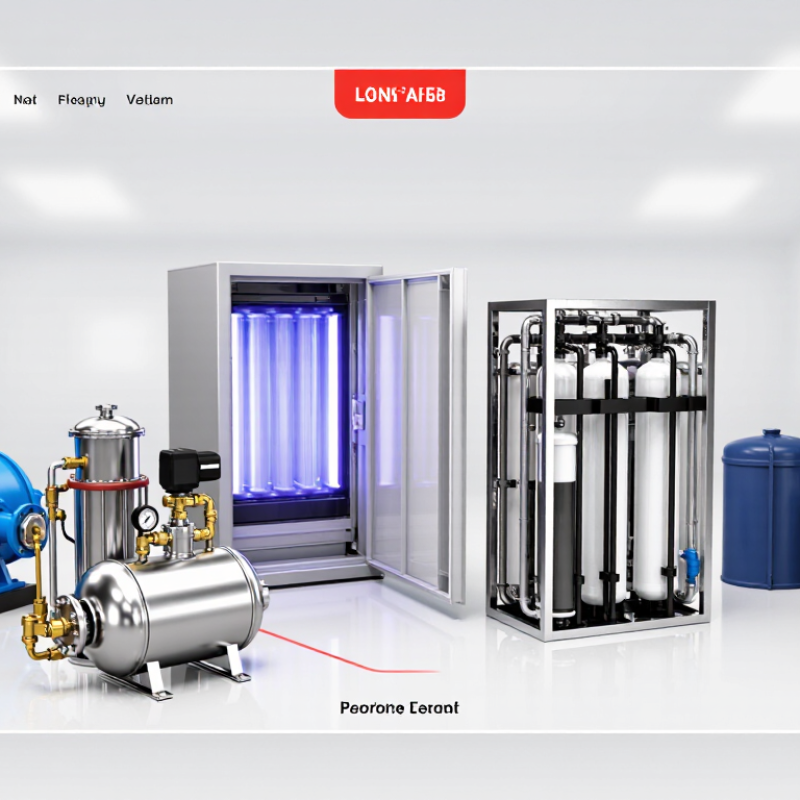
Water equipment suppliers serve a broad industry, from municipal treatment plants to hotels, factories, farms, and remote communities. Their products may include filtration units, dosing systems, pumps, membrane equipment, storage tanks, and monitoring instruments. Global buyers need more than a long product catalog. They need equipment that matches local water quality, climate, power supply, and maintenance capacity.
A reliable supplier should provide test data, material specifications, flow rates, pressure limits, and installation guidance. Buyers should request recent project references in similar operating conditions. A system designed for clear groundwater may fail quickly with muddy surface water. Salt exposure can also damage unsuitable metal parts. Small details matter, especially spare-part availability and response time across borders.
Certification helps, but it does not replace practical verification. Buyers should examine factory quality controls, warranty terms, operator training, and commissioning support. Ask how the supplier handles changing feedwater conditions. The answer may reveal more than a polished brochure. Some suppliers offer advanced automation that local technicians cannot repair easily. That is a real weakness, not a minor inconvenience. In my experience, the best purchasing decisions balance treatment performance with daily usability. Price still matters. However, a cheaper pump can create higher energy and maintenance costs within months. Site testing, clear contracts, and honest technical discussions reduce that risk. Mistakes remain possible. Even experienced buyers should leave room for adjustment.
How to Evaluate Suppliers for International Water Projects
For global water projects, supplier evaluation should begin with the operating conditions, not a polished catalogue. The WHO/UNICEF Joint Monitoring Programme reported that 2.2 billion people lacked safely managed drinking water in 2022. That gap makes reliable performance more important than the lowest quoted price. Check whether a supplier can document flow rates, pressure limits, materials, and test results for the actual site conditions. Ask for references from projects using similar source water and climate. A pump tested in a cool workshop may behave differently in a hot, dusty field location. Details matter.
Review the full delivery chain: technical drawings, spare-parts availability, operator training, and response times for faults. The World Bank’s 2023 report, Scaling Up Public Water and Sanitation Services, highlights persistent service and investment challenges across the sector. Treat after-sales support as part of the equipment, not an optional extra. Request clear warranty terms and a realistic shipping schedule, then verify both with previous project clients. Small gaps can become costly. I would also compare maintenance needs over several years, although forecasts are never perfect. A supplier that admits limits and explains corrective steps may be more dependable than one promising flawless performance.
Ten Leading Water Equipment Suppliers and Their Specialties
Water equipment suppliers serve different needs, from municipal treatment plants to farms and factories. Some specialize in pumps and piping, while others focus on filtration, disinfection, or monitoring systems. A supplier’s specialty matters because equipment must match water quality, flow rate, pressure, and site conditions. A pump sized from catalog figures alone may perform poorly once installed.
Filtration specialists provide cartridge, membrane, and media-based systems for removing particles or dissolved substances. Pump manufacturers and distributors supply units for wells, transfer lines, and wastewater applications. Control-system providers offer sensors that track pressure, flow, and water quality; those readings help operators spot changes before they become costly failures. For treatment projects, engineering suppliers may combine several components and support installation or maintenance. Details matter.
Other suppliers focus on storage tanks, valves, pipes, or compact treatment packages for remote sites. Buyers should request clear performance data, compatible replacement parts, and realistic service timelines. Ask how equipment handles seasonal changes or irregular feedwater, not just ideal test conditions. No supplier can remove every risk. A careful comparison of technical documents, references, and after-sales support can reveal gaps that a polished brochure may miss.
10 Best Water Equipment Suppliers for Global Buyers
Global demand for water equipment is strongly influenced by freshwater use across agriculture, industry, and municipal services.
Agriculture accounts for approximately 69% of global freshwater withdrawals, followed by industrial use at 19% and municipal use at 12%. These proportions help explain the broad demand for irrigation, water treatment, filtration, pumping, and wastewater equipment.
Comparing Product Quality, Certifications, and Global Service
10 Best Water Equipment Suppliers for Global Buyers
Comparing Product Quality, Certifications, and Global Service
Choosing among ten water equipment suppliers requires more than comparing prices. Product quality appears in weld consistency, pump noise, filter housing strength, and stable flow during long tests. A reliable supplier should provide inspection records, material specifications, and clear warranty terms. Small details matter.
Certifications deserve careful checking.
ISO 9001 can indicate controlled production processes, but it does not prove every product performs well. Buyers should verify certificates through issuing bodies and match them with the exact model purchased. For drinking water equipment, relevant safety approvals and tested material records are especially important. A certificate copied into a brochure is not enough.
Global service often separates a capable supplier from a convenient seller.
Ask about spare-part stock, remote troubleshooting, installation manuals, and response times across different time zones. Experienced suppliers can explain customs documents, voltage differences, and local maintenance needs. I have seen excellent equipment delayed by unclear shipping instructions. That failure is easy to overlook.
No supplier is flawless, and even strong factories may struggle with urgent replacement parts. Buyers should request sample reports, speak with recent customers, and test communication before signing a large order. Pricing still matters, but dependable evidence matters more.
Selecting the Right Supplier for Your Water Treatment Goals
Selecting the right water equipment supplier starts with your treatment goals, not a catalogue. Define the source water, target flow rate, and contaminants you need to reduce. A well-water system may need iron removal, while a facility using surface water may require stronger sediment control. Ask suppliers for equipment specifications, operating limits, and maintenance intervals. Check whether their proposed process matches your actual water test results. Small details matter.
Tips: Request a sample layout showing filters, pumps, and connection points. Ask how often media or cartridges need replacement. Confirm spare-part availability and technical support for your region. Get key performance claims in writing.
Compare suppliers on more than purchase price. A lower-cost unit can demand frequent servicing or consume more energy. Ask for references from projects with similar water conditions and capacity needs. Review installation requirements, including floor space, drainage, and power supply. If the supplier cannot explain expected performance in plain language, pause and ask for clearer evidence. I would not treat polished brochures as proof; even a careful selection can miss a site-specific issue. Share operating conditions early, and leave room to revise the design after testing.
10 Best Water Equipment Suppliers for Global Buyers - Selecting the Right Supplier for Your Water Treatment Goals
| Supplier Profile | Primary Equipment Focus | Typical Capacity Band | Core Treatment Process | Common Applications | Relevant Standards to Verify | Project Complexity | Best Fit for Global Buyers |
|---|---|---|---|---|---|---|---|
| Profile 01 | Municipal membrane-system supplier | 1,000–100,000 m³/day | Ultrafiltration, microfiltration, reverse osmosis, and disinfection | Drinking-water plants, water reuse, and municipal upgrades | ISO 9001; ISO 14001; local potable-water approval; project-specific membrane requirements | High | Large public infrastructure projects requiring engineering, commissioning, and lifecycle support |
| Profile 02 | Industrial reverse-osmosis system supplier | 5–5,000 m³/day | Media filtration, cartridge filtration, reverse osmosis, and polishing | Boiler feed, process water, food production, and electronics manufacturing | ISO 9001; electrical safety requirements; local pressure-vessel rules; applicable potable-water standards | Medium to high | Factories needing stable conductivity, scalable skids, and predictable operating costs |
| Profile 03 | Containerized and modular treatment supplier | 20–2,000 m³/day | Coagulation, clarification, filtration, membrane treatment, and disinfection | Remote communities, emergency response, temporary facilities, and rapid deployment | ISO 9001; ISO 14001; electrical and structural transport requirements; local discharge limits | Medium | Buyers prioritizing transportability, short installation time, and limited civil works |
| Profile 04 | Wastewater biological-treatment supplier | 50–50,000 m³/day | Activated sludge, moving-bed biofilm treatment, membrane bioreactors, and nutrient removal | Municipal sewage, industrial effluent, hotels, and commercial developments | ISO 9001; local effluent-discharge regulations; occupational and electrical safety standards | High | Projects requiring biological nutrient removal, water reuse, or strict discharge compliance |
| Profile 05 | Ultraviolet and ozone disinfection supplier | 1–10,000 m³/hour | Ultraviolet irradiation, ozone oxidation, and advanced oxidation processes | Potable water, tertiary wastewater treatment, aquaculture, and process-water reuse | UV dose validation; electrical safety requirements; local drinking-water and reuse regulations | Medium | Buyers seeking chemical-free or low-chemical pathogen control with compact equipment |
| Profile 06 | Ion-exchange and demineralization supplier | 1–1,500 m³/hour | Cation exchange, anion exchange, mixed-bed polishing, and electrodeionization | Power generation, laboratories, pharmaceutical production, and high-purity manufacturing | ISO 9001; pharmaceutical water requirements where applicable; pressure and chemical-handling regulations | Medium to high | Industrial users requiring low conductivity, controlled silica, or high-purity water |
| Profile 07 | Filtration and pretreatment equipment supplier | 1–2,500 m³/hour | Multimedia filtration, activated carbon, iron removal, manganese removal, and cartridge filtration | Well water, surface water, cooling systems, and membrane pretreatment | ISO 9001; material-contact requirements; local backwash and wastewater regulations | Low to medium | Buyers needing reliable pretreatment, lower turbidity, and protection for downstream equipment |
| Profile 08 | Sludge dewatering and residuals-management supplier | 0.5–100 m³/hour sludge feed | Belt pressing, screw pressing, centrifugation, thickening, and polymer conditioning | Municipal wastewater, food processing, mining, and industrial treatment plants | ISO 9001; machinery safety; local waste-classification and disposal requirements | Medium | Facilities aiming to reduce sludge volume, hauling costs, and residuals-handling risks |
| Profile 09 | Water-softening and corrosion-control supplier | 1–1,000 m³/hour | Softening, alkalinity adjustment, chemical dosing, and filtration | Boiler systems, district heating, commercial buildings, and cooling towers | ISO 9001; chemical-storage rules; pressure-equipment requirements; local water-quality regulations | Low to medium | Operators focused on scale prevention, asset protection, and lower maintenance frequency |
| Profile 10 | Smart monitoring and dosing-system supplier | Point-of-use to 10,000 m³/day | Online sensing, automated chemical dosing, flow control, alarms, and remote monitoring | Distributed utilities, industrial plants, cooling systems, and multi-site operations | ISO 9001; IEC electrical requirements; cybersecurity controls; local chemical-handling regulations | Medium | Global buyers seeking remote visibility, predictive maintenance, and standardized operation across sites |
Capacity ranges are indicative industry-use bands rather than guarantees. Buyers should verify feed-water analysis, required output quality, local regulations, certifications, warranty terms, spare-parts availability, and after-sales service before selecting a supplier.
Related Posts
-
How to Choose the Right Water Equipment for Your Business?
-
How to Choose Water Treatment Supplies for Global Buyers
-
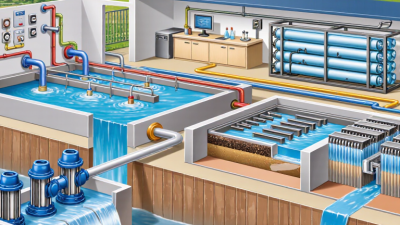
What Is Water Treatment Equipment and How Does It Work?
-
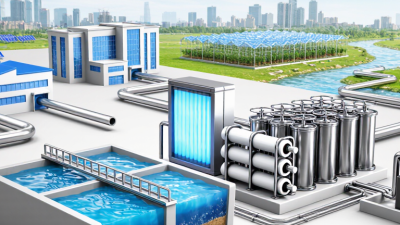
Top 10 Water Treatment Equipment Types for Global Buyers
-
What Are the Best Water Treatment Supplies in China?
-
China Top 10 Water Treatment Supplies Manufacturers
Ready to talk about water treatment?
Contact us
Please complete this form and we will be in touch