What Are the Best Water Treatment Supplies in China?
Choosing the best water treatment supplies in China starts with the water itself. A clear sample bottle can still conceal dissolved salts, fine sediment, or changing microbial risks. That is why buyers should define the source, target quality, flow rate, and operating conditions before comparing equipment. The right choice may involve membranes, filter media, pumps, dosing systems, sensors, or replacement parts. No single product suits every plant.
Water-quality expert Dr. Mark W. LeChevallier has long emphasized evidence-based control of drinking-water risks. In paraphrase, his practical lesson is: “Choose treatment components by verified performance, not by claims alone.” For buyers, that means checking technical datasheets, test conditions, material compatibility, and documented quality controls. Ask how suppliers verify membrane integrity or sensor accuracy. Request sample results, where appropriate. Small details matter.
China’s supplier market is broad, but a polished catalog does not prove dependable performance. Check whether product specifications match your water analysis and installation plan. Confirm spare-part availability, technical support, delivery expectations, and clear warranty terms. A low purchase price can become costly if filters clog early or dosing pumps are difficult to maintain. Keep the comparison practical. Get the details in writing. This guide will examine key product categories, supplier evaluation, and questions to ask before ordering. It will also note where buyers may need independent testing or specialist advice. One caution remains: published specifications do not guarantee results at every site. Real operating conditions can be messier than a brochure suggests.
Define China’s Water Treatment Supply Categories and Main Applications
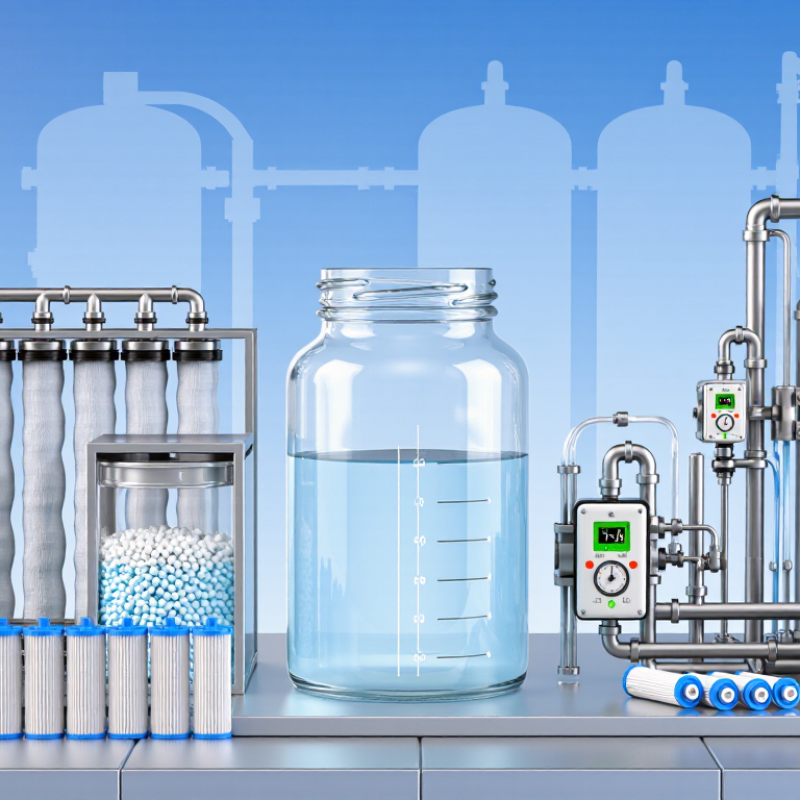
Water-treatment supplies in China generally fall into five practical categories: treatment chemicals, filtration media, membranes, process equipment, and monitoring instruments. Coagulants, disinfectants, and pH adjusters support clarification and water conditioning. Sand, activated carbon, and ion-exchange resin capture particles, odors, or dissolved ions. Membranes serve ultrafiltration and reverse-osmosis systems. Pumps, valves, tanks, and dosing units move and control water through the treatment train. Meters track flow, pressure, turbidity, and conductivity.
Applications vary by water source and required output. Municipal plants combine clarification, filtration, and disinfection to treat surface water. Factories may add softening or membrane systems to meet process-water needs. Wastewater facilities use biological treatment equipment, aeration parts, and sludge-handling supplies. Homes often rely on compact filters for drinking water. One detail is easy to overlook: a supply that works well in a pilot test may need adjustment when flow, water chemistry, or maintenance routines change. Specifications alone do not tell the whole story.
Tips: Match each item to a recent water analysis and the system’s flow rate. Check material compatibility, operating limits, and replacement intervals. Ask for product specifications and test records, then confirm them with a small trial where practical. Keep spare seals and filter media on hand; delays can disrupt routine service.
Compare Coagulants, Activated Carbon, Membranes, Disinfectants, and Sensors
What Are the Best Water Treatment Supplies in China?
Choosing water treatment supplies depends on the incoming water, treatment goals, and operating conditions.
Coagulants help suspended particles clump together, making them easier to remove. Jar tests can show whether a dose works before full-scale use. Too much can increase sludge and leave treatment less efficient.
Activated carbon can reduce many taste, odor, and organic-compound problems. Its performance depends on contact time and the carbon’s condition.
Membranes provide fine separation, but fouling and pressure requirements need attention. Disinfectants help control harmful microorganisms; operators must verify dose and contact time.
Sensors track factors such as pH, turbidity, and residual disinfectant. Useful readings depend on proper calibration and routine checks.
No single supply fits every plant. A choice that works well on clear water may disappoint after heavy rain. I may be overlooking local water variations, so trial results matter.
Tips: Test source water regularly, compare supplier specifications, and run a small pilot when practical. Keep calibration records, and inspect filters for clogging. These steps reveal problems early, though they cannot replace skilled operation.
Match Membrane Technology: UF Uses 0.01–0.1 μm Pores; RO Removes Dissolved Salts
Choosing water treatment supplies in China begins with the source water and the job each membrane must do. Ultrafiltration (UF) membranes commonly use pores around 0.01–0.1 μm. They help reduce suspended solids, fine particles, and many microorganisms, but they do not remove dissolved salts. A clear sample after UF can still contain minerals or salinity.
Reverse osmosis (RO) is designed to remove much of the dissolved salt content, along with other dissolved substances. It needs suitable feed pressure and often benefits from pretreatment, such as sediment filtration or UF, to limit fouling. Check the feed-water analysis, membrane specifications, flow rate, and operating pressure before choosing supplies. Supplier documents and a small-scale test can help verify that the equipment fits the actual water conditions. A tidy specification sheet is useful, but it may not reflect seasonal changes in a local water source. That detail is easy to overlook.
Tips: Match the membrane to the measured problem. Use UF for particles; consider RO when dissolved salts matter. Retest the treated water, because performance can drift as membranes age or foul.
Check Drinking-Water Compliance: China’s GB 5749-2022 Lists 97 Indicators
China’s GB 5749-2022 drinking-water standard sets 97 indicators and took effect on April 1, 2023. It covers microbial safety, chemical risks, sensory properties, and radioactivity. That is a compliance framework, not a shopping list. Treatment supplies should match the raw-water profile and the indicators a facility must monitor. A plant might need validated sampling bottles, turbidity meters, pH instruments, and residual-disinfectant test kits. Some sites also need filtration or adsorption media, but the standard alone cannot determine the right system.
The World Health Organization and UNICEF’s 2023 Joint Monitoring Programme report estimates that 2.2 billion people lacked safely managed drinking water in 2022. This is a global figure, not a measure of Chinese compliance. Still, it underlines why dependable monitoring matters. A tidy spreadsheet can hide a changing intake line. One weak point: sampling routines are easy to underfund. Calibrated instruments, documented maintenance, and repeat testing help turn results into useful decisions. Check that methods suit the target indicators, and confirm that supplies remain reliable under local temperature, flow, and water-quality conditions. A laboratory result is only as representative as the sample.
What Are the Best Water Treatment Supplies in China?
China’s GB 5749-2022 drinking-water standard specifies 97 indicators. The chart shows selected chemical limits for compliance reference.
Maximum concentration limits for selected contaminants (mg/L). These values are standard limits, not measured water-quality results; requirements depend on the applicable standard conditions.
Evaluate Suppliers by Product Certification, Quality Control, and After-Sales Service
What Are the Best Water Treatment Supplies in China?
Evaluate Suppliers by Product Certification, Quality Control, and After-Sales Service
When comparing water treatment supplies in China, judge the evidence behind each product, not the brochure. Request certificates for the exact model and application. Check independent test reports for flow, pressure, material safety, and contaminant reduction. Verify the laboratory, test date, and standard version. A certificate for one filter cartridge does not validate every item in a supplier’s catalogue. Small distinction. WHO and UNICEF’s 2023 Joint Monitoring Programme estimated that 2.2 billion people lacked safely managed drinking water in 2022. Reliable performance is more than a purchasing detail.
Quality control should be visible at the factory. Request sample batch records, incoming-material inspection criteria, calibration logs, and evidence that failed units are isolated. If possible, compare a pilot unit’s readings with an independent laboratory result after installation. One visit helps. But not enough. Ask how the supplier tracks serial numbers, handles repeat defects, and communicates specification changes. For after-sales service, get response-time targets, spare-parts lead times, commissioning support, and warranty exclusions in writing. A polished service promise can still be vague. Test it with a practical question: who will diagnose falling outlet pressure on a Friday afternoon? I would record unresolved questions rather than smooth them over; procurement teams can accept neat documents too quickly.