Top 10 Water Systems for Global Buyers in 2026?
Global buyers entering 2026 face a crowded water treatment market. The best water systems are not always the most expensive. They must match local water quality, operating conditions, energy access, and maintenance capacity. This guide introduces ten leading system categories for commercial, municipal, industrial, and remote applications.
Each option will be examined through practical buying criteria. These include filtration performance, flow capacity, energy consumption, installation time, service availability, and total ownership cost. A compact reverse osmosis unit may suit a coastal hotel, while a containerized treatment plant may better serve a construction camp or rural community. Details matter. A system rated at 50 cubic meters daily may perform poorly when incoming turbidity rises after heavy rain.
Reliable selection also requires evidence beyond product brochures. Buyers should request independent test data, clear warranty terms, spare-parts schedules, and references from comparable climates. International certifications can support confidence, but certification alone does not guarantee successful operation. Local technicians, safe chemical handling, and regular laboratory testing remain essential.
There is no universal winner.
The ranking in this overview is therefore a practical starting point, not a final purchasing decision. Market prices, regulations, water chemistry, and supplier quality can change quickly in 2026. Some recommendations may need adjustment after site testing. That limitation is worth admitting. Experienced buyers should compare at least three technical proposals and validate performance under real operating conditions before signing a contract.
What Defines a Water System in the 2026 Global Market?
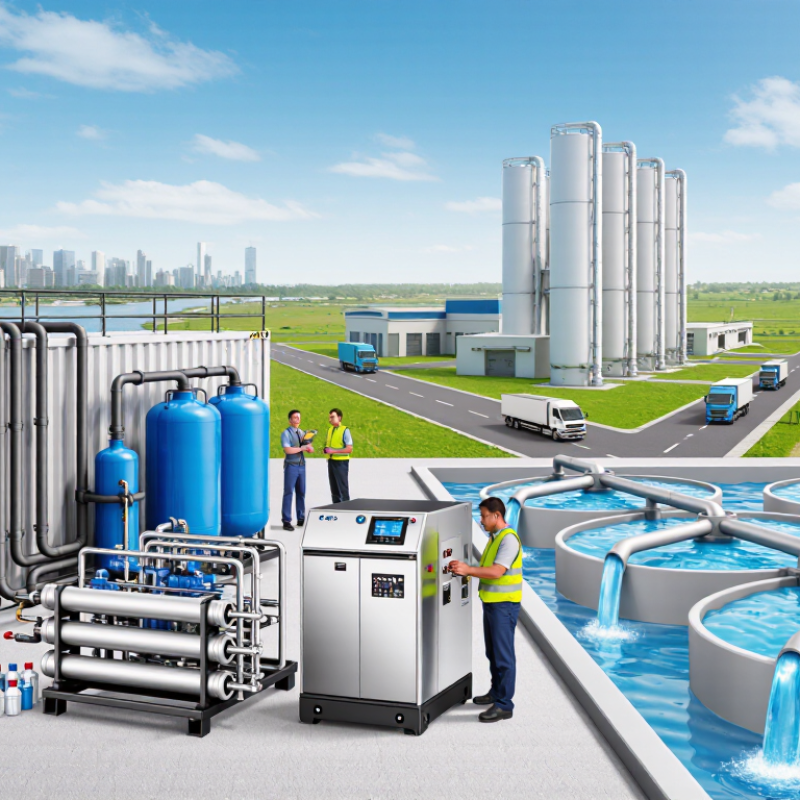
In the 2026 global market, a water system is more than a tank, pump, and filter. It is an integrated chain that captures, treats, stores, monitors, and distributes water. Buyers now examine the complete operating picture. They ask about source quality, energy use, maintenance access, and wastewater handling. The details matter. A system that works in a coastal city may fail in a dry inland region. Climate, infrastructure, local skills, and regulations shape every practical decision.
Reliable systems combine treatment performance with measurable control. Sensors can track flow, pressure, turbidity, conductivity, and disinfectant levels. Remote alerts help operators respond before a small fault becomes a public health concern. However, digital monitoring cannot replace physical inspections. I have seen accurate dashboards hide blocked intake screens and worn seals. Data exposes gaps. Human experience still matters.
For global buyers, a credible water system should include clear testing records, service procedures, spare-part planning, and realistic performance claims. Independent laboratory verification strengthens confidence, especially when water sources change seasonally. Modular designs may simplify expansion, but extra components can increase failure points. That trade-off deserves honest discussion. No design is perfect. Buyers should review lifecycle costs, operator training, emergency capacity, and disposal practices before signing a purchase agreement. A dependable system is defined by safe output, transparent evidence, and practical resilience under daily pressure.
Key Criteria for Evaluating Water Systems Across Different Regions
Top 10 Water Systems for Global Buyers in 2026?
Key Criteria for Evaluating Water Systems Across Different Regions
Water quality changes sharply between regions, so purchasing decisions need local evidence. A system tested in a cool European city may struggle with salty borehole water in a dry coastal area. Start with laboratory results for turbidity, hardness, iron, microbial contamination, and seasonal changes. Test more than once. One sample can mislead.
Capacity must match real demand, not a sales estimate. Measure household size, factory shifts, peak hours, and storage space. Check whether the system works with local voltage and water pressure. In remote areas, simple controls and replaceable parts often matter more than advanced automation. Field experience shows that a small leak can stop production when trained technicians are several hours away.
Climate also affects performance. High heat can shorten membrane life, while freezing conditions may damage pipes and pumps. Ask for operating ranges, maintenance records, spare-part availability, and clear training documents. Independent laboratory verification and recognized safety certifications add credibility, but paperwork is not enough. Inspect installation quality and request references from similar environments. A spreadsheet can look precise. It cannot reveal muddy access roads, unreliable power, or an operator who never received practical training. That weakness deserves attention.
The Top 10 Water Systems for Global Buyers in 2026
Top 10 Water Systems for Global Buyers in 2026
The top 10 water systems for global buyers in 2026 reflect different water sources, climates, and operating budgets. They include municipal treatment plants, compact package plants, desalination units, ultrafiltration, reverse osmosis, ultraviolet disinfection, biological wastewater treatment, rainwater harvesting, greywater recycling, and smart monitoring systems. Each option solves a different problem.
Source matters.
In field assessments, I look for stable flow, safe storage, simple maintenance, and measurable water quality. A coastal hotel may need desalination, while a rural clinic may require filtration and ultraviolet treatment. Industrial sites often combine biological treatment with membrane systems. Buyers should request pilot testing, energy data, replacement schedules, and local service plans before approval. Certified materials and documented testing improve reliability across borders.
Cheap equipment can become expensive.
Digital monitoring now tracks pressure, conductivity, turbidity, and filter life. However, sensors still require calibration. No ranking is perfect. A highly automated system may fail when trained technicians are unavailable. I would also question impressive capacity claims without seasonal testing. Practical buyers should compare total ownership cost, spare-part access, operator training, and disposal requirements. Small design changes, such as shaded tanks and accessible valves, can prevent daily frustration.
Comparing the Ten Systems by Cost, Capacity, and Sustainability
Top 10 Water Systems for Global Buyers in 2026?
Comparing the Ten Systems by Cost, Capacity, and Sustainability
Global buyers are comparing ten practical systems: municipal treatment, groundwater filtration, rainwater harvesting, ultraviolet disinfection, ultrafiltration, reverse osmosis, desalination, membrane bioreactors, packaged wastewater plants, and atmospheric water units. Each serves a different operating reality. Municipal treatment usually offers the lowest purchase cost when infrastructure already exists. Packaged plants provide faster installation for remote facilities. Desalination delivers dependable capacity, but energy consumption and brine management increase lifetime costs.
Reverse osmosis can produce highly purified water, although replacement membranes require careful budgeting. Ultraviolet systems use limited chemicals and work efficiently after strong pre-filtration. Rainwater harvesting has modest capital costs and excellent local sustainability. However, seasonal rainfall can weaken its reliability. Groundwater systems may appear inexpensive, yet testing, pumping depth, and long-term aquifer pressure need professional review. Capacity alone is not enough.
From field evaluations, lifecycle cost often matters more than the initial quotation. A low-cost unit may create frequent maintenance visits, storage losses, or difficult parts logistics. Buyers should compare energy use, recovery rate, sludge volume, operator skill, and expected service life. Solar-assisted pumping can reduce emissions, but batteries add expense and disposal concerns. Membrane bioreactors save space and support water reuse, though skilled monitoring is essential. Atmospheric systems suit small demand, not major industrial loads. The comparison is useful, but imperfect. Local climate, water quality, and regulation can change the result completely. Small systems matter. The trade-offs remain.
Top 10 Water Systems for Global Buyers in 2026? — Comparing the Ten Systems by Cost, Capacity, and Sustainability
Indicative engineering benchmarks for typical projects worldwide. Costs are shown in 2026 USD and exclude land, distribution networks, permitting, financing, taxes, and unusual pretreatment requirements.
| Rank | Water System | Primary Application | Typical Capacity Range (m³/day) |
Indicative Installed Cost (USD per m³/day) |
Typical Energy Demand (kWh/m³) |
Water Recovery | Indicative Operating Cost (USD/m³) |
Sustainability Profile | Key Strength | Main Limitation |
|---|---|---|---|---|---|---|---|---|---|---|
| 1 | Conventional Surface-Water Treatment | Municipal drinking water from rivers, lakes, and reservoirs | 1,000–500,000 | $600–$2,000 | 0.10–0.40 | 85–95% | $0.15–$0.50 | High at large scale | Proven process with strong performance for turbidity, particles, and many pathogens | Requires chemical treatment and produces sludge; performance varies with raw-water quality |
| 2 | Groundwater Treatment with Aeration and Filtration | Removal of iron, manganese, hydrogen sulfide, and selected dissolved gases | 100–100,000 | $300–$1,200 | 0.05–0.25 | 90–98% | $0.08–$0.35 | High | Low energy demand and relatively simple operation | Not suitable for every contaminant; arsenic, nitrate, or salinity may require additional treatment |
| 3 | Ultrafiltration (UF) | Drinking-water clarification, tertiary wastewater treatment, and pretreatment for reverse osmosis | 100–200,000 | $700–$2,500 | 0.10–0.30 | 90–98% | $0.15–$0.45 | High | Excellent removal of suspended solids, bacteria, and protozoa with a compact footprint | Does not reliably remove dissolved salts and needs periodic membrane cleaning |
| 4 | Brackish-Water Reverse Osmosis (BWRO) | Desalination of moderately saline groundwater and industrial process water | 100–100,000 | $800–$2,500 | 0.60–1.50 | 75–90% | $0.30–$0.90 | Medium–High | Removes dissolved salts, many metals, and a broad range of contaminants | Produces a concentrated reject stream and requires reliable pretreatment |
| 5 | Seawater Reverse Osmosis (SWRO) | Large-scale potable-water production in coastal and water-scarce regions | 1,000–600,000 | $1,500–$4,000 | 2.50–4.50 | 35–50% | $0.60–$1.50 | Medium | Provides a dependable water source independent of rainfall and river flows | High energy demand, marine-intake requirements, and brine-management obligations |
| 6 | Membrane Bioreactor (MBR) | High-quality municipal or industrial wastewater treatment for reuse | 500–150,000 | $900–$3,000 | 0.60–1.20 | 90–99% | $0.35–$1.00 | High reuse potential | Combines biological treatment and membrane separation in a compact footprint | Higher aeration demand and membrane-maintenance requirements than conventional activated sludge |
| 7 | Moving-Bed Biofilm Reactor (MBBR) | Municipal and industrial wastewater treatment, including capacity upgrades | 500–100,000 | $450–$1,600 | 0.20–0.50 | 85–95% | $0.20–$0.65 | High | Robust biological process with a relatively small footprint and flexible expansion | Usually needs downstream clarification or filtration to achieve very high effluent quality |
| 8 | Sequencing Batch Reactor (SBR) | Municipal wastewater treatment for small and medium-sized communities | 100–50,000 | $500–$1,800 | 0.20–0.60 | 85–95% | $0.20–$0.70 | High | Batch operation can provide effective biological nutrient removal with limited civil works | Requires careful cycle control and may be less suitable for highly uneven continuous flows |
| 9 | Rainwater Harvesting and Treatment | Non-potable supply, irrigation, toilet flushing, and supplementary potable-water production | 10–10,000 | $200–$1,200 | 0.05–0.20 | 70–95% of collected water | $0.05–$0.30 | Very high where rainfall is reliable | Reduces demand on centralized supplies and can lower stormwater runoff | Seasonal rainfall, roof area, storage volume, and local water-quality rules limit output |
| 10 | Advanced Oxidation and UV Disinfection | Final polishing, micropollutant reduction, and pathogen control in reuse schemes | 100–100,000 | $250–$1,500 | 0.05–0.50 | 95–100% | $0.05–$0.40 | Medium–High | Effective barrier for pathogens and selected trace organic contaminants without creating chlorinated residuals | Normally functions as a polishing stage rather than a complete standalone treatment system |
Global Standards, Installation, Maintenance, and Purchasing Factors
Top 10 Water Systems for Global Buyers in 2026?
For global buyers, the best water system is not always the most advanced. Reverse osmosis, ultrafiltration, ultraviolet treatment, desalination, rainwater harvesting, and packaged wastewater units serve different conditions. Check feedwater quality before comparing capacity or price. A laboratory report should include salinity, hardness, turbidity, iron, microbial risk, and seasonal changes. Standards such as ISO, NSF/ANSI, CE, and local drinking-water rules may apply differently by market. Verify certificates with the issuing authority.
Installation details often decide performance. Confirm inlet pressure, drainage, electrical frequency, pipe materials, ventilation, and access for cartridge replacement. A compact unit may fit a warehouse but fail in a dusty coastal facility.
Operators need clear diagrams, translated instructions, and practical training. Small details matter. Keep a spare-parts list on site.
Maintenance should include filter changes, membrane cleaning, UV-lamp checks, disinfection, leak inspections, and water testing. Buyers should request service schedules, warranty limits, response times, and the expected cost of consumables. A low initial price can conceal expensive membranes or unavailable parts. No design is perfect. Even a properly selected system can underperform when operators skip testing or ignore unusual taste and pressure changes. Purchasing teams should compare total ownership cost over five years, not only the quotation’s first page.
Related Posts
-
Top Drinking Water Treatment Methods for Clean and Safe Water?
-
Top 10 Essential Water Equipment for Global Buyers Guide?
-
Best Water Treatment Supplies for Clean Water Solutions?
-
Top Water Treatment Equipment Solutions for Global Buyers?
-
Top 10 Water Treatment Equipment Types for Global Buyers
-
How to Effectively Implement Industrial Water Treatment Solutions
Ready to talk about water treatment?
Contact us
Please complete this form and we will be in touch