What Are Water Technologies and How Do They Work?
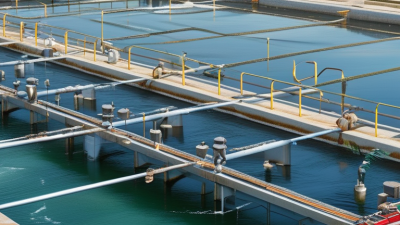
Clean water rarely comes from one machine. It usually passes through a chain of controlled treatment steps. Water technologies include screens, filters, membranes, sensors, pumps, and disinfection systems. Each technology targets a different risk or contaminant. A screen may catch leaves and plastic fragments. Sand filters can reduce suspended particles. Membranes may remove salts, microbes, and other dissolved substances. Ultraviolet light can damage microorganisms without adding chemicals. It sounds simple. It is not.
This article explains how these systems work together in real treatment settings. Coagulation helps small particles gather into larger groups. Sedimentation then allows those particles to settle. Operators monitor turbidity, pressure, pH, flow rate, and microbial indicators. A sudden pressure drop may signal a blocked filter. A damaged membrane can reduce water quality before anyone notices. Reliable facilities use laboratory testing, equipment maintenance, and documented operating procedures. Performance is measured, not assumed.
Water technologies also support homes, agriculture, rainwater collection, and wastewater reuse. However, every system has limits. Reverse osmosis can require substantial energy and create concentrated waste streams. Filters need timely replacement. Ultraviolet systems may perform poorly when water is cloudy. Not every system fits. Sound decisions depend on local water conditions, intended use, operating costs, and verified test results. Engineers, technicians, and public health professionals should evaluate these factors together. Looking closely at mechanisms and trade-offs helps readers distinguish practical solutions from attractive but unsupported claims.
What Water Technologies Cover: Supply, Treatment, Reuse, and Monitoring
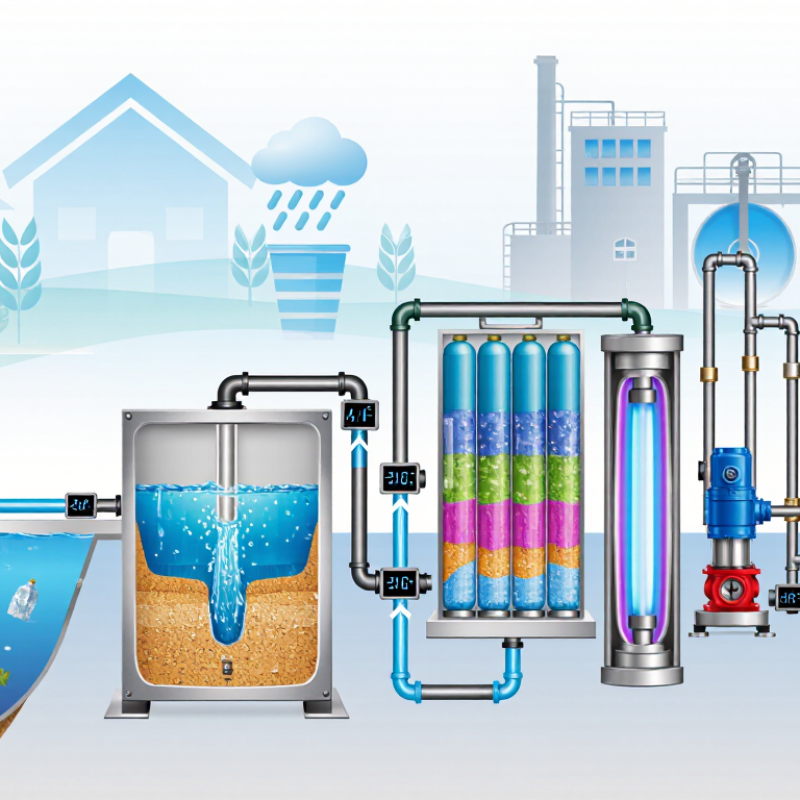
Water technologies cover the full journey of water, from collection to safe discharge. Supply systems draw water from rivers, reservoirs, wells, or seawater sources. Pumps move it through pipes, while sensors measure pressure, flow, and storage levels. The process is layered. If a prefilter becomes clogged, flow can drop before users notice.
Treatment removes physical, chemical, and biological contaminants. Screens catch debris, while settling tanks reduce suspended particles. Filters, membranes, and carefully controlled disinfection provide additional protection. Operators check turbidity, pH, conductivity, and microbial indicators throughout the process. These measurements support decisions, but they do not replace maintenance or trained judgment. A clean reading can still hide a sampling mistake.
Reuse technologies give treated water another purpose, such as irrigation, industrial cooling, or toilet flushing. Advanced treatment may combine filtration, carbon, membranes, and ultraviolet systems. Monitoring continues after treatment. Remote sensors can identify unusual changes, while laboratory testing verifies important results. Real facilities face imperfect data, aging pipes, and changing demand. No system is flawless. A practical design leaves room for inspection, backup equipment, and human review. Too much automation may also create false confidence, especially when sensors drift or maintenance records are incomplete.
How Screening, Coagulation, Filtration, and Disinfection Remove Pollutants
What Are Water Technologies and How Do They Work?
Water treatment combines several controlled barriers to remove pollutants. Each barrier handles a different problem, and performance depends on careful monitoring.
At the intake, screening removes leaves, plastics, grit, and other large debris. Screens protect pumps and reduce blockages. They do not remove dissolved chemicals or tiny microbes. During coagulation, operators add a carefully measured coagulant. Rapid mixing spreads it through the water. Gentle stirring then forms larger particles called flocs. These flocs may contain suspended solids, organic matter, and some metals. Dose control matters. Too little leaves pollutants behind, while too much can increase treatment waste.
Filtration follows. Water passes through layers of sand, gravel, or other engineered media. These layers trap remaining particles and some microorganisms. A filter can look clean while its pores are filling. Operators therefore track turbidity, pressure loss, and flow changes. Disinfection targets pathogens that survive earlier stages. Ultraviolet light damages their genetic material. Chemical disinfectants can provide protection while water moves through pipes. The required contact time depends on water quality, temperature, and disinfectant concentration. No stage is flawless. A clear sample can still contain invisible risks, so laboratories and online sensors check results repeatedly. Even routine systems need adjustment after heavy rain, equipment wear, or sudden changes in source water.
How Sensors and AI Monitor Water Quality in Real Time
What are water technologies, and how do they work? Modern systems combine sensors, data networks, and artificial intelligence to watch water continuously. Probes measure pH, turbidity, temperature, conductivity, dissolved oxygen, and nitrate levels. Readings move to an edge device or secure dashboard within seconds. AI models compare new measurements with historical patterns. A sudden turbidity increase may indicate runoff, pipe damage, or treatment failure. Operators can investigate before the problem spreads.
The need is substantial. The WHO and UNICEF Joint Monitoring Programme reported that 2.2 billion people lacked safely managed drinking water in 2022. The 2024 UNESCO World Water Development Report also states that agriculture uses about 70% of global freshwater withdrawals. Real-time monitoring cannot solve scarcity alone. It can reduce waste and improve response times. However, sensors drift, batteries fail, and models can misread unusual weather. A clean data stream is not always a truthful picture. Sampling locations must represent the whole network, not only convenient points.
Tips: Calibrate probes regularly. Pair automated alerts with laboratory testing. Keep a record of weather, maintenance, and unusual events. Start with simple thresholds before deploying complex AI. Human review still matters. A model may detect a pattern without understanding its cause. That gap deserves careful attention.
How Reverse Osmosis Desalination Produces Freshwater (IDA, 2023)
Water technologies help communities treat, move, and protect freshwater. Reverse osmosis desalination is one important example. It turns seawater into usable water through pressure and selective filtration.
Seawater first passes through screens and pretreatment filters. These steps remove sand, algae, and suspended particles. Without them, the membrane can clog or degrade quickly. A high-pressure pump then pushes the water against a semipermeable membrane. Tiny water molecules pass through. Most dissolved salts, minerals, and many contaminants remain in a concentrated stream. The filtered water becomes freshwater, often called permeate.
The process needs careful monitoring. Operators check pressure, flow, salinity, and membrane performance during production. According to the International Desalination Association’s 2023 discussions, energy use remains a major concern in reverse osmosis systems. Electricity powers the pumps, so efficiency affects both operating costs and environmental impact. The concentrated brine also requires responsible management. It should not be released carelessly near sensitive marine habitats.
Freshwater from the membrane may need remineralization and disinfection before distribution. Pure water can taste flat and may interact with pipes differently. Treatment choices depend on local standards and water conditions. In practice, desalination is reliable, but never effortless. Filters need cleaning. Membranes eventually lose efficiency. Small design mistakes can become expensive problems. Good results depend on trained staff, transparent testing, and regular maintenance. The technology works well, yet its wider impacts still deserve honest review.
Why Water Reuse Matters: 2.2 Billion People Lack Safe Water (WHO, 2022)
Water technologies turn unsafe or used water into a safer resource. They include screening, sedimentation, filtration, membrane treatment, and disinfection. Each method removes a different problem. Screens catch larger debris, while filters reduce particles and some microbes. Membranes can separate salts and very small contaminants. Disinfection then uses controlled chemical or physical processes to inactivate remaining pathogens.
Water reuse matters because 2.2 billion people lacked safely managed drinking water in 2022, according to the World Health Organization. Reusing treated wastewater can support farming, industry, and toilet flushing. It can also reduce pressure on rivers and underground supplies. However, reuse is not automatically safe. Treatment must match the water’s final purpose, and independent testing should verify performance. A clear pipe does not prove clean water. That mistake remains common.
Tips: Keep untreated and treated water physically separate. Test for microbes and chemicals regularly. Monitor filters, pressure, and disinfection levels. Ask how waste concentrates are handled. Small systems may fail when maintenance is delayed. This is where practical judgment matters. Technology helps, but trained operators, honest reporting, and local oversight decide whether reuse protects people.
What Are Water Technologies and How Do They Work?
Why Water Reuse Matters: 2.2 Billion People Lack Safe Water (WHO, 2022)
| Water technology or indicator | What it does | How it works | Typical target or performance information | Common role in water reuse | Reference |
|---|---|---|---|---|---|
| Global safe-water gap | Shows why treatment, conservation, and reuse are important. | The indicator combines availability of water on premises, reliable availability when needed, and compliance with microbiological and priority chemical standards. | 2.2 billion people lacked safely managed drinking-water services in 2022; 703 million lacked even a basic drinking-water service. | Provides context for expanding reliable potable-water supplies and reducing pressure on freshwater sources. | WHO/UNICEF Joint Monitoring Programme, 2023 |
| Coagulation and flocculation | Removes suspended particles, colloids, and part of the organic matter that causes turbidity or color. | Coagulants destabilize small particles; gentle mixing then brings them together into larger flocs that can settle or be filtered. | Performance depends strongly on water chemistry, dose, mixing, and temperature; it is not a stand-alone pathogen barrier. | Pre-treatment for drinking-water production and municipal wastewater treatment. | U.S. EPA, Drinking Water Treatability Database |
| Sedimentation and clarification | Separates heavier flocs and solids from water. | Water moves slowly through a basin, allowing gravity to settle particles into sludge while clarified water flows onward. | Usually follows coagulation and flocculation; removal varies with particle size, settling time, and hydraulic conditions. | Reduces solids loading on downstream biological, membrane, or disinfection processes. | U.S. EPA, Water Treatment Manuals and Treatability Database |
| Biological treatment | Reduces biodegradable organic matter and can remove nitrogen compounds. | Microorganisms use organic pollutants as food; controlled oxygen conditions support carbon removal and nitrification or denitrification. | Commonly monitored using biochemical oxygen demand, chemical oxygen demand, ammonia, nitrate, and suspended solids. | Core process for municipal wastewater before discharge or advanced polishing for reuse. | U.S. EPA, Wastewater Technology Fact Sheets |
| Sand or multimedia filtration | Removes remaining suspended particles and improves clarity. | Water passes through granular media; particles are captured by straining, interception, sedimentation, and attachment to media surfaces. | Often used after clarification; filtration alone should not be assumed to provide complete pathogen removal. | Protects membranes and improves the effectiveness of subsequent disinfection. | WHO, Guidelines for Drinking-water Quality |
| Activated carbon adsorption | Reduces tastes, odors, many dissolved organic compounds, and selected micropollutants. | Dissolved substances attach to the extensive internal surface area of porous carbon. | Effectiveness depends on carbon properties, contact time, pollutant concentration, and competition from natural organic matter. | Polishing step for reclaimed water; spent carbon requires controlled management or regeneration. | U.S. EPA, Drinking Water Treatability Database |
| Ultraviolet disinfection | Inactivates bacteria, viruses, and protozoa without adding a chemical disinfectant. | UV light damages microbial genetic material, preventing replication. | Common design practice uses validated UV dose requirements; effectiveness decreases when turbidity or UV-absorbing compounds shield microorganisms. | Final or near-final disinfection for high-quality reclaimed water; it does not remove salts or most dissolved chemicals. | U.S. EPA, Ultraviolet Disinfection Guidance Manual |
| Chlorination | Inactivates many disease-causing microorganisms and provides residual protection in distribution systems. | Free chlorine or chloramine reacts with microbial components and remains at a controlled concentration in the water network. | The required dose and contact time depend on pH, temperature, chlorine demand, and the target organism; disinfection by-products must be controlled. | Commonly used after wastewater treatment and in drinking-water distribution. | WHO, Guidelines for Drinking-water Quality |
| Ultrafiltration and microfiltration | Removes suspended solids, colloids, bacteria, and some protozoa. | Pressure drives water through membrane pores while larger particles and microorganisms are retained. | These membranes generally do not remove dissolved salts, many small organic molecules, or all viruses without additional treatment. | Barrier treatment before UV, chlorine, reverse osmosis, or other advanced processes. | U.S. EPA, Membrane Filtration Guidance Manual |
| Reverse osmosis | Reduces dissolved salts, many inorganic contaminants, and a broad range of dissolved compounds. | High pressure forces water through a semipermeable membrane, leaving a concentrated reject stream. | Typical systems can achieve approximately 95–99% rejection for many dissolved salts, although results vary by membrane, compound, operating conditions, and pretreatment. | Advanced treatment for potable reuse, industrial reuse, and desalination; concentrate management is required. | U.S. EPA, Water Treatability Database |
| Water reuse | Uses treated municipal, industrial, or agricultural water again instead of relying only on new freshwater withdrawals. | Wastewater is treated to a quality appropriate for a defined end use, followed by monitoring and risk management. | End uses include irrigation, industrial processes, toilet flushing, environmental flows, groundwater replenishment, and potable supply; treatment requirements differ by exposure risk. | Can improve water security, reduce wastewater discharges, and lessen pressure on rivers, lakes, and aquifers when properly regulated. | WHO, Potable Reuse: Guidance for Producing Safe Drinking-water |
| Monitoring and multiple barriers | Confirms that treatment is working and limits health risks. | Operators combine source protection, treatment barriers, online sensors, laboratory testing, maintenance, and emergency response procedures. | Typical parameters include turbidity, microbial indicators, disinfectant residual, conductivity, pH, nutrients, and regulated chemical contaminants. | Essential for reliable reclaimed-water systems because no single technology removes every contaminant under all conditions. | WHO, Guidelines for Drinking-water Quality; U.S. EPA, Water Reuse Action Plan |
Note: Treatment performance depends on source-water quality, system design, operating conditions, maintenance, and regulatory requirements. Water intended for drinking generally requires a validated, multiple-barrier treatment and monitoring approach.
Related Posts
-
Why Are Water Technologies Important for Global Buyers?
-
What Are the Best Water Treatment Supplies in China?
-
Top 10 Essential Water Equipment for Global Buyers Guide?
-
2026 Best Water Cleaning Solutions for Global Buyers?
-
Why Are Water Treatment Supplies Essential for Global Procurement?
-
Best Cooling Water Treatment Chemicals for Global Buyers?
Ready to talk about water treatment?
Contact us
Please complete this form and we will be in touch