What Is Water Treatment and How Does It Work?
Water treatment begins with a practical question: what is in the water, and what must be removed before people can use it? A clear glass can contain particles, dissolved chemicals, or microbes invisible to the eye. Treatment plants address these risks through carefully controlled physical, chemical, and biological processes. The exact steps depend on the source, local conditions, and intended use. There is no single recipe.
Hydrologist Luna Leopold wrote, “The health of our waters is the principal measure of how we live on the land.” That perspective helps explain why water treatment matters beyond the plant itself. Operators may screen out debris, settle suspended material, filter finer particles, and disinfect water to reduce harmful microorganisms. They also test samples and adjust processes when water quality changes. A filter is not a magic barrier. Treatment needs monitoring, maintenance, and sound judgment.
This guide explains what water treatment is, how its main stages work, and why different water sources call for different approaches. It also considers drinking water, wastewater, and the challenges of keeping systems dependable. The details can seem tidy on a diagram. Real systems are less tidy: equipment ages, raw water shifts with weather, and treatment choices can involve trade-offs. Understanding those limits is part of understanding how safe, useful water reaches homes and communities.
Why Water Is Treated: 2.2 Billion Lacked Safely Managed Water in 2022
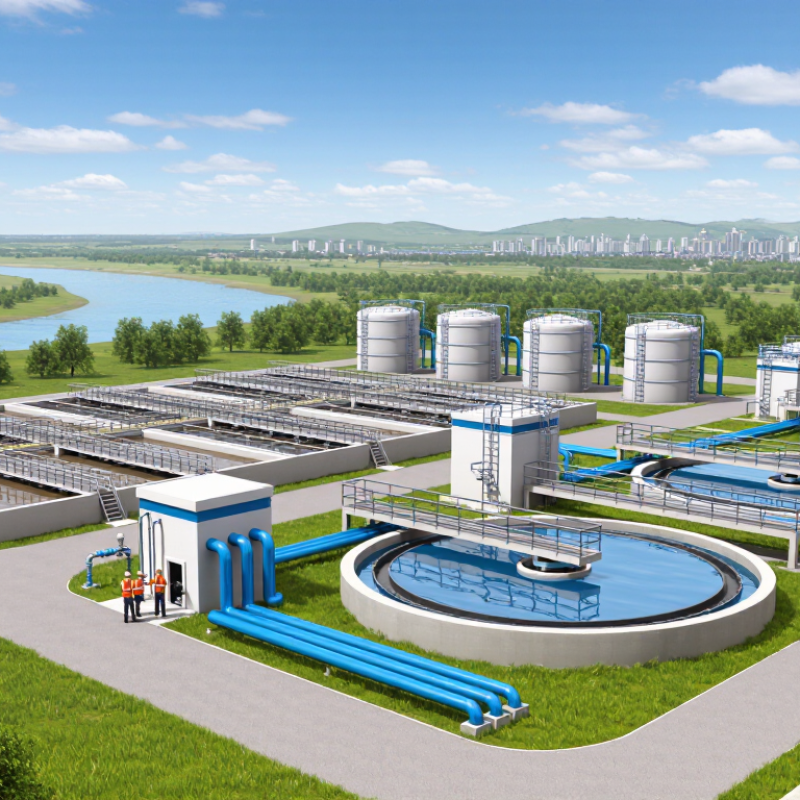
Water treatment makes raw water safer by reducing particles and disease-causing microbes. Yet access remains uneven. The WHO/UNICEF Joint Monitoring Programme reported that 2.2 billion people lacked safely managed drinking water in 2022. The measure requires water to be available when needed, accessible on premises, and free from contamination. A clear glass is not proof of safety.
Treatment depends on the source. At a municipal plant, operators may add coagulants so fine particles clump together, then settle and filter them out. Disinfection, often with chlorine or ultraviolet light, helps control microbes. WHO’s drinking-water guidelines stress that risks can also arise during storage and distribution. Treatment is not a magic switch. Pipes, power cuts, and poor maintenance can undo careful work, and no single process suits every supply.
Tips: Follow local water advisories, especially after floods or pipe repairs. Store drinking water in a clean, covered container; avoid dipping hands or cups into it. If water looks cloudy, let particles settle and filter it before disinfection, using current public-health guidance. Small steps matter. But household care cannot replace reliable infrastructure—an uncomfortable gap that deserves attention.
Step 1—Screening and Coagulation: Preparing Raw Water for Treatment
At a treatment plant, raw water may carry leaves, twigs, grit, and tiny suspended particles. Screening catches larger debris as water passes through metal bars or fine mesh. Operators remove the trapped material and check for blockages. A screen is simple, but it cannot capture everything. Mud and microscopic particles pass through.
Coagulation prepares those finer particles for removal. A treatment professional adds a measured coagulant, then mixes the water so the chemical can interact with particles that otherwise repel one another. Small particles begin to gather into larger, visible clumps called floc. The dose is not universal; it can change with turbidity, temperature, and water chemistry. Plant staff may use jar tests—small, controlled trials—to compare doses before adjusting full-scale treatment. They also monitor pH and clarity. Small changes matter. A screen can look clear while fine material still slips past, and that is easy to overlook. Mixing that is too weak may limit floc formation; mixing that is too intense can break fragile clumps apart. The process needs adjustment, not guesswork.
Step 2—Flocculation, Sedimentation, and Filtration: Removing Particles
During flocculation, water is gently stirred so tiny suspended particles can meet and form larger clumps called flocs. A treatment operator may adjust mixing speed and chemical dose because water quality changes with rainfall, season, and source. The goal is steady contact, not vigorous churning. Too much force can break the new flocs apart.
The water then enters a sedimentation basin. Heavier flocs settle onto the floor, while clearer water moves onward. This can take hours, depending on the plant’s design and conditions. Some fine particles remain suspended, so filtration follows. Water passes through layers such as sand, gravel, or specialized media that trap remaining material. Filters need monitoring and cleaning; a clear appearance alone does not prove that water is safe. I find this step easy to underestimate: small changes in flow can affect how well particles are removed.
Tips: Look for stable, gentle mixing and settled sludge being removed regularly. If water suddenly turns cloudy, operators should check the source and treatment settings rather than assume the filter will fix everything. Treatment is practical, but never perfectly uniform. Each water supply behaves a little differently.
Step 3—Disinfection: EPA’s 3-Log Giardia and 4-Log Virus Targets
What Is Water Treatment and How Does It Work?
Step 3—Disinfection: EPA’s 3-Log Giardia and 4-Log Virus Targets
Disinfection is a key barrier against disease-causing organisms in drinking water. For many surface-water systems, EPA treatment requirements include at least 3-log removal or inactivation of Giardia and 4-log removal or inactivation of viruses. A log means a tenfold reduction: 3-log equals 99.9%, while 4-log equals 99.99%. These targets apply to the treatment process as a whole, not necessarily to disinfection alone. Filtration and other treatment steps can contribute.
Disinfection performance depends on contact time, disinfectant concentration, water temperature, pH, and clarity. Operators monitor these conditions and use validated methods to show the process is working. Cloudy water can shield microbes, so effective filtration matters. The numbers sound precise. Real water is less tidy, and operating conditions can change.
Tips: If you manage a private water supply, use a qualified laboratory for microbial testing and follow local health guidance. Keep treatment equipment maintained, and record test results. A clear glass is not proof of safe water.
What Is Water Treatment and How Does It Work? - Step 3—Disinfection: EPA’s 3-Log Giardia and 4-Log Virus Targets
| Topic |
Giardia target |
Virus target |
What it means |
| Required log reduction |
3-log |
4-log |
A log reduction describes how much a treatment process reduces the number of organisms. |
| Equivalent reduction |
99.9% |
99.99% |
These percentages are mathematical equivalents of the stated log reductions. |
| Example: 1,000,000 organisms before treatment |
At most 1,000 remain after a 3-log reduction |
At most 100 remain after a 4-log reduction |
Illustrative calculation only; actual source-water concentrations vary. |
| How treatment credit can be achieved |
Through qualifying combinations of physical removal, such as filtration, and pathogen inactivation, such as disinfection. |
The credited contribution depends on the applicable drinking-water rules and the approved treatment process. |
| Key disinfection factors |
Disinfectant type and concentration, contact time, water temperature, pH, and water quality. |
Operators control and monitor process conditions to demonstrate the required inactivation credit. |
| Why filtration matters |
Filtration can remove particles and contribute treatment credit; disinfection provides inactivation credit. |
Effective pretreatment and filtration can support reliable disinfection performance. |
| Regulatory context |
The 3-log Giardia and 4-log virus benchmarks are associated with U.S. federal drinking-water requirements for public water systems using surface water or groundwater under the direct influence of surface water. Applicable requirements and treatment credits depend on the system and governing rules. |
Note: “Log reduction” may include both physical removal and inactivation; it does not necessarily mean disinfection alone achieves the full target.
Step 4—Storage and Distribution: Protecting Water Quality to the Tap
After treatment, water enters covered reservoirs and elevated tanks. These stores balance daily demand, steady pressure, and give pumps room to respond. But storage can also become a weak link. Warm spots, sediment, and long residence times may reduce disinfectant residual. For chlorinated systems, the World Health Organization’s 2022 Guidelines for Drinking-water Quality recommend at least 0.2 mg/L free chlorine at delivery. Effective disinfection generally requires 0.5 mg/L after 30 minutes of contact at pH below 8. Small numbers matter.
From each tank, water travels through mains, valves, and service lines. Operators monitor disinfectant levels, pressure, and water quality, while inspecting tanks and flushing low-flow sections. A pressure drop can let contaminants enter through leaks, so alarms and routine checks are practical safeguards, not paperwork. The U.S. EPA’s 2023 7th Drinking Water Infrastructure Needs Survey and Assessment estimated $625 billion in drinking-water infrastructure needs over 20 years, including distribution assets. That figure points to the scale of maintenance required. Still, a clean tank does not guarantee clean water at every tap. Stagnant sections and overlooked valves can complicate the picture, and no monitoring plan catches every unusual event.
What Is Water Treatment and How Does It Work? — Step 4: Storage and Distribution
Selected U.S. chlorine benchmarks for protecting water quality as treated water travels to the tap
Why it matters: A disinfectant residual helps control microbial growth in storage tanks and distribution pipes. The 0.2 mg/L benchmark applies to certain systems under U.S. federal rules; 4.0 mg/L is the EPA maximum residual disinfectant level, not a treatment target. Requirements and operating goals can vary by system.
Sources: U.S. EPA drinking-water regulations (40 CFR §141.72) and EPA National Primary Drinking Water Regulations (40 CFR §141.65).