China Top 10 Water Treatment Supplies Manufacturers

China Top 10 Water Treatment Supplies Manufacturers introduces suppliers serving one of the world’s most demanding infrastructure markets. The sector covers filtration membranes, dosing pumps, ultraviolet systems, ion-exchange media, pressure vessels, and monitoring instruments. Quality is visible in details: stable flow, clean welds, readable calibration labels, and traceable test records. Small defects can create expensive failures.

The need is substantial. The WHO and UNICEF Joint Monitoring Programme reported that 2.2 billion people lacked safely managed drinking water in 2022. The UNESCO World Water Development Report 2024 also identified growing pressure from pollution, climate change, and uneven water access. These figures make water treatment supplies more than an industrial purchasing category. They connect directly with public health, factory reliability, and environmental responsibility.

Strong manufacturers should therefore be assessed beyond price. This overview considers production experience, certification evidence, material quality, customization capacity, after-sales support, and delivery performance. It also examines whether suppliers communicate honestly about treatment limits. As water-policy expert Peter Gleick has stated, “Water is a human right, not a commodity.” That principle matters when equipment influences safe water access.

No ranking is flawless. Supplier capabilities can change, and published specifications may not reveal field performance. Buyers should verify certificates, request recent test reports, inspect factories when possible, and compare performance under real operating conditions. A polished catalogue is not enough. Reliable water treatment begins with evidence, careful engineering, and responsible procurement.
China Top 10 Water Treatment Supplies Manufacturers

Industry Scope and Criteria for Selecting China’s Top Water Treatment Suppliers

China’s top water treatment suppliers should be assessed across a broad industry scope. This includes municipal sewage, industrial process water, drinking water, desalination, wastewater reuse, sludge treatment, and digital monitoring. The need is substantial. The WHO and UNICEF Joint Monitoring Programme reported that 2.2 billion people lacked safely managed drinking water in 2022. The UN World Water Development Report 2024 also states that agriculture represents about 70% of global freshwater withdrawals.

China’s leading suppliers should therefore offer more than equipment. Buyers should examine membrane performance, biological treatment stability, chemical dosing accuracy, automation, and sludge reduction. Compliance with applicable Chinese standards is essential. Independent laboratory results, project references, pilot-test records, and energy-consumption data deserve careful review. A supplier claiming low operating costs should provide figures from comparable facilities, not only brochure estimates. Service coverage matters too, especially for plants operating outside major cities. The evaluation is never perfect. Site conditions can change quickly.

Tips: Request a complete lifecycle-cost model. Check replacement intervals, spare-part availability, and operator training. Ask for raw-water data from similar projects. Review at least three years of performance records when available. ISO certifications can support credibility, but they cannot replace technical verification. Buyers should also compare discharge limits, climate conditions, maintenance staffing, and emergency response plans. Some suppliers look strong on price yet provide limited after-sales support. That weakness may appear only after commissioning.

Core Product Categories and Technologies Offered by Leading Manufacturers

China Top 10 Water Treatment Supplies Manufacturers

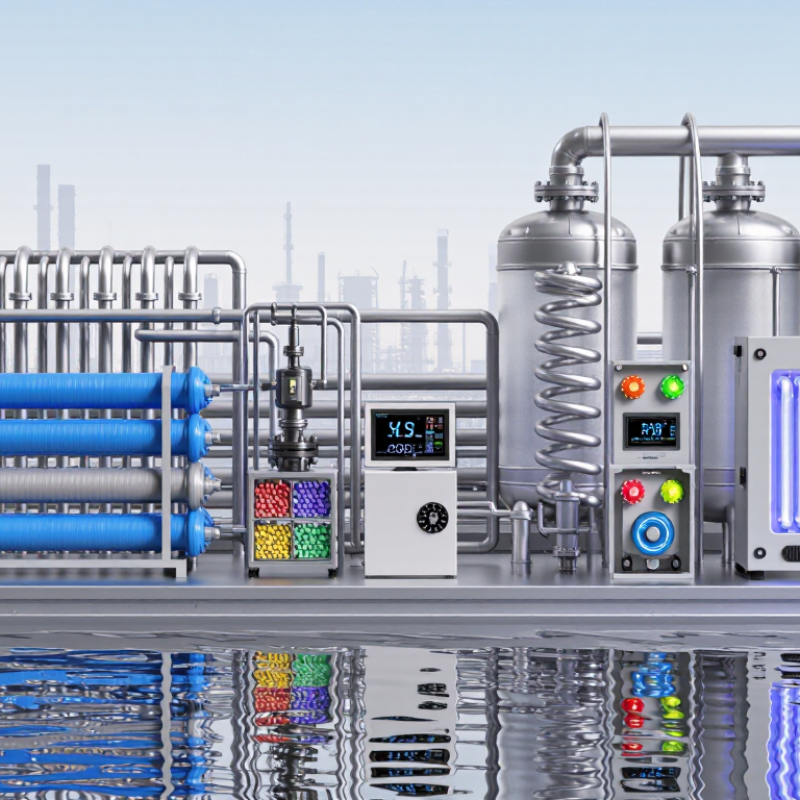
Leading Chinese water treatment manufacturers cover a broad range of core products and process technologies. Their portfolios often include reverse osmosis membranes, ultrafiltration modules, MBR systems, cartridge filters, and ion-exchange equipment. Many also supply dosing pumps, clarifiers, sedimentation tanks, UV units, ozone generators, and sludge dewatering machines. Digital monitoring is becoming common, with sensors tracking pH, turbidity, conductivity, flow, and membrane pressure. These tools help operators identify fouling before output drops sharply.

Technology selection should match the water source and operating conditions. Industrial wastewater may require chemical dosing, biological treatment, and membrane polishing. Municipal facilities often combine screening, clarification, biological treatment, disinfection, and sludge handling. A reliable manufacturer should provide material specifications, test data, installation guidance, and replacement plans. Factory inspection matters. Brochures alone are not enough.

Tips: Ask for pilot-test results using water similar to yours. Check energy use, cleaning frequency, spare-part availability, and remote support. Compare total operating cost, not only purchase price. Small details matter. A low-cost membrane can become expensive when cleaning is frequent. Product ratings may also change under real conditions, so buyers should leave room for uncertainty and verify claims through site testing.

Profiles of Ten Notable Chinese Water Treatment Supplies Manufacturers

China Top 10 Water Treatment Supplies Manufacturers

The ten profiles focus on Chinese manufacturers serving municipal, industrial, and commercial water projects. Their product ranges include membrane modules, dosing pumps, filtration vessels, ultraviolet units, sludge dewatering equipment, valves, sensors, and compact treatment skids. Selection should consider verified operating records, process knowledge, testing capacity, and after-sales support, not catalogue size alone.

The WHO and UNICEF Joint Monitoring Programme reported that 2.2 billion people lacked safely managed drinking water in 2022. The 2024 United Nations World Water Development Report also highlights rising pressure from industry, cities, and climate variability. These figures explain the market’s direction. One profiled manufacturer specializes in reverse-osmosis assemblies, while another focuses on membrane bioreactor systems. Others supply chemical dosing, automation, pumps, clarifiers, and laboratory monitoring instruments. Their strengths differ sharply.

Evidence remains uneven. Public project claims may omit water chemistry, maintenance intervals, or failure rates. That matters. A low purchase price can become expensive when membranes foul quickly or replacement parts arrive late. Buyers should request test reports, factory acceptance records, energy data, and references from comparable sites. Certification helps, but it does not replace field verification. Some manufacturers appear technically capable, yet their international service networks remain limited. This is an area requiring careful review.

China Top 10 Water Treatment Supplies Manufacturers - Profiles of Ten Notable Chinese Water Treatment Supplies Manufacturers

Rank Manufacturer Profile Core Product Categories Primary Treatment Applications Common Construction Materials Typical Project Scale Relevant Technical Standards Typical Export Markets Key Purchasing Considerations
1 Profile A
Integrated municipal equipment manufacturer
Packaged treatment plants, clarifiers, sedimentation tanks, sludge dewatering systems and dosing skids Drinking-water treatment, municipal wastewater treatment and tertiary polishing Carbon steel with protective coating, stainless steel, reinforced concrete and fiberglass-reinforced plastic Small to large municipal installations; commonly configured from tens to thousands of cubic metres per day ISO 9001 quality management; project specifications may reference EN, ASTM, DIN or local water authority requirements Asia, Africa, the Middle East and Latin America Process guarantees, hydraulic loading, corrosion protection, commissioning support and spare-parts availability
2 Profile B
Membrane system specialist
Ultrafiltration, microfiltration, reverse-osmosis skids, membrane housings and pretreatment packages Industrial reuse, potable-water production, desalination and high-purity process water Stainless steel, duplex stainless steel, fiberglass-reinforced plastic and high-pressure polymer piping Containerized and skid-mounted systems ranging from laboratory or pilot units to industrial plants Membrane system design commonly follows ASTM test methods, ISO management systems and local drinking-water regulations Southeast Asia, the Middle East, Europe, Africa and South America Feed-water analysis, recovery rate, membrane flux, energy consumption, pretreatment quality and membrane replacement cost
3 Profile C
Industrial wastewater equipment manufacturer
Dissolved-air flotation units, oil-water separators, equalization tanks, chemical dosing systems and filter presses Textile, food processing, chemical, metal-finishing and machinery-manufacturing wastewater Coated carbon steel, stainless steel 304 or 316, polypropylene and fiberglass-reinforced plastic Factory-scale systems generally ranging from a few cubic metres per day to several thousand cubic metres per day ISO 9001; electrical assemblies may follow IEC requirements, while discharge limits depend on the destination country Asia, the Middle East, Africa and industrial zones in Latin America Pollutant load, chemical consumption, sludge yield, automation level, installation footprint and discharge compliance
4 Profile D
Water filtration equipment producer
Multimedia filters, activated-carbon filters, cartridge filters, bag filters and automatic backwash filters Drinking-water pretreatment, process-water filtration, boiler feedwater and wastewater polishing Carbon steel, stainless steel, fiberglass-reinforced plastic, polyethylene-lined steel and polypropylene Individual vessels for small facilities through parallel filter trains for large water-treatment plants Designs may reference ASME pressure-vessel practice, ASTM materials testing and local pressure-equipment rules Asia, Africa, the Middle East, Europe and Oceania Filter velocity, pressure rating, media depth, backwash flow, vessel diameter, control-valve quality and media certification
5 Profile E
Water disinfection and oxidation supplier
Ultraviolet systems, ozone generators, chlorine-dioxide systems, hypochlorite dosing units and contact tanks Drinking-water disinfection, wastewater reuse, aquaculture, food processing and industrial process water Stainless steel, borosilicate or quartz components, PVC, CPVC and chemically resistant elastomers Point-of-use systems, packaged skids and continuous-flow systems for municipal or industrial facilities Disinfection performance is commonly verified through validated dose, contact-time and microbiological testing procedures Asia, Europe, the Middle East, Africa and North America Required pathogen reduction, residual disinfectant control, energy consumption, chemical safety and monitoring instrumentation
6 Profile F
Sludge-management equipment manufacturer
Belt filter presses, screw presses, centrifuges, sludge thickeners, mixers and polymer preparation units Municipal sludge, industrial biological sludge and chemical precipitation sludge Stainless steel, coated carbon steel, wear-resistant alloys and corrosion-resistant polymer components From compact dewatering packages to continuous systems serving large wastewater-treatment plants Equipment selection normally considers applicable occupational-safety, electrical and machinery requirements in the installation country Asia, Africa, the Middle East, Eastern Europe and Latin America Sludge concentration, dry-solids throughput, cake dryness, polymer demand, wash-water use, noise and maintenance access
7 Profile G
Biological treatment system integrator
Moving-bed biofilm reactors, sequencing-batch reactors, membrane bioreactors, aeration systems and fine-bubble diffusers Municipal sewage, food-processing wastewater, hotel wastewater and industrial biodegradable effluent Reinforced concrete, stainless steel, coated carbon steel, EPDM membranes and engineering plastics Decentralized plants, commercial developments and medium-to-large municipal facilities Design is based on biological loading, oxygen-transfer testing, effluent limits and local environmental permits Asia, the Middle East, Africa, Europe and Latin America Influent variability, oxygen-transfer efficiency, sludge production, nutrient removal, membrane fouling and operator requirements
8 Profile H
Desalination and brackish-water equipment supplier
Reverse-osmosis desalination skids, high-pressure pumps, energy-recovery units, cartridge filters and remineralization systems Seawater desalination, brackish-water treatment, island water supply and industrial water production Duplex or super-duplex stainless steel, fiberglass-reinforced plastic, high-pressure polymer piping and titanium components Containerized units for remote sites through large multi-train desalination plants System design may incorporate ISO, ASTM, ASME, IEC and destination-country drinking-water requirements Middle East, North Africa, Southeast Asia, island regions and coastal Latin America Feed salinity, recovery ratio, specific energy consumption, intake design, concentrate disposal and corrosion resistance
9 Profile I
Water-pump and fluid-handling manufacturer
Raw-water pumps, centrifugal pumps, dosing pumps, submersible pumps, mixers and packaged pumping stations Water intake, water distribution, wastewater transfer, sludge handling and chemical dosing Cast iron, ductile iron, stainless steel, bronze, engineered plastics and ceramic mechanical-seal materials Small dosing assemblies, booster sets and large pumping stations for municipal or industrial systems Pump performance is generally evaluated using recognized hydraulic-test methods and applicable electrical-safety requirements Asia, Africa, the Middle East, Europe and South America Flow rate, total dynamic head, efficiency, solids handling, seal arrangement, motor protection and lifecycle cost
10 Profile J
Water-quality monitoring and automation supplier
Online pH, conductivity, turbidity, dissolved-oxygen, chlorine and flow-monitoring instruments with control panels Process monitoring, compliance reporting, chemical dosing control and remote operation of treatment plants Stainless steel, PVC, polycarbonate, chemically resistant sensor housings and industrial-grade electrical enclosures Standalone measurement points, plant-wide supervisory control systems and remote monitoring networks Instrumentation may be aligned with IEC electrical practices, ISO quality systems and recognized analytical test methods Asia, Europe, the Middle East, Africa and Latin America Measurement range, accuracy, calibration interval, sensor fouling resistance, data connectivity, enclosure rating and after-sales service

Note: The profiles use generic manufacturer categories rather than company or brand names. Capacity ranges, materials and standards are representative industry references; final specifications should be confirmed against the supplier’s technical datasheet, test report and project requirements.

Manufacturing Standards, Certifications, and Quality Control Practices

Evaluating China’s top 10 water treatment supplies manufacturers requires more than comparing prices or catalog sizes. Reliable factories usually operate under ISO 9001 quality systems, with documented procedures for purchasing, production, inspection, and corrective action. Environmental controls may follow ISO 14001, while workplace processes can align with ISO 45001. Product-specific certifications, such as NSF/ANSI or CE, should match the intended market and equipment category.

Quality control becomes visible on the production floor. Inspectors may check membrane dimensions, pipe wall thickness, valve pressure, weld appearance, and electrical safety. Batch numbers should connect raw materials to final inspection records. For dosing equipment, calibration tests must confirm flow accuracy at different operating pressures. For filter media, laboratories should examine particle size, moisture, and contamination levels. Traceability matters.

Small details reveal manufacturing discipline. A sealed sample bag, readable instrument label, and signed inspection sheet can prevent expensive disputes. However, certificates alone prove little. Some suppliers maintain excellent paperwork but inconsistent process control. That weakness deserves careful questioning. Factory audits should include supplier records, calibration dates, failed-test handling, and worker training evidence. Independent laboratory testing adds credibility, especially for materials contacting drinking water. No audit is perfect. Continuous sampling and honest corrective reports remain necessary.

How to Compare Suppliers by Capacity, Applications, Service, and Pricing

Choosing among China’s top ten water treatment supplies manufacturers requires more than a factory tour. Compare verified output, not advertised capacity. Ask for monthly production records, critical equipment lists, and recent delivery evidence. A supplier making membranes may not produce dosing systems well. Check application fit. Municipal wastewater, food processing, electronics, and seawater projects need different materials, controls, and testing. Ask for sample reports. Small details matter.

Capacity should match your project risk, not only your order size. Review peak-season lead times, backup production lines, inspection procedures, and spare-part availability. Request a pilot sample or factory acceptance test when performance affects water quality. Experienced engineers should explain flux, pressure, chemical resistance, energy use, and maintenance in practical terms. Beware of vague guarantees. They sound attractive, but rarely help commissioning teams.

Compare pricing on a full-life basis. Include freight, installation support, consumables, replacement parts, training, and warranty exclusions. A low quotation may hide expensive membranes or frequent cleaning. Ask whether prices remain valid after specification changes. Service quality appears in response times, drawings, troubleshooting records, and language support. Contact recent customers when permission is available. One limitation remains: supplier data is often self-reported. Independent testing and staged payments can reduce uncertainty, though they add time. That trade-off is easy to underestimate.

Ready to talk about water treatment?

Contact us

Please complete this form and we will be in touch