How to Choose a Drinking Water Treatment System?
Choosing a drinking water treatment system should begin with the water itself, not with an attractive product label. A clear glass can still contain bacteria, lead, nitrates, PFAS, or unpleasant odors. Testing creates the useful starting point. It shows which contaminants require attention and prevents unnecessary filtration.
Dr. Joseph Cotruvo, a respected drinking water treatment specialist, stated, “There is no single treatment process that removes every contaminant.” That principle remains practical for homes, offices, and small facilities. Activated carbon can improve taste and reduce some chemicals. Reverse osmosis can reduce many dissolved substances. Ultraviolet systems can target microorganisms, but they do not remove metals or salts. Each technology has limits.
Think about the kitchen tap.
A suitable system must also match daily water use, pressure, available space, and maintenance habits. A whole-house unit may protect showers and washing machines, while an under-sink system can focus on drinking and cooking water. Certification matters, yet it should match the specific contaminant claim. Filter replacement dates matter too. A neglected cartridge can reduce performance and create avoidable hygiene concerns.
The choice is rarely perfect. Test results may be incomplete, and household needs can change. That is why this guide compares treatment methods, operating costs, installation demands, and maintenance responsibilities. It also asks an uncomfortable question: are you solving a measured water problem, or reacting to fear? A reliable decision combines laboratory evidence, professional advice, and realistic everyday care.
Define Your Household’s Drinking Water Treatment Needs
How to Choose a Drinking Water Treatment System?
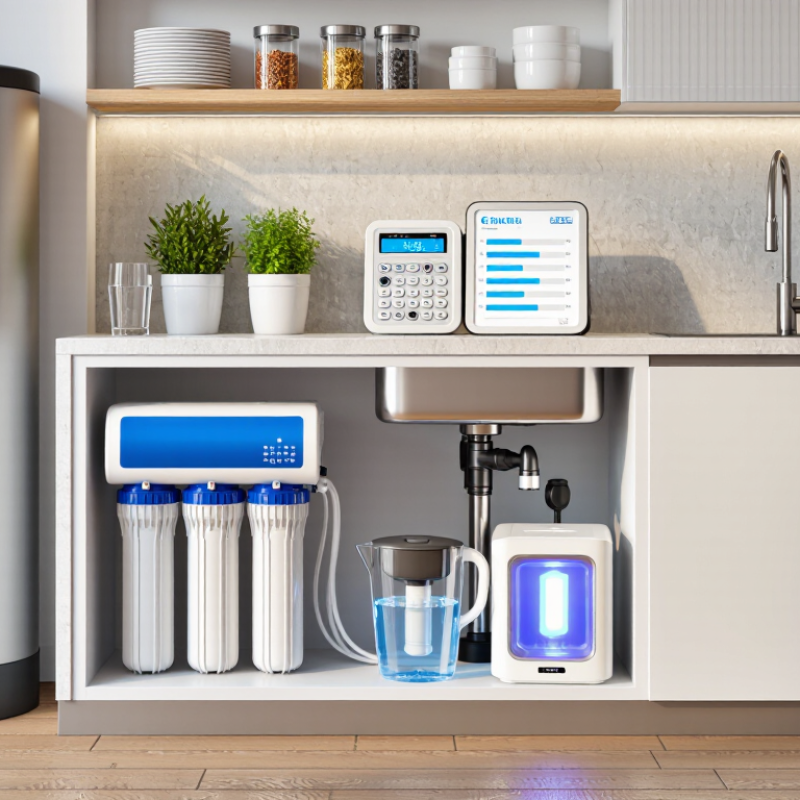
Defining your household’s needs should come before comparing treatment systems. Start with your water source. Municipal water may contain chlorine, sediment, or aging-pipe metals. Well water can vary after heavy rain. Notice practical clues, such as a metallic taste, cloudy ice cubes, or scale around the kettle. These details matter, but they cannot replace testing. Request a current water report, or use an independent laboratory for a private well. Test for likely contaminants, not everything randomly.
Think about who uses the water. A baby, an older adult, or someone with a sensitive stomach may need stricter control. Calculate daily drinking and cooking volume, then check the system’s flow rate. A small unit may suit one tap but disappoint a busy family. Maintenance is part of the need. Filter changes, storage space, wastewater, and electricity should fit your routine. It is easy to overbuy. More treatment is not automatically better.
Tips: Write down your concerns for one week. Record odors, stains, and filter changes. Compare test results with treatment claims, and ask a qualified water professional about limitations. Certification can support reliability, but it does not prove suitability for every home. A result may also change with seasons. Recheck when conditions change.
How to Choose a Drinking Water Treatment System?
Define Your Household’s Drinking Water Treatment Needs
Start by identifying the contaminants present in your water through a current utility report or certified laboratory test. This chart compares selected U.S. drinking-water regulatory benchmarks, shown in micrograms per liter (µg/L). The logarithmic scale makes it possible to display values that vary widely.
Treatment needs depend on the test results, source water, household size, and preferred goals such as contaminant reduction, taste, odor, or scale control. Select a system certified for the specific contaminants you need to reduce.
Benchmarks shown: arsenic MCL 10 µg/L, lead action level 15 µg/L, mercury MCL 2 µg/L, total chromium MCL 100 µg/L, and copper action level 1,300 µg/L. Values are based on U.S. federal drinking-water standards and action levels.
Identify Water Quality Problems Through Testing
How to Choose a Drinking Water Treatment System?
Test the water first. A clear glass can still hide serious contaminants. The WHO/UNICEF Joint Monitoring Programme reported that 2.2 billion people lacked safely managed drinking water in 2022. This figure shows why appearance and taste are unreliable indicators. Begin with an accredited laboratory test, not a sales claim. Test for bacteria, nitrate, arsenic, lead, hardness, pH, and total dissolved solids. Add PFAS or pesticides when local land use creates a reasonable risk.
Source matters. Private wells, aging pipes, rainwater tanks, and municipal supplies produce different testing priorities. The WHO Guidelines for Drinking-water Quality set a guideline value of 10 micrograms per litre for arsenic and lead. These are tiny concentrations. A basic carbon filter may improve taste but cannot solve every problem. Reverse osmosis, ultraviolet treatment, softening, or chemical filtration each target different conditions.
Retest after installation. Small mistakes happen. A neglected filter can become a contamination point, while an oversized system may waste water and maintenance money. Seasonal flooding can also change well quality. I would not choose equipment from one sample alone. Test at the kitchen tap and, when possible, at the source. Keep laboratory reports, replacement dates, and unusual changes in taste or pressure. That record supports a safer, more defensible decision.
| Water Quality Parameter | What the Test Can Reveal | Common Reference Value* | Suggested Testing Method | Possible Treatment Category | Selection Considerations |
|---|---|---|---|---|---|
| Escherichia coli (E. coli) | Indicates possible fecal contamination and an elevated risk of disease-causing microorganisms. | No detectable E. coli in a 100 mL drinking-water sample. | Certified laboratory microbiological test; test after flooding, repairs, or changes in taste or odor. | Disinfection, ultraviolet treatment, or properly designed filtration plus disinfection. | Identify and correct the contamination source first. Ultraviolet systems require low-turbidity water and regular lamp maintenance. |
| Turbidity | Cloudiness caused by suspended particles; high turbidity can interfere with disinfection. | For many treated public-water systems, the treatment technique target is approximately 0.3 NTU or lower, depending on the treatment process and regulations. | Laboratory nephelometric test or a calibrated turbidity meter. | Sediment filtration, multimedia filtration, or coagulation and filtration. | Choose the filter size according to the particle load. A sediment filter alone may not remove dissolved contaminants or microorganisms. |
| pH | Shows whether water is acidic or alkaline and helps predict corrosion, scaling, and treatment performance. | 6.5–8.5 is a commonly used secondary drinking-water guideline range. | Calibrated electronic meter or laboratory analysis. | Neutralizing filter, acid injection, or pH adjustment as part of another treatment process. | Low pH can increase metal corrosion. Treatment should be selected together with alkalinity, hardness, and corrosivity results. |
| Total Dissolved Solids (TDS) | Measures the total concentration of dissolved minerals, salts, and other substances; it does not identify individual contaminants. | 500 mg/L is a commonly used secondary aesthetic guideline. | Laboratory analysis or conductivity/TDS meter for screening. | Reverse osmosis, nanofiltration, or distillation, depending on the specific dissolved substances. | Confirm the individual contaminants before choosing a system. High TDS alone does not prove that water is unsafe. |
| Hardness | Indicates calcium and magnesium levels that can cause scale, soap consumption, and reduced water-heater efficiency. | No federal health-based maximum is established; approximately 120–180 mg/L as CaCO₃ is commonly classified as hard to very hard water. | Laboratory test or hardness titration kit. | Cation-exchange water softener or template-assisted crystallization for scale control. | Water softeners add sodium or potassium and produce a regeneration discharge. Consider household plumbing and wastewater requirements. |
| Nitrate | Can enter water from fertilizer, septic systems, animal waste, or naturally occurring sources; particularly important for infants. | 10 mg/L as nitrogen (N), equivalent to approximately 45 mg/L as nitrate (NO₃⁻). | Certified laboratory test, preferably reported clearly as nitrogen or nitrate. | Reverse osmosis, anion exchange, or biological treatment designed for nitrate removal. | Boiling does not remove nitrate and may concentrate it. Retest private wells regularly where agricultural or septic contamination is possible. |
| Arsenic | A naturally occurring or industrial contaminant associated with long-term health concerns. | 0.010 mg/L, or 10 µg/L, is the U.S. drinking-water maximum contaminant level. | Certified laboratory analysis using an approved metals method. | Adsorptive media, reverse osmosis, oxidation and filtration, or coagulation and filtration. | Treatment depends on arsenic form, pH, iron, and phosphate. Test both raw and treated water to verify performance. |
| Lead | Usually enters water through plumbing materials and corrosion rather than the source water itself. | Public systems use a 0.015 mg/L action level based on sampling results at customer taps. | First-draw and flushed tap samples analyzed by a certified laboratory. | Certified point-of-use reverse osmosis or activated carbon filtration designed and certified for lead reduction; corrosion control may also be needed. | Use cold water for drinking and cooking. A treatment device does not replace plumbing assessment or corrosion-control measures. |
| Fluoride | May occur naturally or be adjusted in some public-water supplies; excessive levels can affect teeth and bones. | 4.0 mg/L is the U.S. maximum contaminant level; 2.0 mg/L is a secondary standard related to dental fluorosis. | Certified laboratory analysis or validated ion-selective measurement. | Reverse osmosis, activated alumina, or distillation. | Verify the concentration before treatment. Media capacity and pH strongly affect removal performance. |
| Iron and Manganese | Can cause metallic taste, staining, dark particles, and deposits; often occur naturally in groundwater. | Common aesthetic reference values are 0.3 mg/L for iron and 0.05 mg/L for manganese. | Laboratory metals test, ideally including dissolved and total concentrations. | Oxidation and filtration, greensand-type media, catalytic media, or ion exchange for suitable water chemistry. | Test pH, dissolved oxygen, and sulfur-related compounds because these affect oxidation and filter sizing. |
| Chlorine Residual | Shows whether disinfectant remains in chlorinated water and may explain taste or odor complaints. | Operational levels vary by water system; measure against the local supplier’s reported target and applicable regulations. | DPD colorimetric test for free and total chlorine. | Activated carbon filtration for taste and odor; maintain disinfection where microbiological safety requires it. | Do not remove disinfectant from a system that still needs protection without adding an appropriate alternative barrier. |
| Volatile Organic Compounds (VOCs) | May indicate contamination from fuels, solvents, industrial activities, or improper storage. | Limits vary by compound; results must be compared with the applicable regulatory value for each substance. | Certified laboratory analysis using methods designed for VOCs. | Granular activated carbon, air stripping, or specialized treatment selected for the identified compound. | Do not rely on a general-purpose filter without contaminant-specific performance data and replacement monitoring. |
| Hydrogen Sulfide and Sulfate | Can cause rotten-egg odor, taste complaints, corrosion, or nuisance issues; hydrogen sulfide may originate in wells or plumbing. | No universal health-based value applies to every odor complaint; evaluate the measured concentration and source. | Prompt laboratory testing because hydrogen sulfide can change or escape during sampling. | Aeration, oxidation and filtration, activated carbon for limited applications, or treatment for sulfate when confirmed. | Differentiate odor in cold water from odor produced by water heaters. System sizing depends on concentration and flow rate. |
Compare Treatment Technologies and Their Target Contaminants
How to Choose a Drinking Water Treatment System?
Compare Treatment Technologies and Their Target Contaminants
Choosing a drinking water treatment system starts with identifying the actual contaminants. A laboratory report is more useful than taste or appearance. Sediment filters remove sand, rust, and visible particles. Activated carbon can reduce chlorine, odors, and many organic compounds. However, carbon performance depends on contact time and timely cartridge replacement. It is not a universal solution.
Reverse osmosis can reduce dissolved salts, some metals, and several other contaminants. It also produces wastewater and may remove useful minerals. Ultraviolet treatment targets microorganisms, but it does not remove chemicals or cloudy particles. Ion exchange is commonly used for hardness, though it requires careful regeneration and maintenance. Each technology has limits. I have seen households choose complex systems without checking their source water first. That mistake can waste money and create false confidence.
Tips: Match the treatment to a verified contaminant. Check independent performance certifications, flow rate, storage capacity, and replacement costs. Test private wells regularly, especially after flooding or construction nearby. Keep a simple maintenance log with filter dates and pressure changes. Do not ignore installation conditions, because poor sealing can reintroduce contamination. A system may perform well in testing but disappoint when neglected. That uncomfortable detail matters.
Evaluate Installation, Maintenance, Cost, and Certification
How to Choose a Drinking Water Treatment System?
Installation should match your home, water source, and daily demand. A point-of-use filter may suit one kitchen tap, while whole-house treatment needs more space and stronger plumbing connections. Check flow rate, drain requirements, electrical access, and replacement-cartridge clearance.
Test for lead, bacteria, hardness, nitrates, or other local risks before choosing treatment. Guessing can waste money.
Maintenance is where many systems quietly fail. Inspect seals, record installation dates, and replace media according to tested capacity. Delayed replacement may reduce performance or create hygiene concerns.
The U.S. Environmental Protection Agency recommends using products certified for specific contaminant reduction, rather than trusting broad marketing claims. Look for independent certification under relevant NSF/ANSI standards, such as standards covering taste, particulates, or health-related contaminants. Certification does not mean every model removes everything. Read the exact claim.
Tips:
Request a recent water report, then confirm with an accredited laboratory when risks are uncertain. Calculate annual costs, including filters, servicing, electricity, wastewater, and disposal. Compare two years, not only the purchase price. Keep installation records. This small habit helps. I would also question unusually low maintenance estimates; they often exclude labor or replacement parts. A cheaper system can become expensive beside a damp cabinet or a neglected cartridge.
Select a System That Fits Your Water Source and Usage Habits
Choosing a drinking water treatment system starts with your water source and daily habits. Tap water may need different treatment than well water, rainwater, or a shared building supply. Check a recent water quality report, then test for concerns such as hardness, sediment, chlorine, lead, or bacteria. A certified laboratory provides more reliable evidence than taste alone.
Your household routine matters just as much. A couple who drinks filtered water occasionally may need a simple point-of-use system. A large family may require higher flow and more frequent filter replacement. Consider cooking, coffee making, pets, and temporary water shortages. Storage space also matters. An oversized system can become inconvenient and poorly maintained. I once chose a powerful filter without checking replacement costs. It worked well, but the upkeep was frustrating.
Tips: Match the treatment method to the contaminant, not a general promise. Measure your available space under the sink. Confirm the system’s rated capacity and replacement schedule. Keep test results and maintenance dates together. If your water source changes seasonally, test again after heavy rain or drought. Do not ignore unusual smells, cloudy water, or sudden taste changes. Those signs deserve investigation. Water treatment is not always perfect, and my own assumptions have occasionally been wrong. A qualified water professional can help interpret confusing results before installation.
Related Posts
-
How to Choose a Water Department Supplier in 2026?
-
What Are the Best Water Treatment Supplies in China?
-
How to Choose the Best Water Cleaning System?
-
Why Are Water Technologies Important for Global Buyers?
-
10 Best Drinking Water Treatment Systems for Global Buyers
-
What Are Water Technologies and How Do They Work?
Ready to talk about water treatment?
Contact us
Please complete this form and we will be in touch