Top 10 Water Treatment Systems for Global Buyers
Choosing among water treatment systems is no longer a purely technical purchasing decision. It affects public health, operating costs, resilience, and long-term water security. The WHO and UNICEF Joint Monitoring Programme reported that 2.2 billion people lacked safely managed drinking water services in 2022. That figure makes equipment selection feel less abstract. A failed membrane, clogged filter, or unstable chemical feed can affect an entire community.
The UN World Water Development Report 2024 identifies agriculture as responsible for roughly 70% of global freshwater withdrawals. The World Bank also expects global water demand to rise significantly by 2050. These pressures are reshaping industrial, municipal, and commercial procurement. Reverse osmosis, ultrafiltration, ultraviolet disinfection, media filtration, and desalination each solve different problems. None is universally superior. That is easy to forget.
Peter Gleick, co-founder of the Pacific Institute, has said, “The water crisis is not a crisis of scarcity, but a crisis of poor management.” His observation remains highly relevant for global buyers. A reliable system must match feedwater chemistry, local skills, energy access, maintenance capacity, and regulatory requirements. A low purchase price may hide expensive membrane replacement or complex pretreatment. Field experience often exposes those gaps. This Top 10 guide compares leading water treatment systems through practical performance, scalability, lifecycle cost, and operational reliability. The ranking is a useful starting point, not a final verdict. Local testing still matters.
Understanding the Main Types of Water Treatment Systems
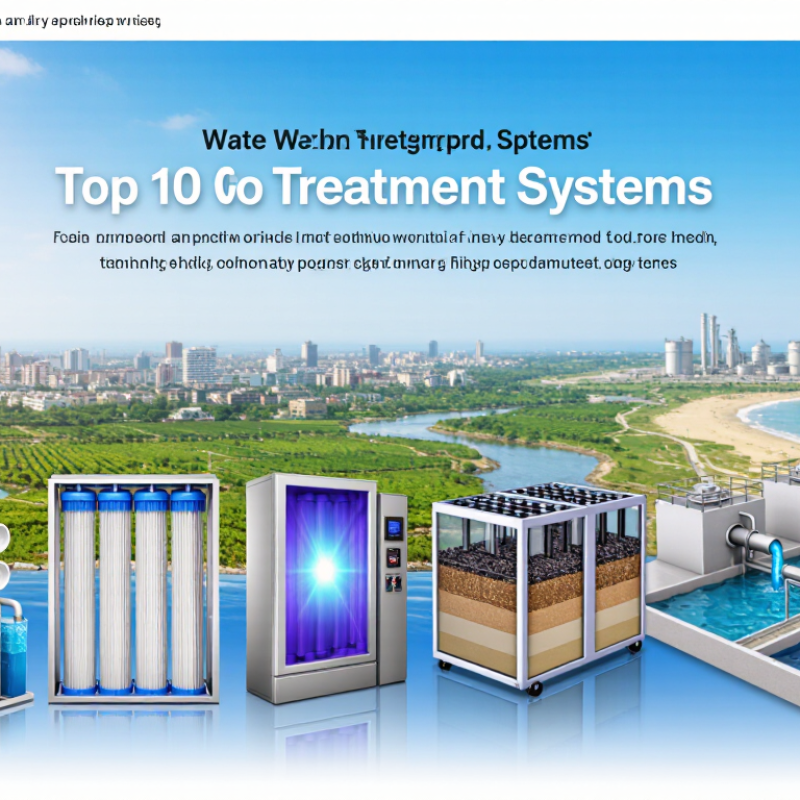
Water treatment systems are not interchangeable, even when they look similar in product catalogs.
Sediment filters remove sand, rust, and suspended particles before they reach sensitive equipment. Activated carbon filters reduce chlorine, unpleasant odors, and some organic compounds. They are useful for improving taste, but they do not reliably remove dissolved salts.
Hard water needs a different approach. Water softeners exchange calcium and magnesium ions, protecting heaters, pipes, and washing equipment from scale. Reverse osmosis systems push water through a semi-permeable membrane, reducing salts, metals, and many dissolved contaminants. However, they create wastewater and need stable pressure.
Ultrafiltration uses smaller pores than ordinary filters, while ultraviolet treatment targets microorganisms without adding chemicals. UV works best with clear water. Cloudy water weakens its performance.
Distillation produces very pure water by boiling and condensing it, but energy use can be high. Biological treatment is common in municipal and industrial wastewater applications, where microorganisms break down organic matter. Disinfection may also involve carefully controlled chemical dosing.
In practical installations, selecting equipment by contaminant data is safer than choosing by capacity alone. A high-flow system can still fail if its membrane fouls quickly. That mistake is common.
Buyers should review laboratory results, maintenance access, replacement intervals, pressure requirements, and local water conditions.
No system is perfect. The most reliable design often combines several treatment stages rather than forcing one technology to solve every problem.
Matching Treatment Technologies to Water Quality and End Uses
Choosing among the top ten water treatment systems starts with measurement, not equipment. The WHO and UNICEF Joint Monitoring Programme reported that 2.2 billion people lacked safely managed drinking water in 2022. That figure hides different risks: storm turbidity, salty wells, or microbial contamination at the tap. A laboratory panel should test pH, conductivity, hardness, iron, nitrate, pathogens, and site-specific chemicals. Guessing is expensive.
Sediment filters suit visible particles, while activated carbon targets taste, odor, and some organic compounds.
Softening reduces calcium and magnesium before boilers or membranes. Ultrafiltration removes bacteria and suspended solids, while reverse osmosis addresses dissolved salts and many ions.
Ultraviolet systems disinfect without adding residual chemicals. However, they need low turbidity and reliable electricity. Ozone can oxidize difficult compounds, yet it demands skilled control.
End use changes the specification. Agriculture accounts for roughly 70% of global freshwater withdrawals, according to the UN World Water Development Report 2024. Irrigation systems often need salinity control and clog-resistant pretreatment.
Food processing requires validated microbial control and hygienic materials.
Industrial reuse may combine membranes with biological treatment, such as membrane bioreactors.
Distillation produces highly pure water, but energy costs can be severe.
I have seen clear water fail after poor maintenance. That lesson matters. Testing after installation should verify performance, not merely confirm flow.
Comparing Capacity, Performance, Costs, and Maintenance Needs
Choosing among the top 10 water treatment systems requires more than comparing purchase prices. Buyers should assess capacity, treatment performance, energy use, and maintenance access. Reverse osmosis can deliver strong dissolved-salt removal, but it creates concentrate waste and needs regular membrane cleaning. Ultrafiltration usually uses less energy, yet it cannot remove all dissolved chemicals. Biological systems suit large wastewater flows, while ultraviolet units provide rapid disinfection without chemical storage.
Scale matters greatly. The WHO and UNICEF Joint Monitoring Programme reported that 2.2 billion people lacked safely managed drinking water in 2022. This demand makes reliability essential, especially where replacement parts are difficult to import. The U.S. Department of Energy reports that seawater reverse osmosis commonly requires about 3–6 kWh per cubic metre, depending on design and recovery rate. That difference can reshape operating costs. A cheaper system may become expensive after pumps, filters, labour, and downtime are included. My practical concern is simple: published capacity often assumes ideal feedwater.
Tips: Request performance data using your actual water analysis. Check turbidity, salinity, temperature, and seasonal changes. Ask for a five-year cost model, including membrane replacement and wastewater disposal. Keep critical spare parts locally. Small details matter.
The 2024 UN World Water Development Report notes that agriculture accounts for roughly 70% of global freshwater withdrawals. Therefore, industrial buyers should consider reuse systems, not only intake treatment. Membrane bioreactors can reduce discharge volume, but their controls and aeration systems demand skilled maintenance. No system is perfect. A pilot test is usually wiser than a confident brochure.
Reviewing Certifications, Regulations, and Supplier Reliability
Top 10 Water Treatment Systems for Global Buyers
Certification matters because water risks differ sharply between markets. The WHO and UNICEF Joint Monitoring Programme reported that 2.2 billion people lacked safely managed drinking water in 2022. This figure makes documentation more than a purchasing formality. It affects public health, installation approval, and long-term operating costs.
Buyers should match each system with local requirements. The 2022 WHO Guidelines for Drinking-water Quality provide health-based targets, but national rules may be stricter. In Europe, Directive 2020/2184 controls drinking-water quality and materials contacting water. In North America, standards such as NSF/ANSI 42, 53, 58, 60, and 61 address performance, chemicals, membranes, and components.
A certificate can be genuine and still be irrelevant. Check its scope, model number, test method, and expiry date.
Supplier reliability requires evidence beyond polished brochures. Request ISO/IEC 17025 laboratory reports, batch traceability, factory audit records, spare-parts lists, and service-response commitments.
The 2024 UN World Water Development Report notes that agriculture uses about 70% of global freshwater withdrawals, increasing pressure on efficient treatment and reuse.
Inspect pumps, seals, sensors, and control panels before shipment. Ask for reference installations in similar climates.
Some choices still fail. I would also record unresolved complaints, because perfect supplier histories rarely exist.
Selecting and Implementing the Right System for Global Markets
Selecting a water treatment system for global markets requires more than comparing flow rates and price. Start with the source water. A borehole may contain iron, while a coastal plant may face salt intrusion. Independent laboratory testing should guide the design, not a generic product sheet. Check turbidity, hardness, pathogens, seasonal changes, and expected demand before choosing filtration, membrane treatment, or disinfection.
Local conditions shape implementation. A system installed in a remote area needs simple controls, durable materials, and accessible spare parts. Operators should receive practical training using the actual control panel and maintenance tools. Clear manuals must match local languages, electrical standards, and approved discharge requirements. Pilot testing is valuable, especially when feedwater changes after heavy rain. Small trials expose problems early.
Performance must remain measurable after installation. Record pressure, flow, conductivity, chemical use, and microbiological results at defined intervals. Independent verification can strengthen trust with regulators, buyers, and site owners. A perfect system rarely exists. In practice, a design may meet treated-water targets but consume too much energy, or operate efficiently but demand skills unavailable locally. That weakness should be documented and corrected through monitoring, operator feedback, and scheduled review. Global buyers should also examine supplier response times, warranty terms, cybersecurity controls, and long-term service capacity before approving the final system.
Top 10 Water Treatment Systems for Global Buyers
Selecting and Implementing the Right System for Global Markets
The chart compares indicative water recovery rates commonly used during preliminary technology selection. Actual performance depends on feed-water quality, system design, operating conditions, pretreatment, discharge requirements, and local regulations. Seawater reverse osmosis generally has lower recovery than brackish-water reverse osmosis, while zero-liquid-discharge systems can recover nearly all process water but require higher energy and capital investment.
Related Posts
-
Top 10 Water Systems for Global Buyers in 2026?
-
Why Are Water Technologies Important for Global Buyers?
-
What Are the Best Water Treatment Supplies in China?
-
How to Choose the Best Water Systems for Global Sourcing
-
What Are Water Technologies and How Do They Work?
-
Top Water Treatment Solutions for Global Buyers in China
Ready to talk about water treatment?
Contact us
Please complete this form and we will be in touch